Fewer queues for refugees: Slovakia updates rules for obtaining secure personal BOK code

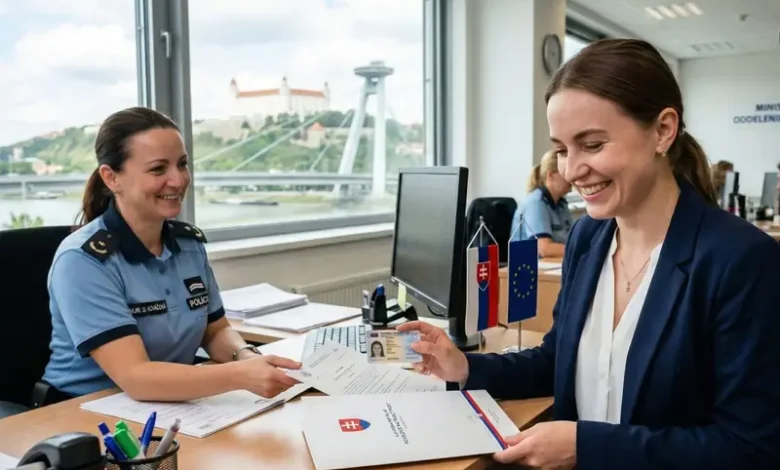
For foreigners in Slovakia, the BOK security personal code has long been the key to some state electronic services, as without it it is more difficult to use digital identification, an electronic mailbox and online procedures related to documents. Ukrainians who have received asylum or reside in the country on the basis of permits often face the fact that even a simple administrative action requires an appointment, a personal visit and waiting in overloaded institutions. Therefore, the change in the rules regarding BOK has practical significance for thousands of people who daily decide on issues of residence, documents and access to Slovak state services.
From May 15, 2026, a new procedure should come into effect in Slovakia, according to which it will be possible to create, change or restore a bezpečnostný osobný kód not only in police stations. The Parliament adopted amendments to the laws on identity cards and residence of foreigners, after which some procedures should be transferred to certain institutions, the list of which will be established by the Ministry of Internal Affairs.
It is expected that this network may include post offices, which already have a wider coverage across the country than specialized police units. For people living outside large cities, such a change could reduce travel, waiting times and the need to search for free dates in institutions where demand for services remains high.
The BOK security code consists of six digits and is used to confirm identity when logging in to electronic government services. With it, the holder of a document with a chip can log in to e-government systems, use an official electronic mailbox and perform some procedures without paper correspondence and personal applications.
For foreigners, the importance of the BOK has especially increased due to the gradual digitalization of migration services. The code may be needed to work with electronic services Slovensko.sk, activate eSchránka, receive official notifications from government agencies and confirm identity during certain procedures related to staying in the country. Because of this, the lack of an activated code becomes a real obstacle, especially for those who have limited time, work, children or live far from police stations.
Until now, many foreigners were forced to contact police departments or client centers, where the procedure depended on the availability of places, queues and workload of staff. In the case of refugees from Ukraine, this created additional difficulties, since the processing of documents and communication with institutions often coincide with work, education of children and solving household issues after moving.
The new rules should relieve the police and make the service closer to people. If the Ministry of Internal Affairs includes post offices or other institutions with a developed network in the list, the processing of BOK will cease to be a procedure tied to a limited number of specialized offices. At the same time, the state must ensure the protection of personal data, since the code opens access to electronic identification and official communication with authorities.
The changes will affect not only Slovak citizens, but also foreigners who have the appropriate documents. For Ukrainians with temporary protection or other reasons for residence, this may mean easier access to administrative procedures, which are gradually moving online. This will be especially important for those who plan to renew documents, receive official notifications via e-mail, or use state services without unnecessary personal visits.
Of particular importance is the ability to restore BOK outside the police. People often forget codes, block them after incorrect attempts, or need to change them for security reasons. Under the old approach, such a situation could mean a new entry and a repeat visit to the institution, while expanding the list of points should make restoration less burdensome.
For Slovakia, this is also a way to streamline the work of state services against the backdrop of a large number of foreigners using documents with electronic functions. The more procedures are transferred to digital format, the more important access to basic electronic identification tools becomes. Without a BOK, a person can have a document but not use its full functionality, which is why some online services remain inaccessible.
After the changes come into force, the main practical issue will be the list of institutions where it will be possible to create, change or restore a code. It must be determined by the Ministry of Internal Affairs, and this will determine how noticeable the simplification will be for foreigners in different regions of the country. If the network of points is wide, the procedure will indeed become more convenient for Ukrainians who live in smaller cities or cannot regularly go to police stations.
The update of the rules on BOK does not change the content of the procedure itself, but access to it. Slovakia maintains the requirements for identification and data protection, while at the same time opening up the possibility of issuing a code in a larger number of places. For Ukrainian refugees and all foreigners who depend on digital state services, such a change could remove one of the most common administrative obstacles.