Forced injections and torture: new details of the detention of Oschadbank employees in Budapest

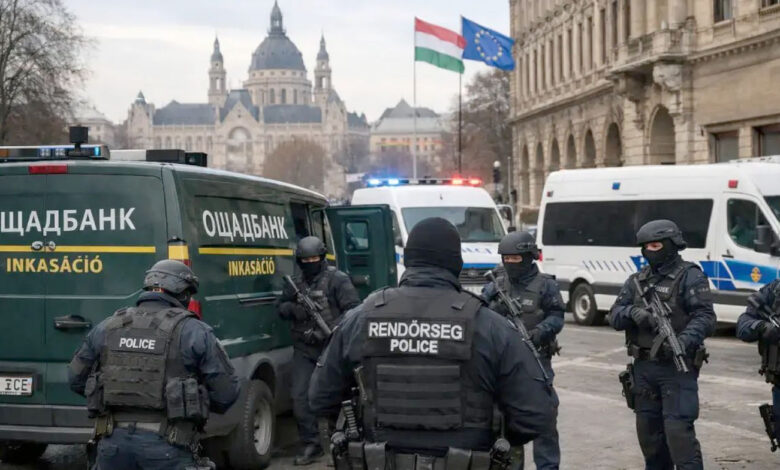
The international scandal surrounding the detention of Oschadbank employees in Hungary has received a high-profile continuation. According to sources in the Security Service of Ukraine, Hungarian special services may have administered a special drug-relaxant to one of the detainees. This is reported by the Guardian.
The purpose of such an injection, as experts suggest, was to make the man more “talkative” during interrogations. Earlier, the Ministry of Foreign Affairs of Ukraine confirmed that one of the collectors, who suffers from diabetes, was forcibly injected with an unknown substance despite his protests. This provoked a critical spike in blood sugar levels and a hypertensive crisis, which caused the victim to be urgently taken to the hospital. After the man returned to his homeland, medical tests confirmed the presence of foreign drugs in his blood.
The foreign press has already compared such methods to practices from the Soviet era. In particular, the Guardian, citing Ukrainian sources, calls this incident an example of the “Russian style”, which refers to the use of “truth serums” by the KGB structures.
In addition to medical intervention, there were recorded facts of harsh treatment of seven bank employees: they were kept in handcuffs and blindfolded for 28 hours. According to the Ministry of Foreign Affairs, the detainees were subjected to physical and psychological pressure, their demands for legal representation were ignored, and they were forced to communicate exclusively in Russian, prohibiting them from testifying in Ukrainian.
The conflict began on March 5, when two armored vehicles belonging to Oschadbank, carrying $40 million, €35 million, and 9 kilograms of gold, disappeared from radar. Thanks to a GPS signal, they were found in the closed territory of the Hungarian Anti-Terrorist Center in Budapest. The cargo was transported to the Austrian Raiffeisen Bank in compliance with all international customs procedures. Assessing the situation, the head of the Ukrainian foreign ministry spoke extremely sharply: “Hungary actually took hostages and stole money” — believes Andriy Szybiga.
The Hungarian side, in turn, justifies its actions by suspicion of money laundering. Hungarian Foreign Minister Péter Szijjártó publicly voiced the version about the activities of the so-called “Ukrainian military mafia”, in whose interests the transportation was allegedly carried out. In response to these accusations, official Kyiv declared its readiness to initiate personal sanctions against individuals involved in the abduction of Ukrainian citizens.
As of the evening of March 6, all seven collectors had been released, but armored cars and multimillion-dollar valuables still remain under arrest in Hungary.