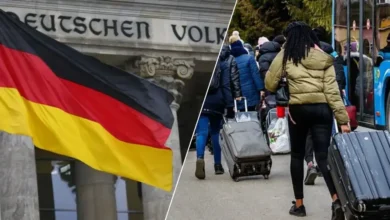
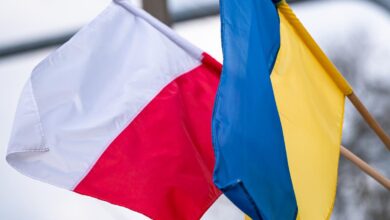
Amid rising domestic political tension in Germany and talks on a new coalition, the federal government has announced the suspension of participation in a refugee resettlement program coordinated by the Office of the United Nations High Commissioner for Refugees. This is reported Reuters with reference to the Ministry of Internal Affairs of the country.
This decision has already caused a wide resonance in human rights circles and raised the question of what is changing now for people seeking protection in Europe, and in particular for Ukrainian citizens who continue to leave the war. Although the temporary protection of Ukrainians is not directly included in this program, the general change in Germany’s migration policy is an alarming signal for everyone who depends on the decisions of European capitals.
Since 2016, Germany has participated in the voluntary refugee reception program coordinated by the EU in cooperation with the UN. Within the framework of this program, people arrived in the country from countries where the UN recognized a critical humanitarian situation: in particular, Turkey, Egypt, Jordan, Libya (through transit in Rwanda) and Kenya. The resettlement program should not be confused with the asylum procedure – it is a special, additional scheme where refugees receive guarantees of reception, housing and basic assistance even before arriving in the EU.
As reported by the Reuters agency, the admission of new persons under the program is currently suspended, and new initiatives of this type are not planned. The decision comes amid talks to form a new government, expected to be led by the conservative CDU/CSU bloc led by Friedrich Mertz, which has consistently advocated tighter immigration controls. Unlike the Social Democrats, who lead the current coalition, the Christian Democrats and allies are focused on limiting the admission of new refugees, revising asylum rules and cutting humanitarian programs.
This is not a formal ban, but a very clear political signal: the state, which until recently was at the center of humanitarian solidarity in Europe, is now showing a change in priorities. And although the UN program did not cover Ukrainian refugees — they receive temporary protection within the framework of a separate EU directive — Germany’s decision cannot but cause concern. After all, this shows that even the largest economy in Europe is beginning to limit humanitarian channels. In the future, this may also affect those who are not looking for temporary, but long-term asylum, who did not have time to obtain documents or are in the gray zone between evacuation and integration.
This decision looks especially alarming against the background of processes that have been taking place at the level of municipalities for a long time. Germany’s cities are overcrowded, social support budgets are limited, and the public mood is gradually changing: more and more voters, especially in the eastern regions, are supporting parties that favor tighter border controls and less migration.
For Ukrainians who are in Germany or are considering the possibility of moving, the situation is not critical, but requires vigilance. For now, the status of temporary protection remains valid, as does access to the labor market, education, and medicine. But any change in the general migration policy is always a risk of changing conditions and procedures. What was considered the standard of support yesterday may be revised or limited tomorrow.
Human rights organizations call on the German government to consider international obligations and not close humanitarian channels for those fleeing war, persecution or disasters. But the new political configuration that is being formed in the country seems to be aimed at significantly narrowing the approaches to the concept of protection. And if this becomes a trend, it is possible that in the future there will also be a review of approaches to temporary protection for Ukrainians.
It is symbolic that Germany, which was one of the first countries to open its doors to millions of Ukrainians in the spring of 2022, is now reviewing its obligations in terms of humanitarian programs. This does not mean an immediate change of policy towards Ukraine. But this is already a clear indicator: in Europe, not so much sympathy as fatigue is beginning to prevail. And this is a signal that Ukrainian society, the government and communities abroad should pay close attention to.