
In Poland, a special law on assistance to Ukrainians, introduced after the start of a full-scale war, will cease to apply from March 5.

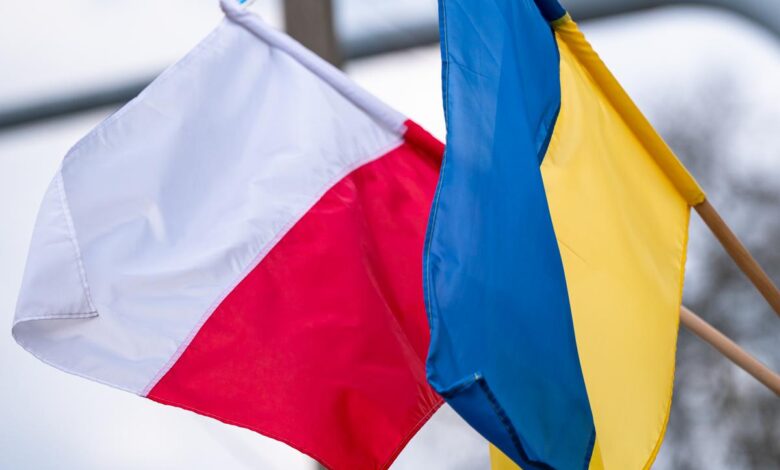
The changes in the legal status of Ukrainian citizens in Poland, which came into effect in March 2026, were the result of a gradual transition from an emergency legal regime to systemic mechanisms enshrined in Polish legislation and European Union decisions. After several years of special regulations adopted in response to Russia’s full-scale invasion of Ukraine, the Polish authorities transferred most of the provisions regulating the stay of Ukrainians to the standard system of legal protection for foreigners. This approach means changing the legal basis for residence, employment and receiving social assistance, although the temporary protection regime itself continues to operate.
Transition from a special law to a general protection system
On March 5, 2026, a special law in Poland, which was adopted in the first weeks after the Russian invasion in 2022 and provided for a number of simplified procedures for Ukrainian citizens, ceased to be in force. This was reported by the Ukrainian Embassy in Poland. Instead, the key mechanisms of the legal status of Ukrainians have been transferred to the current Act of June 13, 2003 on the granting of protection to foreigners in the territory of the Republic of Poland, which applies to various categories of persons in need of international or temporary protection.
The basis for the further stay of Ukrainian citizens remains the temporary protection regime introduced at the level of the European Union after the outbreak of the war. In accordance with the decision of the EU Council, the legality of the stay of beneficiaries of this protection has been extended until March 4, 2027. Thus, the right of residence does not automatically terminate with the termination of the special law, but its regulation takes place within the framework of the general legal system.
Conditions of legal residence
The right to legal residence during the specified period is maintained provided that several criteria are met. This primarily concerns persons who entered Poland after February 24, 2022 due to an armed conflict, received a PESEL identification number with the status of UKR and do not benefit from the temporary protection regime in another European Union state.
This status remains a key element confirming the right to stay and access to certain public services. At the same time, the system of checks and controls has become more clearly integrated into the general migration policy of Poland, which provides for the possibility of terminating temporary protection under circumstances specified by law.
Medical care and insurance
The system of medical care for persons with temporary protection maintains access to a significant part of the services provided to Polish citizens. The full scope of medical care is available in the case of health insurance and regular payment of contributions to the ZUS social insurance system.
For those who do not have insurance coverage, a limited list of free care is provided. In such cases, medical services are provided during emergencies when there is a threat to a person’s life or health. Certain categories of persons receive wider access to assistance, including pregnant women, children under 18, people affected by hostilities, as well as persons who have become victims of violence or torture.
Support system with accommodation
A new permanent support system regulating temporary accommodation for persons with protection status has come into effect in Poland since March 5, 2026. The Minister of the Interior has been authorized to provide assistance in the form of accommodation in collective accommodation centers or cash payments intended to cover living expenses.
The provision of such assistance has clearly defined time limits. For persons who have just arrived in Poland, support may last no longer than 60 days from the moment of first entry into the country. The total period of stay in collective accommodation centers during the entire period of temporary protection is limited to 12 months.
An important feature of the new system is the cumulative principle of calculating this time. The total limit includes all periods of residence in such centers starting from 2022.
Transitional period until summer 2026
To smooth the transition to the new rules, the Polish authorities have provided for a transitional period that will last until June 30, 2026. During this time, voivodeships have the right to allow people to remain in collective accommodation centers even in cases where the established annual limit has already been exceeded.
The introduction of such a mechanism is explained by practical considerations. A significant number of Ukrainian families live in such centers with school-age children, so the additional time should help them complete the school year and find more stable housing conditions.
After the end of the transition period, the right to free accommodation in the centers will remain only for persons belonging to vulnerable categories.
Social benefits for families with children
Financial support for families raising children is maintained, but it is provided in accordance with the general rules applicable to foreigners in Poland. This is, in particular, the popular 800+ payment program, which provides for regular child support.
To receive such support, guardians must be economically active, that is, work or engage in other legal professional activities. An additional condition is that the child fulfills the obligation of school education.
The use of funds received for child support is monitored by county authorities. In cases where violations of the established rules are detected, payments may be suspended.
Grounds for termination of temporary protection
The legislation provides for a number of situations in which the right to temporary protection may be canceled or not granted at all. This applies to persons who have obtained another legal status of residence in one of the European Union countries, such as a permanent residence permit, refugee status or long-term resident.
The protection also does not apply to citizens of EU countries or persons who have applied for international protection under other procedures. The grounds for termination of the status may be the provision of false information, the use of forged documents or entry into Poland within the framework of local border traffic.
Another important factor is the duration of stay outside Poland. If a person leaves the territory of the country for more than 30 days, the temporary protection regime is terminated. It can also be canceled upon a written application by the person himself or in the event of obtaining another legal residence status.
Further decisions on legal status
The term of temporary protection for citizens of Ukraine in Poland is set until March 4, 2027 in accordance with the decision of the Council of the European Union. After this date, further changes or a possible extension of the regime will depend on the decisions of the Polish government and the general EU policy on the protection of persons who left Ukraine due to the war.
Thus, the new legal model does not cancel support for Ukrainian citizens, but transfers it to a more structured system, where the conditions of stay, access to social services and rules for receiving assistance are regulated by standard state legislation.


