Google has signed a contract with the US Department of Defense to use AI in secret projects

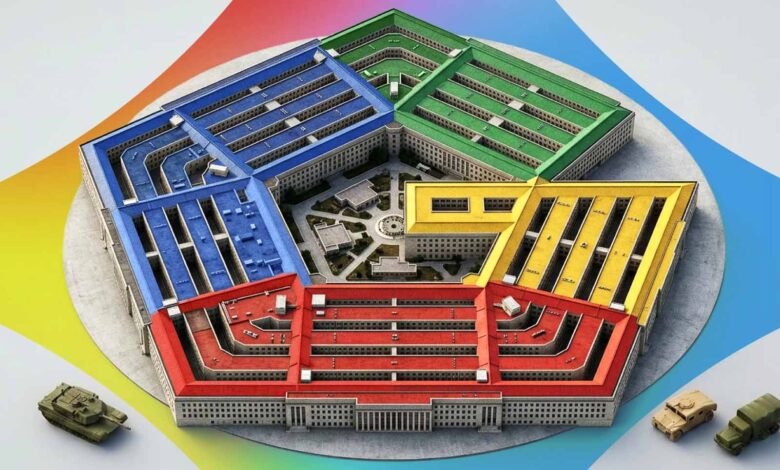
Google signed a strategic contract with the US Department of Defense for the use of artificial intelligence technologies in secret defense projects.
According to the terms of the agreement, the Pentagon receives full rights to use the company’s developments for any legitimate government purposes. At the same time, the tech giant loses the right to veto specific decisions of the military department regarding the operation of the provided tools.
The document allows for the integration of artificial intelligence into classified networks to perform confidential tasks. The range of applications of the technologies covers the planning of complex operations, the development of guidance systems and the automation of target selection. The contract also obliges the company to adapt security filters and internal model settings to the specific requests of the US government, which actually transfers control of the tools to military strategists.
Despite the expansion of the military’s powers, the agreement contains certain ethical caveats. In particular, artificial intelligence cannot be used to create fully autonomous weapons that operate without human control. There is also a strict ban on using developments for mass domestic surveillance of citizens.
“Supporting national security by providing access to APIs is a responsible approach,” Google emphasized.
The involvement of civilian technologies is part of a large-scale modernization program for the US Armed Forces. Previously, the US Department of Defense signed similar agreements worth about $200 million with OpenAI and Anthropic. Military experts emphasize that the use of Google models will significantly speed up the processing of intelligence data and increase the accuracy of combat operations.
The trend towards increased cooperation between artificial intelligence developers and defense structures is becoming global. Currently, other market leaders are also considering the possibility of deploying their technologies in NATO networks to strengthen collective security.
This indicates a change in the paradigm of AI development, where commercial products are increasingly becoming elements of the state’s military strategy.