How the nature of relationships between people changes in wartime, how to properly communicate with the military: an explanation of a psychotherapist

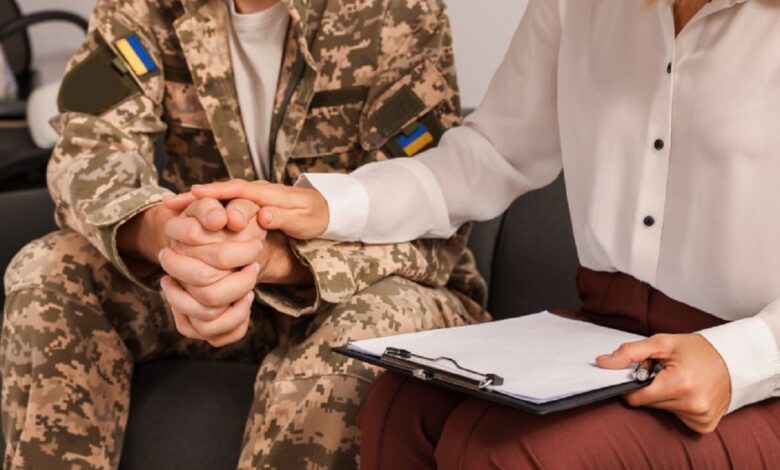
In the modern realities of war, proper communication with the military becomes critically important. Families who support their loved ones at the front face many problems: emotional fatigue, anxiety for the lives of soldiers, difficulty adapting to changes. Psychological support for these people is vitally important, because after the return of military personnel, post-traumatic syndrome can significantly affect family relationships, their ability to work and lead a normal life. How to live with post-traumatic stress disorder, how the nature of relationships between people changes in conditions of war and what resources can help, explains psychotherapist, candidate of psychological sciences Olena Rykhalska.
The psychotherapist emphasizes that the war accumulates energy in men, which has been suppressed for years due to economic difficulties or the inability to realize oneself. In times of peace, men may not have had the opportunity to express their abilities as protectors or breadwinners. Now Ukrainian men got the opportunity to realize this energy, which makes them stronger and more dedicated to their work. On the other hand, it also causes a lot of stress for their families, who have to adapt to these changes.
In addition, Olena Ryhalska notes that women react to war in different ways. Those who felt confident in peacetime often suffer from a loss of stability: someone lost their home, someone had to break up with a husband who went to the front, and someone can’t stand the flow of negative news. Such women are often rational and pragmatic, so the lack of a sense of security and control over the situation becomes a big challenge for them.
However, there is another category of women who are beginning to blossom in the conditions of war. In peacetime, they may have felt unclaimed or unfulfilled, but now find themselves volunteering or helping in other ways. Reviews of the military, their gratitude and admiration often become a powerful emotional support for such women.
Often, war even changes the dynamics of relationships in couples. For example, women who lost interest in their partners before the war now discover them in a new way when they become soldiers. However, as Ryhalska notes, relationships that begin at the front often have risks. War creates peak emotional states that may disappear after hostilities end, and couples are then faced with the need to rethink their relationship in peacetime.
“Couples who stay together after the war are the exception. The self-delusion is that life in a critical situation and life in a calm peacetime are two completely different forms of interaction between a man and a woman, with different needs. War is a peak state when details recede into the background. This is a kind of euphoria in which the brain cannot stay for long – sooner or later a hangover sets in. And when a man and a woman “ripen up”, there is a need to decide – do you want to continue Do you love his real and not his heroic image.
One of my clients from the Maidan is actively engaged in humanitarian aid. One day, one of the soldiers wrote her a letter in which he expressed his desire to thank her personally. He arrived, lived with her for five days, after which… he went to another volunteer mistress, and then to his wife. The client is upset, but excuses him in all possible ways in order to continue the relationship. Another client married a soldier and found out within a month that he was cheating on her… I’m not exaggerating – each case is individual, but the experience of previous wars shows that such unions are bright, but short-lived.
The military uniform and the image of the hero exacerbate their polygamy in men. Those who were under the heel of their wives are now surrounded by beautiful, intelligent, active volunteer girls who look at them with admiration and pride. Men’s self-esteem has increased, their wings have spread. In addition, they are in a situation where every day can become the last. Social restrictions do not work. They are replaced by instincts.
Serious men also start front-line families – with nurses, for example. They are really passionate about new passions. But after the war, as a rule, they return to their former life and former wife. Leonid Brezhnev, who, by the way, had a front-line affair, did not leave his family because of violent feelings. Ratio in such people usually wins feelings.
The experience of the Great Patriotic War shows that even those who went to the front alone, fell in love there and spent the entire war with a woman, and after the war broke up with their girlfriends. When a woman raises bullets, she turns into a comrade in arms, and they don’t want a man’s comrades. He does not protect this woman because he did not protect her. I had a client who said “she gave me ammunition, I can’t leave her” — but at the same time he had a mistress whom he wanted, and he respected his wife very much, and that’s all.
Another reason for breaking up with front-line girlfriends is the desire to erase the terrible military past and start all over again. With a new, clean woman. Which is not associated with pain and problems in a man, but gives lightness, beauty and hope for a new life.” – says the psychotherapist.
Many Ukrainians are now actively helping the army, which is also a way of maintaining their own emotional state. When a person feels that they are needed, it helps not to despair. However, it is important not to overwork yourself even in charitable activities. If you couldn’t do something today, don’t beat yourself up—there’s always an opportunity to do more tomorrow. Even in such matters, it is necessary to find a balance between helping others and your own rest.
Olena Rykhalska draws special attention to the energy of anger, which people have a lot of now. Anger can be both destructive and helpful. It is important to learn to direct this energy to achieve goals, and not waste it on shouting or hatred. When properly controlled and harnessed, anger can be a powerful engine of change and action.
The psychotherapist focuses on working with post-traumatic syndrome. War veterans can face serious psychological challenges, including depression, insomnia, and affective disorders. It is important that society and the state support them: reward them for courage, help with rehabilitation, provide them with prostheses, and give them time to adapt. Post-traumatic syndrome is not a short-term condition, and its overcoming requires efforts from both the person and the society and the state.
“After the war, another stratum of Ukrainians will indeed appear – veterans. In this armed confrontation, everything is not as clear as it was in the Great Patriotic War, but the soldiers must be rewarded, thanked, and given medals for courage. The wounded must be supplied with prostheses, to show them respect, not to demand from these people immediately to “become normal” and not even to forbid them to drink for a while, if it will help to survive the acute stage. Post-traumatic syndrome can last up to
20 years. Such people can fall into a state of affect, suffer from insomnia, see the world in black and white colors. At the same time, those who go to war must realize that their lives will definitely change. You can tear off an arm or a leg, you can lose everything and find yourself on the sidelines. The men who fought would need a lot of inner strength to handle all of this on their own. A psychologist can help only if the fighter himself wants it. Many get stuck in the “line of fire” for years. Therefore, overcoming post-traumatic syndrome is the work of the state, society and relatives, as well as the person himself,” – the expert believes.
At the same time, the psychotherapist emphasizes that positive psychology, which works in peacetime, in conditions of constant danger, not only does not help, but can also cause irritation. Now, in order to preserve internal strength, it is more appropriate to turn to the principle of Scarlett O’Hara – “I’ll think about it tomorrow.” In peacetime, such an approach would be considered childish, but now it is the best way to deal with reality. Olena Rykhalska advises to end each day with quality: if you did your best, thank yourself for it. You don’t have to beat yourself up for not having time. The main thing is to recognize your achievements and support yourself with praise if something is done well.
“It is important to understand: it is about ending the day with quality. The day is over when you have done everything you could, thank him, and you will think about what will happen tomorrow. If you demand more from yourself than you have time , scolding yourself only increases stress. But when you have done something good, do not be ashamed. It is also not worth giving up bad habits. But also Do not rush to increase the doses of harm.
Our nervous system is so arranged that it reacts to a small pleasure in the same way as to a big one. Everyone has their own personal list of what brings them pleasure. It can be a glass of wine, a massage, a hot bath, morning coffee, a drink by the window, driving through the night city – anything. It is necessary to get high from trifles to the maximum. It helps a lot to conserve energy.” – Ryhalska notes.
In her opinion, it is important not to limit yourself in small joys. Our nervous system responds equally to small and large pleasures, so even small things that bring joy can support our psyche. It can be morning coffee, a walk, a hot bath or other personal pleasures. Every little thing like this helps to maintain strength and stability in a difficult time.