If we do not decide what kind of world we want to live in, others will make that choice for us: Vladislav Rashkovan

The future does not arise by itself, it is shaped by the decisions made by millions of people every day. The choices people make, in a broader perspective, determines the configuration of the entire society. That is why the question arises: does a modern person realize how much depends on his way of thinking, readiness not only to consume information, but also to critically analyze it, to contrast one view with another, to look for cause-and-effect relationships and risks? Public figures connected to the economy are increasingly turning to fiction, particularly fiction, as a way to make sense of scenarios that are not limited to dry numbers or models.
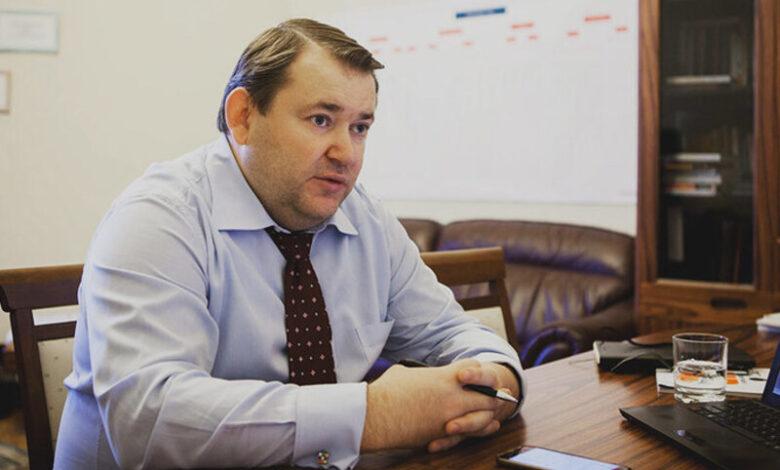
One such example is consideration Deputy Executive Director of the IMF, ex-Deputy Head of the NBU Vladyslav Rashkovan, who, analyzing Neil Stevenson’s texts, raised the question not only of what technological models or social architectures may be formed in the coming decades, but also of who and how constructs these scenarios. Ideas from the American science fiction writer’s books have become a topic of conversation not only in the family circle, but also in professional discussion – in particular, with MIT professor Simon Johnson, winner of the 2024 Nobel Prize in Economics.
As Vladyslav Rashkovan pointed out, the future is not something predetermined, but a consequence of our decisions, choice of values, social models and critical thinking. In this context, he shared his reflections on the series of works by Neal Stevenson, one of the most influential science fiction writers of our time, who in his novels models alternative scenarios of the future.
Rashkovan mentioned Simon Johnson, a professor at the Massachusetts Institute of Technology and winner of the 2024 Nobel Prize in Economics. During a conversation with him, as well as at a lecture at the IMF and a mentoring session with Rashkovan’s daughter, Johnson mentioned his favorite Stevenson books as a source of inspiration for understanding what kind of world we ourselves choose to build. The same idea, according to Rashkovan, is supported by another Nobel laureate, Daron Acemoglu, who in a recent interview also emphasized that the future is the result of our ability to think and plan.
As Rashkovan emphasizes, in the novel Snow Crash (1992), the author depicts a hypercapitalist society where the nation state has almost completely disappeared, giving way to corporations, franchises, and privatized enclaves. This is a world without democracy, where social order is determined by algorithms, information weapons, mem-cultures and the Metaverse. It lacks a public sphere in the classical sense — it is replaced by virtual reality. It is there that the main threat unfolds — a virus that combines computer code and language as a tool of influence.
The deputy executive director of the IMF also mentions the work The Diamond Age (1995), in which the author depicts a society transformed by nanotechnology, dominated not by states, but by cultural and ideological communities – the so-called “phyles”. In the center of the story is a girl who receives an interactive book with AI elements that teaches her to think critically. This is a world in which democratic institutions are disappearing, and the future is determined not by politicians, but by education and knowledge systems. Access to resources, according to Rashkovan, in such a world is the prerogative of elite groups, the rest remain excluded.
As Rashkovan explained, the novel Cryptonomicon (1999) unfolds at the turn of the 20th and 21st centuries and shows how cryptography becomes the basis of a new digital civilization. its author outlines the foundation from which a new form of digital society can grow — a space where cryptography, computer technologies, and information security cease to be exclusively the sphere of military purpose and turn into the main support of the future civilizational system. The plot unfolds at the intersection of two historical periods: on the one hand, it is the era of the Second World War with its ciphers, cryptanalysts, moral dilemmas and technical breakthroughs – in particular, the figure of Alan Turing; on the other – the end of the 20th century, in which the heirs of those events are trying to establish an autonomous digital space in Southeast Asia – the so-called data haven, a territory of information privacy free from state supervision.
In this reality, there are no classical institutions of democracy, and the entire structure of power is built around the struggle for the right to control information. Particular attention is paid to efforts to create a parallel financial system based on cryptocurrency, which is an alternative to the state monetary order. People, technical tools and concepts in the world of the novel are subject to the logic of autonomy, technological independence and control over knowledge. Artificial intelligence does not yet occupy a key place in this system, but there is a deep wariness about the centralized ownership of data and constant attempts to build independent digital platforms capable of regulating social processes without the participation of the state.
In addition, Rashkovan cites another example – the book Anathem (2008), in which the writer creates a parallel world where intellectuals isolate themselves from the world, live in “concentrations” – monastic communities, engage in science, avoid technology and do not rely on AI. At the same time, it is these people who retain the ability to think deeply, and it is this, and not technical innovation, that can save civilization. There is no democracy here at all — society is built on intellectual discipline.
In the novel Reamde (2011), the world looks as close as possible to reality, as Rashkovan noted. It is a space of online games, criminal networks, digital currencies and illegal transactions. The game involves not only entertainment, but also real financial and political manipulation. Democracy exists, but power is dispersed among private platforms and players. People are simultaneously becoming both participants and hostages of this new digital globalization.
Along with Rashkovan’s works, one should also pay attention to the work Seveneves (2015), the plot of which begins with a catastrophe – the destruction of the Moon – which forces humanity to seek salvation in the orbital network. Decisions are made by technocrats, and democracy remains only on paper. After five thousand years, we see a new post-genetic civilization. According to Rashkovan, the author emphasizes that humanity and democracy are not eternal givens, but things that have to be created anew after a crisis.
As Rashkovan noted, in The Rise and Fall of D.O.D.O. (2017) magic returns to the modern world, but is controlled by the government. Power is concentrated in the hands of those who control time, information and technology. This is a world where democracy is a decoration, and real decisions are made behind the scenes. The most pressing question here is who has the right to interfere in the course of history. At the same time, in Dodge in Hell (2019), the author creates two parallel worlds — physical and digital. After death, human minds are downloaded into Bitworld, a new reality where new politics, religions, and conflicts begin to form. Here, AI is not a hero, but the foundation of reality itself. At the same time, there is a struggle in the physical world for control of this new “immortality”.
Rashkovan also mentions the work Termination Shock (2021), in which the author talks about ecological disaster, climate crisis and private initiative as the main driving force of change. In this world, decisions are not made by governments, but by wealthy entrepreneurs, and power is turned into a technical possibility.
All these novels, as Rashkovan concluded, have something in common: the absence of stable democratic institutions and the transfer of the center of power to those who have access to knowledge, technology, resources or an alternative reality. In Stevenson’s worlds, the future is not the result of the majority’s choice, it is constructed by those who managed to act, propose new rules of the game, capture a niche or a technological advantage. And while all these worlds are fictional, the questions they ask are very real.
In conclusion, Rashkovan recalled his own chapter in the book “Ukrainian Foundations”, written in co-authorship with Valery Pekar, where it is said that we are all “architects of choice”. Our mission is not to adapt to what is offered, but to independently shape the project of the future. As the economist noted, Stevenson’s books do not give ready-made recipes, but warn: if we do not decide what kind of world we want to live in, others will do it for us.