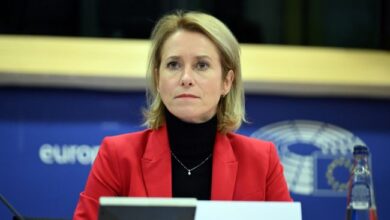
Leaders of nine EU countries call for changes to rules for deporting criminal migrants

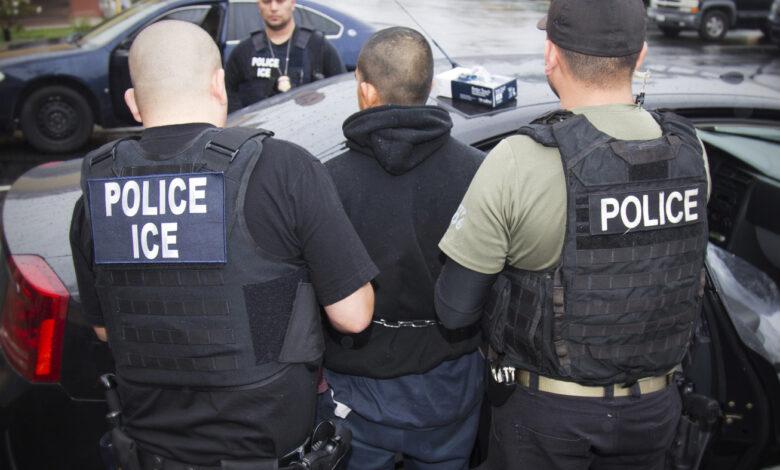
The leaders of nine European countries took the initiative to review the approaches to the interpretation of the European Convention on Human Rights in order to simplify the procedure for the deportation of foreigners who commit crimes. About this it is said in an official statement.
The authors of the appeal, which was initiated by the Prime Minister of Italy, George Meloni, and her colleague from Denmark, Mette Frederiksen, believe that the European Court of Human Rights interprets the provisions of the Convention too broadly.
Italy and Denmark are seeking to open a political debate on the relevance of some provisions of the European conventions, noting that these documents were created “several decades ago” and may not meet modern challenges, in particular problems related to migration. The leaders of Austria, Belgium, the Czech Republic, Estonia, Latvia, Lithuania and Poland also joined the statement.
In the address, the leaders call for countries to be given more freedom in solving the issues of deportation of criminal migrants, as well as to allow tracking of those persons who cannot be deported from the territory of the state.
“In our opinion, the safety and protection of victims and the vast majority of law-abiding citizens is an important and crucial right. And, as a general rule, this right should prevail over other considerations.” – said in the statement.
The document also emphasizes the need to oppose the use of migrants as a tool of pressure by hostile states.
In this context, the artificially created migration crisis on the border between Poland and the Baltic states, which has been ongoing since the summer of 2021, is mentioned. It arose with the active participation of the Belarusian authorities after the intensified reaction of these countries to the repression in Belarus and the incident with the forced landing of a plane in Minsk to arrest an opposition blogger. Despite the strengthening of border protection, the problem remains relevant and periodically worsens both for Poland and for Latvia and Lithuania.