On May 25, Ukraine celebrates the Day of the State Service of Special Communication and Information Protection and Chemistry Day, and the International Day of Missing Children in the world. This day is also marked by a whole series of important historical events in various parts of the world.
Day of the State Service of Special Communications and Information Protection of Ukraine
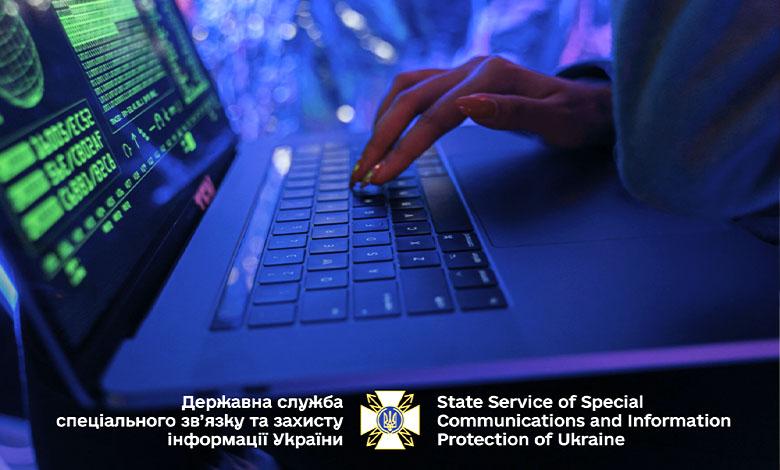
This day is not only a formal tribute to the profession, but also a recognition of the importance of the role played by the State Special Communications Service in the modern system of national security and defense. The State Service for Special Communications and Information Protection of Ukraine (abbreviated as Derzhspetzvyazo) is a central body of the executive power with a special status, which provides government, special and technical communications, cyber protection, protection of state information, support of digital transformations in government bodies, and also carries out control over cryptographic and technical information protection.
In the conditions of a full-scale war, with hybrid threats, the growth of cyber attacks on critical infrastructure and information space, the role of the State Special Communications Service has increased many times. Its specialists work on the front line — both literally, providing communication for military units, and digitally — repelling attacks by Russian hacking groups on state registries, government websites, and electronic services.
The Service’s activities cover not only technical aspects, but also security policy as a whole. It coordinates projects for the creation of a national cyber protection center, works on the implementation of a secure identification system, supports the digital infrastructure of “Actions” and other important state digital services.
The structure of the State Special Communications Service includes: the National Center for Operational and Technical Management of Communication Networks, the State Center for Cyber Protection, the Scientific Research Institute of Communication, educational institutions, as well as special units that perform tasks in the combat zone.
Interesting facts
In the years 2022–2024, specialists of the State Intelligence Service repelled more than 6,000 attempts at cyberattacks on state systems.
Service personnel installed secure government communications channels in dozens of field command posts in the war zone.
Ukraine was the first among the countries at war to introduce a comprehensive system of protection of digital state services, in particular “Actions”, under the leadership of the State Intelligence Service.
After a full-scale invasion began, the Service coordinated the evacuation of government data centers to prevent enemy capture of critical information.
The State Intelligence Service is the point of contact for Ukraine within the framework of cooperation with NATO CCDCOE — the Center for Advanced Technologies of NATO Cyber Defense in Tallinn.
The service includes CERT-UA, the government’s computer emergency response team known for its investigations of cyberattacks, including by groups linked to Russia’s GRU.
Chemist’s Day in Ukraine
This holiday was established by the Decree of the Presidium of the Supreme Soviet of the USSR in 1980, and was preserved in Ukraine after independence. This is a professional day for everyone who works in the fields of chemistry: from scientists and teachers to employees of the chemical industry, pharmaceuticals, analytical laboratories, ecology, food and light industry.
The chemical industry is one of the key industries in the country’s economy, which includes the production of mineral fertilizers, synthetic materials, pharmaceuticals, polymers, plant protection products, paint products, detergents, etc. During the war, the importance of analytical chemistry, eco-testing, development of new materials, in particular for protection, repair of equipment, water and air purification, increased.
A separate field is chemistry in a military context, particularly radiation, chemical, and biological safety, which both civilian and military chemists deal with.
Ukraine has a strong scientific base in the field of chemistry. Among the leading institutions are the Institute of Organic Chemistry of the National Academy of Sciences of Ukraine, the Institute of Physical Chemistry named after V. Pysarzhevsky, chemistry departments at major universities (KNU, KhNU, LNU, DNU, etc.). In wartime conditions, these institutions adapt their research to the needs of defense and the survival of critical infrastructure.
Interesting facts
Lev Pysarzhevskyi is a world-renowned Ukrainian chemist, one of the founders of the electronic theory of catalysis. It was his research that became the basis for understanding how catalysts work in chemical reactions — that is, how to speed up reactions without changing the composition of substances.
The Chuyk Institute of Surface Chemistry of the National Academy of Sciences of Ukraine is considered one of the leading centers in Europe in the field of nanomaterials. There, coatings are being developed that can kill bacteria, filter water and purify the air.
In the Institute of Physical Chemistry named after IN. Pisarzhevsky developed effective sorbents for removing heavy metals from water, which have been used in areas of environmental disaster, in particular in Donbas, since the 2010s.
In 2021, Ukrainian chemists from Chernivtsi and Kyiv presented to the world a new type of biodegradable polymer that decomposes in the soil in 45 days. It is created on the basis of cellulose and can replace disposable plastic.
Chemists from the Institute of Organic Chemistry of the National Academy of Sciences of Ukraine participated in the development of a new generation of anticancer drugs based on thiophene and pyrazole derivatives — these compounds block the growth of tumor cells without harming healthy ones.
In Kharkiv, at the Institute of Cryobiological Problems, chemists have developed cryopreservatives of a new generation that allow cells and tissues to be preserved without damage during deep freezing — these technologies are used in transplantology.
During the full-scale invasion of 2022, chemists from Kyiv, Lviv, and Poltava developed portable rapid tests to detect chlorine, ammonia, and phosgene in the air, which they brought into the war zone to monitor possible chemical attacks.
In 2023, chemistry students of Lviv University won the international competition “Green Chemistry Challenge”, presenting a method of processing plastic waste into non-toxic organic fertilizers.
One of the Ukrainian start-ups, created by chemists in Vinnytsia, entered the European market with phosphate-free ecological detergents made from vegetable raw materials that are completely decomposable in nature.
International Day of Missing Children
This day was founded in response to the disappearance of 6-year-old Ethan Patz in the United States in 1979. He became the first to be sought after through national campaigns, including the publication of photos on milk packages. Since 1983, May 25 has been officially celebrated as Missing Children’s Day in the United States, and later in other countries.
Today, Missing Children’s Day is celebrated as a reminder of the thousands of minors who have gone missing, become victims of trafficking, abduction, deportation, or run away from home. According to estimates, up to 8 million children go missing in the world every year. In Europe – about 180 every day. Some are found, but a large number remain wanted for years.
After the start of a full-scale Russian invasion in 2022, the situation escalated sharply. According to data as of May 2025, more than 2,000 Ukrainian children are officially considered missing. Some of them were deported to Russia, taken to temporarily occupied territories, or lost contact with their families during hostilities.
The return of Ukrainian children is a complex diplomatic and legal procedure. Individual cases are resolved through the mediation of the Red Cross or intermediary countries. In some cases, Russia changes children’s citizenship and gives them to foster families without Ukraine’s knowledge. The International Criminal Court has issued an arrest warrant for Russian President Vladimir Putin and Children’s Ombudsman Maria Lvova-Belova for organizing deportations.
Interesting and disturbing facts
Every year, more than 8 million children go missing in the world, according to international organizations. Some of them are found, but about 1 million do not return home.
In Europe, an average of 180 children go missing every day. Most are teenagers who ran away from home, but some are victims of human trafficking, kidnapping or armed conflicts.
In Ukraine, the “Children of War” platform has been created, which records the disappearance, deportation, injury or death of children. Each case is accompanied by a public appeal for the search.
On the initiative of Ukrainian diplomats, an information mechanism for the return of children was created with the support of the International Committee of the Red Cross, and agreements were concluded with countries through which children can be returned.
The international community demands full transparency from Russia regarding displaced children, but the Russian Federation blocks the access of humanitarian organizations to the camps where Ukrainian teenagers were taken.
Historical events on this day
1521 – Holy Roman Emperor Charles V declared Martin Luther a heretic. The decree forbade the printing, sale and distribution of his works, which became a turning point in the Reformation.
1709 — on the direct order of Peter I, Zaporizhia Sich was destroyed. This act of tsarist policy against the autonomy of the Ukrainian Cossacks had far-reaching consequences for the subsequent history of Ukrainian statehood.
1810 — the May Revolution began in Buenos Aires, which became the first in a series of events that led to the creation of the independent state of Argentina.
1819 — the Constitution was promulgated in Argentina, which established the foundations of a new political order after separation from the Spanish crown.
1926 — Symon Petliura, a Ukrainian political figure, leader of the Directorate of the Ukrainian People’s Republic, was killed in Paris. His killer said that he was taking revenge for the Jewish pogroms in Ukraine, which caused an international outcry.
1946 — Jordan declared independence from Great Britain, starting a new stage in the history of the Middle East.
1963 — the Organization of African Unity (OAU) was established in Addis Ababa, the capital of Ethiopia. This day became the Day of African Liberation – a symbol of the struggle against colonialism.
1996 — Czech track and field athlete Jan Železny set a world record in the javelin throw — 98.48 meters. This record is still unsurpassed.
2001 – American Eric Weichenmayer became the first blind person in history to conquer Everest.
2011 – the last episode of the cult “The Oprah Winfrey Show”, which was broadcast in the USA since 1986 and had a huge impact on American television and society, was released.
2014 — early presidential elections were held in Ukraine, in which Petro Poroshenko won. This became a key stage in the transition period after the Revolution of Dignity.
2020 — in the American Minneapolis, police officers killed George Floyd during detention. The event sparked a wave of protests against racism and police violence around the world and launched the global Black Lives Matter movement.