NASA sent two spiders into space 50 years ago to test whether they could weave webs

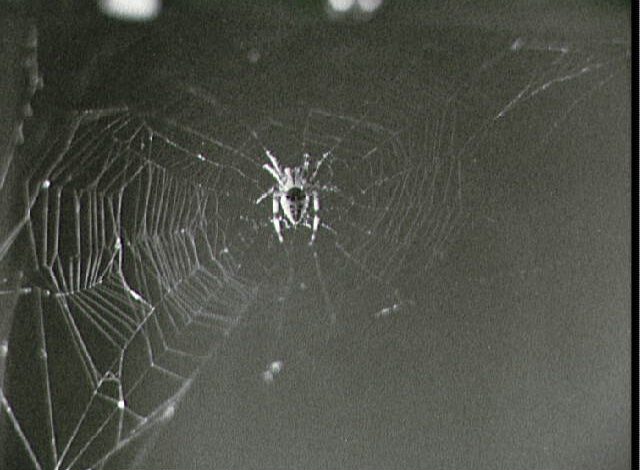
More than 50 years ago, NASA conducted an unusual experiment: two spiders named Arabelle and Anita were sent into space to see if they could spin webs in microgravity. About this informsIFLScience.
The idea belonged to a 17-year-old schoolgirl from Massachusetts, Judith Miles, who submitted a proposal within the framework of NASA’s educational program, which allowed students to conduct their own experiments aboard the American space station “Skylab”. The idea was chosen for implementation as part of the Skylab-3 mission, the second manned expedition that launched on July 28, 1973.
Cross spiders were placed in two small plastic containers. At first, Arabelle struggled to adapt to weightlessness and created only simple, imperfect webs. But already on the second day she started weaving a full-fledged web. Later, Anita was also involved in the experiment. Both arachnids gradually got used to the new conditions and demonstrated the ability to form a web similar in quality to the one they create on Earth, albeit of finer silk.
Although the subjects of the study were spiders, the purpose of the experiment was to study the effects of microgravity on the central nervous system in both animals and humans. As scientists explain, the shape and structure of the web reflects the state of the spider’s nervous system. Under normal conditions, spiders rely on gravity to determine the thickness of the threads and form the web. The absence of gravity became a new stimulus for them, which allowed them to study how the body adapts to an unfamiliar environment.
Usually, spiders on Earth create an asymmetrical web with the center closer to the top – this allows them to descend more quickly on prey. In space, however, the web was almost symmetrical, with a center near the middle. This discovery was made all the more impressive given the speed with which the spiders adapted to weightlessness.
Unfortunately, both arachnids died during the experiment due to dehydration. However, the results of the study were an important step in understanding how a living creature is able to respond to changing environmental conditions — and how the nervous system can adapt to space without gravity.
Фото: assets.iflscience.com