New school in front-line Kharkiv: a chance for children with mental disorders to receive a quality education

In the front-line cities, in particular – Kharkiv, children’s education is becoming a constant challenge – schools are forced to work in dangerous conditions, adapt the schedule and curricula to the restrictions dictated by the situation. However, even in such difficult circumstances, children with mental disorders and behavioral disorders need special attention. For them, regular classes often become an overwhelming test, and inclusive programs are insufficient. In Ukraine, there were no institutions capable of providing the necessary educational environment, due to which a significant part of such students finds themselves outside the full-fledged educational process.
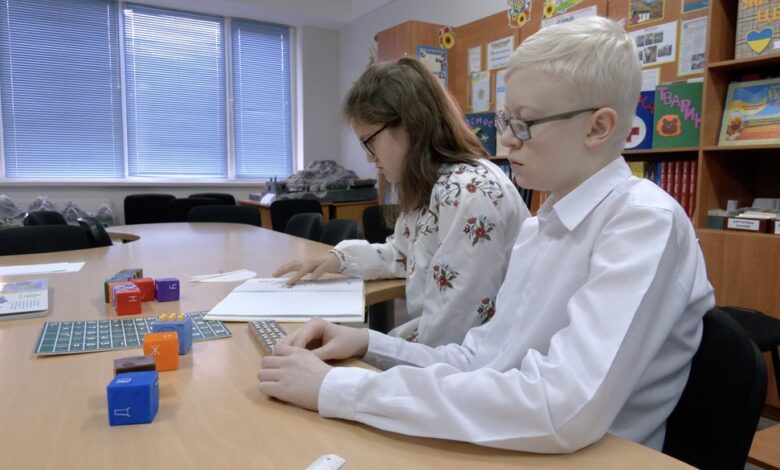
However, the first special school for children with mental disorders and behavioral disorders in Ukraine opened this year in Kharkiv. The institution was founded on the basis of a former sanatorium school for children with psychoneurological diseases, but now has a new status and a new educational mission. This is the answer to the question of time, because the war did not stop children’s diseases, but in some places only exacerbated problems with health and psychological state.
The initiative to create such an institution became possible thanks to changes, proposed by People’s Deputy Pavlo Sushko to the second part of Article 35 of the Law of Ukraine “On Comprehensive General Secondary Education”. After the adoption of these changes, the range of children who can receive special education will significantly expand. The Ministry of Education and Science supported this initiative, recognizing that inclusive education is not suitable for all children with mental disorders, and therefore there must be alternatives.
Previously, such children could attend sanatorium schools, but they were not everywhere. In regions where they were not, families were left without a way out: the child actually dropped out of the educational process, or he was offered a family form of education. The last option often turned out to be only a formal solution to the problem, because it did not allow the child to interact with peers, learn in a team and develop social skills.
The opening of the Kharkiv school is not just an educational project, but a step towards real equality in access to knowledge. Children with special needs will now be able to receive education in conditions that best meet their psychophysiological capabilities. This means not only individual programs, specially prepared teaching staff and corrective and developmental work, but also the right to participate in school life — from holidays and competitions to ordinary daily conversations with peers.
According to Pavlo Sushka, the separation of such a profile also creates a legislative basis for the opening of special classes in ordinary schools. This is important, because not all children with mental disorders need to study in separate institutions – for some, a class with an adapted program and the support of an assistant is enough.
The point of change is to recognize the obvious: all children, without exception, have the right to an education that meets their needs. And if it is necessary to create a special educational environment for this, then it should be created, and not pretend that there is no problem. Kharkiv’s experience can serve as an example for other cities, where children with similar diagnoses are forced either to study at home or to adapt to conditions that do not suit them.
The creation of specialized schools and classes for this category of children is a necessary condition for every child to have real access to quality education and the opportunity to socialize. The educational system is forced to adapt to new conditions, and if for most schoolchildren this means changing the format of classes or the schedule, then for children with chronic diseases or mental disorders the challenges are much more serious. They need not only knowledge, but also a specially created environment that will take into account their special needs, protect them from overloads and help them socialize.
In the conditions of war, when many children are already under stress, the appearance of such an institution in a front-line city is of particular importance. This is a signal to society that even in the most difficult times, the state and the community do not abandon their duty to take care of those who need attention the most. And that no child should be left out of education and social life.