NMT-2026 starts in wartime conditions: graduates were given the right to a second attempt due to danger

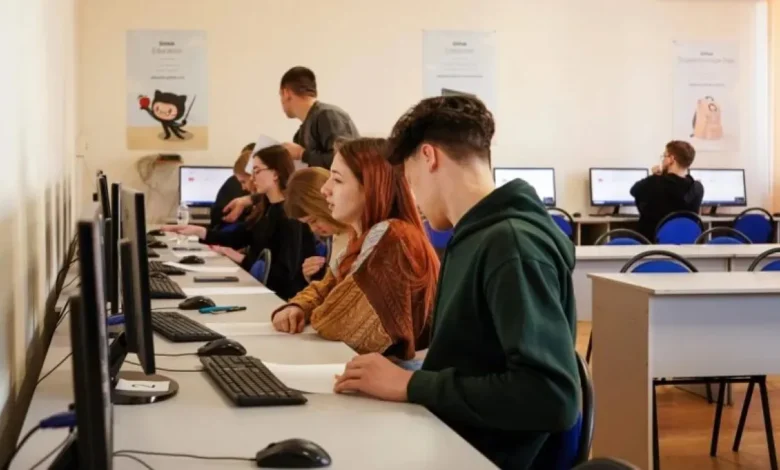
On May 20, Ukrainian graduates begin the main session of the national multi-subject test in conditions in which regular education has long ceased to be stable and predictable. For teenagers who prepared for admission during air raids, night attacks, relocations, distance learning and studying in shelters, the NMT becomes an important stage of the educational path, however, the organizers of the test took into account the circumstances of the war and provided for the possibility of an additional session for those who will not be able to take the exam due to danger or the consequences of shelling.
Beginning of the main session of the NMT
The main session of the NMT will last from May 20 to June 25. For participants who, for good reasons, will not be able to take the test on the specified day, an additional session has been scheduled for the period from July 17 to 24. It is separately emphasized that in cases related to night attacks, prolonged air raids or deterioration of well-being due to the security situation, decisions on admission to an additional session will be made without the requirement to provide additional documents.
The Ukrainian Center for Education Quality Assessment announced that the locations of the NMT in Ukraine will not be published on the websites of the Ukrainian and regional centers, as well as on official pages in social networks. Such a restriction is introduced for security reasons, because during wartime, any information about the place and time of mass stay of people can create an additional threat to participants, teachers and organizers.
Participants are also urged not to disseminate information about where and when they will take the test. For graduates who are used to discussing the entrance campaign in chat rooms, social networks and groups of classmates, this means additional responsibility: even a household publication or a careless message can have undesirable consequences in conditions of constant threat of shelling.
How to act after a night attack or prolonged anxiety
A separate procedure is provided for participants who, due to shelling or air raids, were unable to arrive for testing or did not complete work in the classroom. Andriy Nochkin, Head of the Educational Assessment Administration Department of the Ukrainian Center for Education Quality Assessment, explained that in such situations, the participant has the right to apply for participation in an additional session within three days after the date of the main testing.
If a graduate arrived at the testing point, but due to shelling, prolonged anxiety or deterioration of his psycho-emotional state was unable to start or complete the tasks, he must inform the classroom staff about this and submit an application. Such a mechanism is important for children who, after a sleepless night or being in shelter, may be physically present at the test, but may not be able to concentrate and work at a normal pace.
Another option concerns those participants who, after a night attack or a long-term air raid, did not come to the NMT at all. In this case, they can apply to the regional center for assessing the quality of education with an application for participation in an additional session. For such applications, there is no need to collect certificates or other confirmations, since the organizers recognize the security situation itself as a sufficient reason for considering the application.
Graduates studying under the pressure of war
This year’s NMT is being held for a generation of schoolchildren whose education has been largely shaped by war. Some teenagers were preparing for the test in Ukrainian cities, where lessons were interrupted by alarms, some continued their studies after forced relocation, and for many, distance learning became not a temporary exception, but a long-term way to get an education.
In his address to the participants, the Minister of Education and Science, Oksen Lisovyi, noted that significant tension accumulates around testing every year, which is felt by students, parents, and teachers. At the same time, he emphasized that the NMT remains an important step on the educational path, but it cannot determine a person, their values, or their future once and for all.
Now, children of war are taking the entrance test after years of studying in dangerous conditions, they do so against the backdrop of losses, forced changes, separation from home, unstable schedules, and the constant need to adapt to circumstances beyond their control.
The ability to take the NMT in an additional period in the event of shelling or prolonged alarms has practical significance for the fairness of the entrance campaign. A participant who has not slept due to a night attack, has been in shelter, or has experienced severe stress finds himself in unequal conditions compared to those who had a restful night before testing. That is why the prescribed procedure allows you not to lose your chance of admission due to circumstances that could not be predicted or controlled.
For the organizers of the NMT, this is also an attempt to combine standardized assessment with the reality of wartime. Testing should remain the same according to the rules for everyone, but at the same time, the system cannot ignore situations when an air raid, shelling, or a sharp deterioration in well-being actually deprive the participant of the opportunity to complete the task normally.
Graduates who will take the NMT should carefully check the information in their own offices in advance, not disseminate information about the place and time of testing, and know the procedure for emergency situations. If the danger or consequences of shelling prevented them from passing the test, an application for an additional session must be submitted within three days after the main date.