The forced removal of Ukrainian children from occupied territories has long become a separate dimension of war, in which not only names and addresses but also the child’s vital ties with his family, home and country disappear. In this situation, any confirmed information about the routes of movement, places of detention and people involved in the deportations has the weight of evidence, on which further investigation and the chance of returning those children who were found depend.
What Europol found during the operation in The Hague
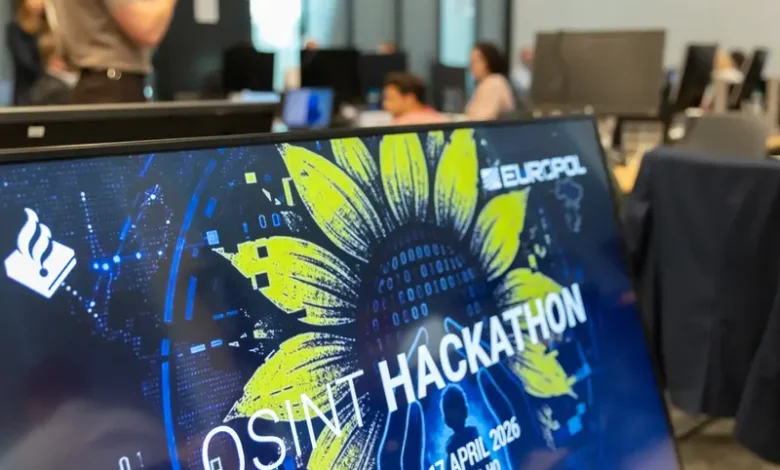
During a coordinated operation that Europol conducted together with partners from the Netherlands, it was possible to identify 45 Ukrainian children who were forcibly transferred or deported to temporarily occupied territories, to Russia and Belarus. The received materials were transferred to the Ukrainian side for use in investigations.
The work took place on April 16–17 in The Hague, where 40 experts from 18 countries joined the joint initiative. Among the participants were representatives of Ukraine, the International Criminal Court, and non-governmental organizations working on the topic of war crimes and the search for deported children.
As part of this work, OSINT experts prepared 45 analytical reports, which collected information about the routes of movement of children, persons involved in their removal, as well as units that participated in the deportations. A separate block of materials concerns the camps and institutions where children were delivered after removal.
The collected documents contain the information that allows us to move further in the legal sphere, since it helps to establish the whereabouts of children and the sequence of actions of those who organized or accompanied the forced removal.
What scale did the Ukrainian side record?
According to the Ukrainian side, the forced transfer or deportation of more than 19,500 children from the temporarily occupied territories to Russia and Belarus has been documented. Some of the children, according to available information, were given up for adoption by Russian citizens, while others are being held in camps or specialized institutions, including psychiatric hospitals.
Against this background, establishing the fate of the 45 children seems to be part of a much larger effort, in which each individual case requires confirmation, documentation, and reconciliation with international and Ukrainian databases.
The reports collected in The Hague record not general circumstances, but specific links in the deportation scheme, through which the child’s path from the occupied territory to the place of detention can be traced. For Ukrainian investigations, such information is important in terms of establishing the perpetrators, organizers, and points through which the forced transfer took place.
The participation of representatives of the International Criminal Court and experts from several countries in this work shows that the search for children and the collection of evidence are unfolding as a joint process, combining open sources, analytics and legal fixation of established facts.
Another direction of pressure on children
Separately, Ukrainian law enforcement officers have recorded an increase in cases when children are tried to be involved in illegal activities through online games and messengers. According to the juvenile police, popular platforms, in particular Roblox, Arma 3 and Discord, are used to establish contact with minors, where the child is gradually forced to trust, offered gifts or winnings, and then sent tasks.
Among the described schemes is the “gamer friend” format, in which a stranger in the chat takes on the role of a mentor, as well as the so-called game quests or courage tests, during which children are asked to take pictures of infrastructure objects or perform minor sabotage actions. Amid reports of deportations, this block appears to be further evidence that Ukrainian children remain targets for various forms of violence, control, and exploitation.