Oksen Lisovyi stated that a trend towards school graduates leaving abroad is being recorded in Ukraine.

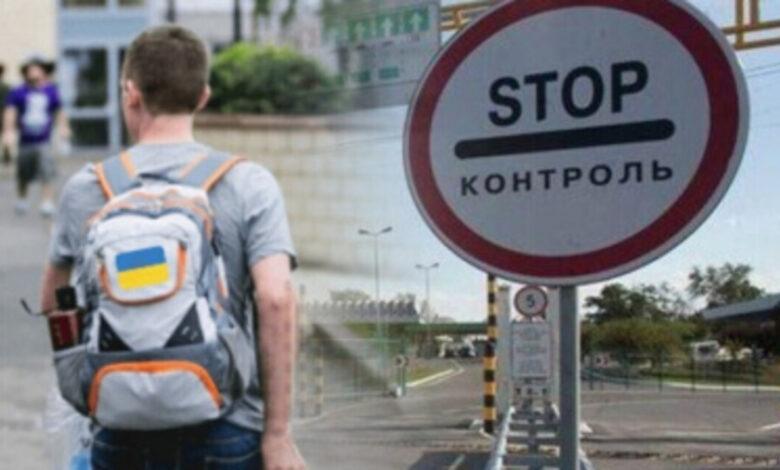
Until recently, finishing school for most Ukrainian teenagers meant entering university, first love, independence and plans for adult life in Ukraine. Today, more and more families are choosing a different path: immediately after the 11th grade, children go abroad. And it’s not just about a better education or an international diploma. The main reason is the desire of parents to protect their children from mobilization and the consequences of war. This process has not yet become an avalanche, but it worries the Ministry of Education and Culture and Ukrainians.
Educational emigration: which is fixed by the state
Minister of Education and Science of Ukraine Oksen Lisovyi said that Ukraine is recording a clear trend: after finishing school, some of the graduates leave the country. At a briefing during the “Education of New Ukraine” event, he clarified that this phenomenon has not yet acquired a mass character, but the trend is stable. According to him, it is connected with the general wave of migration caused by the war.
“I wouldn’t say it’s massive, but the trend is there. It is not mass in fact. Undoubtedly, we have a number of ideas on how to mitigate this negative trend, reducing it to the level of a threat.” said the minister.
In other words, he recognizes the problem, but does not yet have ready mechanisms to overcome it. After all, in the conditions of war, the safety of the child is the main factor that determines the choice of parents.
Lisovyi emphasized that at the moment there is no question of a mass departure of all graduates, but for the government this is already a sign. It is a symptom of larger changes that affect not only the education system, but also the demographic situation, the labor market, and the defense potential. He directly admitted: the root cause of everything is the question of security, and the answer to it is “you know what”.
Here the minister meant the obvious: no educational or migration regulation will work while the war is on. And yet the government is trying to find a solution: preservation of licensed foreign schools at Ukrainian diplomatic institutions, remote forms of admission to Ukrainian higher education institutions, creation of conditions for the return of students.
It is worth reminding that in October 2024, Oxen Lisovyi already declared about the alarming trend of high school students, especially boys, going abroad. During the question hour for the government in the Verkhovna Rada, he expressed concern about the situation where students of grades 10-11, in particular male teenagers, are leaving the country en masse. The reason for this phenomenon, as the minister noted at the time, lies in the conditions of martial law: boys must register for the military from the age of 17, and after reaching the age of 18, travel outside Ukraine is already limited for them.
Lisovyi emphasized that the Ministry of Education and Culture is trying in every possible way to motivate schoolchildren to stay in Ukraine. According to him, the main thing that the state can offer young people is access to high-quality professional, professional pre-higher and higher education, which can convince them not to look for a future abroad. Also, the minister then emphasized that the image of Western education is often romanticized. According to his assessment, higher education institutions that Ukrainians study abroad are not always superior in quality to regional universities in Ukraine.
Almost a year has passed since then, but nothing has changed after Lisovoy’s statements, only another similar statement was made.
Security and mobilization: parental fears
Families, especially those who already have relatives abroad or left with younger children in 2022-2023, are now actively continuing this migration line. Some graduates, receiving a certificate in Ukraine, immediately prepare for admission to foreign universities or prepare documents for secondary education in the EU. One of the reasons is concern about possible mobilization.
Although most boys are not yet eligible for the draft at the time of release, there is a growing sense of uncertainty in the community about changes in the law and future waves of mobilization. Parents who have survived long shelling, evacuations, and losses do not want to test their fate once again, especially because of their children.
This gives rise not only to emigration decisions, but also to strategic distancing from the Ukrainian education system: children are increasingly studying remotely from abroad, taking exams abroad, enrolling in colleges in Poland, the Czech Republic, and Germany, and later in higher educational institutions in other countries.
Today, Ukraine found itself on the verge of a difficult choice. On the one hand, it is the right of every family to provide a child with a safe and dignified life. On the other hand, there is the potential loss of an entire generation that will grow up, get an education, and possibly stay in other countries. It is not only a demographic threat, but also an intellectual loss.
If graduates of Ukrainian schools do not return after studying, the state loses specialists, initiative, and energy. It is these young people, who have experience of European education and integration, who could be the bearers of change in post-war Ukraine. Instead, the country is gradually reducing its human potential.
The problem of the departure of graduates is not solved exclusively within the MES, it lies at the intersection of security, demography, migration policy and trust in the state. Until parents feel stable, until young people have a clear signal about prospects in Ukraine, any plans will remain declarations.
Educational emigration, even if its scale is not critical today, has all the signs of a permanent trend. And the main question that should be asked directly: whether Ukraine will be able not only to maintain contact with its young citizens, but also to return them home after the end of the war.