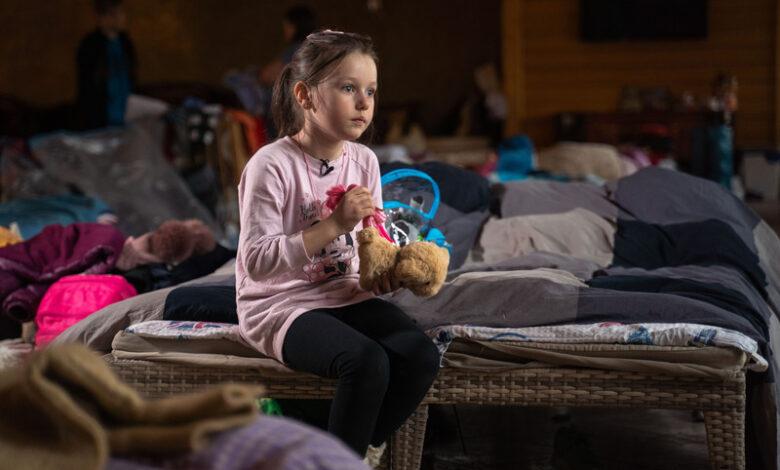
Russia’s full-scale war against Ukraine became not only an act of armed aggression, but also a large-scale humanitarian crime. One of its most tragic pages is the mass deportation of Ukrainian children from the occupied territories — a phenomenon that the UN, the International Criminal Court and leading human rights organizations consider a sign of genocide. Thousands of minor Ukrainians were deported to Russia or are kept in temporarily occupied territories, where they are deliberately isolated from the Ukrainian language, culture, and family roots. Some children are forced to be “adopted” into Russian families, their names, surnames and citizenship are changed. After 2022, this became a systematic practice that contradicts all norms of international humanitarian law.
On June 2, 2025, during the negotiations in Istanbul, this tragedy received a new, significant phase: Russia for the first time actually recognized the fact of the abduction of Ukrainian children. As reported Volodymyr Zelenskyi during an online briefing, the Ukrainian delegation handed over to the Russian side a list of almost 400 children who were identified as deported or illegally removed. In response, the representatives of the Russian Federation offered to “work up to 10 children”, actually disparaging the scale of the tragedy, but confirming the very fact of participation in it.
The president emphasized that although the Russian delegation denied the figure of 20,000 deported children, the recognition of even “hundreds” is key — it is a political fixation of the crime, for which an arrest warrant has already been issued for Putin and the Commissioner for Children’s Rights in the Russian Federation, Maria Lvova-Belova. Zelensky noted that the Russians’ response was accompanied by cynical remarks such as calls to Ukrainians “not to put on a show for childless European grandmothers”, however, what is important for Ukraine is not the emotional subtext, but the very fact that Russia stopped denying the very essence – it really took Ukrainian children away against their will.
“We told them you stole 20,000 and they said we didn’t steal 20,000, hundreds at most. Did our team take offense at that? And I honestly don’t. I think it’s an important confirmation not of the amount, but of the fact that they agree that they stole children… The fact is fixed.” – said the head of state.
Andriy Yermak, the head of the President’s Office, as well emphasized: it is not only about the return of the children, but about the first and key test of Russia’s readiness for real peace. It is this question — not a symbolic one, but a practical one — that determines whether there is even room for further negotiations.
“Today, during the negotiations in Istanbul, the Ukrainian side officially handed over to the Russian side a list of Ukrainian children who must be returned. These are hundreds of children who were illegally deported by Russia, forcibly relocated or kept in the temporarily occupied territories. Back in March, at a meeting in Jeddah, we confirmed readiness for a 30-day ceasefire with a humanitarian component.
The return of Ukrainian children is an integral part of a just and lasting peace and a key element of trust, the first test of sincerity of intentions. We are waiting for an answer. The ball is on Russia’s court. True good faith is not words, but actions. And now is the time to prove it.” Yermak said.
We will remind, according to the official data of the Commissioner for Human Rights of the Verkhovna Rada, Dmytro Lubinets, since the beginning of the full-scale invasion, Russia has deported more than 19,500 children from Ukraine. Most of them still remain unreachable for Ukrainian institutions. Only about a thousand were returned — through international mediation mechanisms, neutral countries, the Red Cross, or thanks to the personal efforts of families.
All this is happening against the background of Ukraine’s systematic efforts to record every case of illegal displacement, establish the identities of the affected children, and prepare legislative initiatives to bring the perpetrators to justice. In particular, the Verkhovna Rada has already adopted a draft law in the first reading, which provides for criminal liability for the abduction, forced transfer and use of children for military or propaganda purposes by representatives of a foreign state.
These actions are not only legal, but also moral obligations of the state to its citizens. Deported children are not only human destinies, it is an enemy’s attempt to destroy the nation’s future. A war against children is a war against the very concept of the Ukrainian people. That is why the issue of the return of every child is not one of the areas of diplomacy, but the core of the struggle for justice.
Russia, recognizing the individual facts of the displacement of children, is trying to reduce the scale and distort the context. But in each case – real children who were torn from their homes, forced to live in a foreign environment, sometimes – without any information about their own family. Their return is not a matter of goodwill, but an obligation under international law. And until that happens, talks about any truce or peace agreement remain purely formal.
The Ukrainian position is clear: there can be no peace without justice, and there can be no justice without the return of all abducted children. Every meeting, every diplomatic initiative, every pressure of the international community should be aimed at exactly this — restoring the connection of children with their families, returning to security, breaking with forced Russification. At the same time, work continues not only on the diplomatic front, but also on the evidentiary front – international investigators, human rights organizations, the UN, the International Criminal Court and independent initiatives continue to collect evidence, testimony and document every crime.