Oleksandr Klymenko spoke about the pressure on anti-corruption bodies, the Mindich case and the limits of what is possible for the SAPO

The Ukrainian anti-corruption system has found itself in a situation where the main obstacle is both the complexity of the cases themselves and the environment in which they are investigated. Information leaks, conflicts between law enforcement agencies, weak preventive measures, protracted examinations and procedural loopholes add up to one big problem, which allows suspects to leave the country, disrupts investigative actions, and wastes time in proceedings where speed is of the essence.
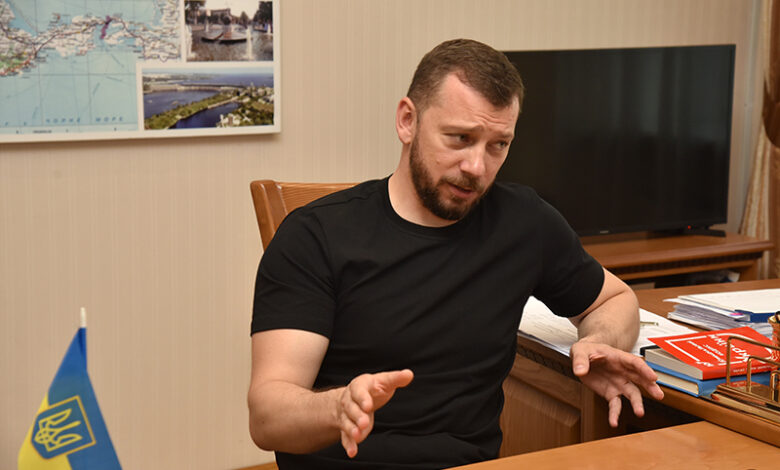
Against the backdrop of high-profile anti-corruption proceedings, international inquiries, suspects fleeing abroad, and long-standing disputes over the independence of the investigation, the head of the Specialized Anti-Corruption Prosecutor’s Office, Oleksandr Klymenko, spoke about the conditions in which the NABU and SAPO operate and where, in his opinion, the system fails.
What’s happening in the “Midas” case
Speaking about the most high-profile anti-corruption operation of recent times, Klymenko separates the investigation from any interim assessments and explains at what stage the proceedings are.
“We cannot talk about interim results. However, the key thing is that the investigation has entered the public stage. That is, in fact, we have informed a number of people of our suspicions and are continuing the investigation and collection of evidence,” Klymenko noted.
According to him, during the covert phase, detectives and prosecutors were limited in the tools without which it is impossible to move forward in complex financial cases:
“Before that, we could not apply all the mechanisms, due to the fact that the operation was carried out covertly. We could not request any documentation from Energoatom or banking institutions, or receive information about the movement of phones.”
Describing the further course of the case, Klymenko emphasizes that after the transition to the public stage, another stage of work began, related to the collection of documents, international inquiries, and the analysis of a large array of financial transactions. In this part he notes:
“Currently, this process is underway, and we have sent a huge number of requests for international legal assistance to other jurisdictions. And for now, we cannot provide more details. As we said at the beginning, the case is quite complex, with a huge number of financial transactions. And it will take, I think, the maximum time provided for by law – up to 12 months.”
Why there is no answer in the case regarding Yermak
Commenting on why the former head of the President’s Office Andriy Yermak has not yet received suspicion, Klymenko does not confirm his appearance among the established persons involved in the recordings and does not make any announcements regarding future procedural decisions:
“I cannot confirm that he appeared on the so-called “Mindich tapes”. We do not announce any suspicions or other procedural decisions in these proceedings.”
He addressed the topic of recordings with pseudonyms reveals more broadly, explaining that the investigation materials contain a large number of pseudonyms, and this applies to both the criminal organization itself and the internal investigation equipment.
“In the materials that we have seized, and in the thousands of hours of recordings that we are still processing, we see a huge number of people with certain pseudonyms. And this is the most criminal organization – more than a hundred people to whom they assigned pseudonyms, who used the services of these so-called back offices, “washing stations”, etc.,” – Klymenko emphasized.
He explains that the pseudonyms within the case have a dual origin, which is why public interpretations of individual names do not provide grounds for final conclusions:
“During the planning of these operations and the opening of a case against a specific person involved, we also assign pseudonyms. Therefore, there are lists of pseudonyms that the criminal organization itself gives to its persons involved, and there are pseudonyms that we assign to each of the persons involved. So there is indeed a person involved in the case, “Surgeon”, and “Surgical Department”, and “Tennis Player”, many, many different pseudonyms. But we have not identified 100 percent of all the persons, and we cannot yet say where a specific person is.”
Has the work of the SAPO changed after the personnel changes in the Office of the President
Explaining whether it became easier to work after Yermak left his post, the head of the SAPO does not link the effectiveness of the work of anti-corruption bodies with his presence or absence in the Office of the President. At the same time, he admits that the general atmosphere after the summer crisis remained difficult:
“Our work did not depend on his being in office or not. But if we talk about whether our work has changed since the so-called summer crisis, it has not changed. We are still working under constant pressure in some incomprehensible situation. Perhaps the tension itself has subsided a little, but overall the situation remains quite difficult.”
How Klymenko describes the pressure from the SBU
Oleksandr Klymenko spoke about the opposition that the SAPO and NABU face from the Security Service of Ukraine. He describes this as systemic resistance from part of the law enforcement system and emphasizes that the leadership in this counteraction is held by the SBU:
“First of all, we feel a kind of resistance from the system in general. First of all, these are law enforcement agencies, and the leadership here is held by the Security Service of Ukraine, which constantly hinders our work with its actions.”
As an example, he cites an episode in the Sumy region, where, according to him, the actions of the SBU disrupted the implementation of the proceedings:
“The latest case is the detention of a Bureau detective during the implementation of the proceedings in the Sumy region. This disrupted our operation, because a larger number of people were planned to be detained, but everything went wrong, there was a leak, the defendants were warned after the transfer of funds that the NABU was working.”
Commenting on the story with the discovered wiretapping of one of the NABU detectives, he speaks more cautiously, not stating about similar episodes in the SAPO, but also without ruling out such a possibility.
“We have not found it, but we do not exclude that it could be somewhere. Because this situation was with NABU, with the head of one of the units, which, by the way, is responsible for investigating crimes in the defense sector and in relation to the Security Service of Ukraine as well,” – Klymenko said.
Explaining why the SBU, in his opinion, acts against anti-corruption agencies, Klymenko does not hide that he finds such logic difficult to understand:
“I do not understand this approach to work. In fact, we should fight together, because the key task of the NABU and the SAPO is to counteract corruption crimes that threaten national security. The SBU should be interested in us exposing these crimes. But in reality we see a completely opposite system.”
To illustrate, he cites a story with an employee of the Bureau who dealt with customs affairs, and whose phone, according to him, was tapped by the SBU. Continuing this topic, he states:
“We even have a story when the SBU tapped the phone of a Bureau employee who was investigating a case involving customs, and passed information about what he was doing, where he was, and who he was monitoring to customs officers. The operation failed. And we documented these correspondences between SBU officers and customs officers. This is evidence of systematic opposition to our work on their part. I don’t understand why they do this.”
Why do suspects manage to leave the country
Turning to the topic of the suspects’ escapes, Klymenko does not categorically state that a specific leak of information has already been established in the case with Timur Mindich. On this subject, he says:
“We are not 100% sure that there was a leak – and he left. We are still investigating in this direction.”
At the same time, he admits that leaks within the SAPO have occurred, and in some cases the sources have been found:
“Were there leaks in the SAPO? Yes, there were. A number of official and criminal investigations were conducted, in some cases we identified sources, brought people to justice.”
Describing how the defendants in the cases are allowed to leave the country at all, the head of the SAPO focuses on preventive measures that must be regularly extended in court:
“The key is the preventive measure. Every two months we have to extend the person’s obligation, for example, not to leave the territory of Ukraine or to hand over their passports for safekeeping. In some cases, suspects ask the court for permission to travel abroad, so that returned their passports, they find some reasons. And very often the court goes to them, because bail was posted. But in most cases the courts assign rather weak preventive measures”.
Free access to the register of court decisions is also harmful. As soon as we apply to the court with some kind of petition – someone already writes in the media that NABU and SAPO are conducting such and such an investigation, such and such people appear. And these people leave ahead of time, and we report suspicion to a person who is already abroad. This is an extremely huge problem for us. We have initiated many times that information about ongoing investigations be more protected in the register of court decisions”.
At the same time, he explains the difference between the situation with Mindich and Herman Galushchenko as follows:
“At the time of the detention of the ex-minister, the proceedings were already in the open stage and everyone knew about the possible involvement of this person – it was easier. Plus, we have already asked the border guard service to inform NABU in case of a certain group of people crossing the border.”
Explaining how extradition requests are prepared, Klymenko emphasizes confidentiality as a key condition. Otherwise, according to him, the procedure itself loses its meaning.
“Sending extradition requests should also be confidential, because the key task is for this request to find the person in the territory of the country to which it is sent. If you say: we sent it two weeks ago and are waiting for it to be sent, then the person can already move to another country, and there is no point in sending such requests.
Was there any delay in signing? In my opinion, there was no delay – because the volume of the request itself and the annexes to it is huge. The first time was sent at the end of February, many shortcomings were identified there, which were eliminated in a working order, a large number of materials were translated, and after that it was submitted to the Prosecutor General for signature, he signed it and sent it to this country,” – said Klymenko.
In international investigations, according to the head of the SAPO, Ukrainian anti-corruption bodies have quite clearly defined boundaries. Investigative actions in the territory of other states are possible only within a joint group with local law enforcement officers or through the execution of instructions by a foreign party, while Ukrainian representatives in such procedures play the role of observers and cannot interfere in the course of the process.
Cases against people’s deputies
Olexander Klymenko cites data according to which 41 people’s deputies currently have the status of suspects or accused in cases NABU and SAPO. Despite this, he sees no reason to say that such a number of proceedings blocks the work of the parliament, and recalls that even after reporting suspicion or referring the case to court, the deputy retains the opportunity to attend meetings and vote until the verdict comes into force.
According to him, no current MP is currently in custody in NABU and SAPO cases. At the same time, several deputies have already lost their mandates after the convictions came into force, and some of these decisions are being reviewed on appeal.
Responding to accusations of persecution of deputies for voting, the head of the SAPO emphasizes that the claims of the anti-corruption bodies relate to completely different actions. According to him, we are talking about receiving funds for voting, illegal enrichment, undeclaration, receiving or giving bribes.
Explaining the effectiveness of anti-corruption investigations, Klymenko recalls that in 2025, the SAPO and NABU sent 124 indictments to the court. If we take the entire period of the SAPO’s existence from the end of 2015, then, according to him, there are already more than 300 convictions, and more than 450 people have received various types of punishment.
At the same time, he draws attention to the presence of acquittals, which, in his opinion, indicates an adversarial process and that cases are considered by independent courts that make decisions based on the persuasiveness of the parties’ positions:
“Of course, we also have acquittals, which is evidence that there really is adversarial process, that independent courts consider these cases, and whoever has a more convincing position, and the court will agree to whose position – that will be the decision”.
Lozovoy’s edits, lawyers’ bot and the risk of closing cases
Among the key problems that, according to the head of the SAPO, undermine the effectiveness of investigations, he names the vulnerability of procedural mechanisms. As an example, he gives a story in which a group of lawyers created a bot with a built-in key of one of the judges of the district court of Kyiv. Such a system, according to him, constantly searched for specific decisions and sent them to the lawyers’ phones before the detective had time to physically get the document in his hands.
Klymenko claims that anti-corruption proceedings are monitored by employees of the State Security Service, the Security Service of Ukraine and prosecutors of the Office the Prosecutor General, which makes the problem of protecting investigative mechanisms go far beyond individual episodes.
Separately, he again returns to the so-called “Lozovoy amendments”, which, in his opinion, make it possible to close cases due to procedural gaps without examining the evidence and without establishing the involvement of individuals. According to Klymenko, different judges interpret the terms of the pre-trial investigation differently, which is why some of the old cases that have been in the courts since 2017, 2018 and 2019 still remain under threat of closure.
As an illustration, he recalls the episode in the fall of 2025, when a prosecutor from the Prosecutor General’s Office was detained with a suitcase of money, because, according to the investigation, he promised to help close the case due to the expiration of the terms. Assessment of the head of the SAPO in in this case, it sounds unequivocally: “Such mechanisms cannot exist in a state governed by law.”
A separate block of the interview concerns technical and procedural mechanisms through which the investigation may lose its advantage even before entering the public phase. The most striking example that Klymenko gives is related to a bot created by lawyers to track court decisions. He describes it as follows: “We have a specific example when a number of lawyers created a corresponding bot, into which they inserted the key of one of the judges of the district court of Kyiv, who constantly searched for specific court decisions and already there directed them specifically to the lawyer’s phones. In fact, the lawyers received a decision that we were planning to conduct a search even before the detective physically received this decision in his hands. Of course, in these cases we would never have succeeded. Therefore, it is not that we lack something, we simply need to protect the mechanism.”
Why the SAPO insists on creating an independent expert institution
Another bottleneck that Klymenko emphasizes concerns expert examinations. He speaks of the need for an independent expert institution that would not be connected to either NABU or SAPO, but could conduct expert examinations in cases under investigation by anti-corruption bodies, and both the investigation, prosecutors, and the defense would have the right to contact it.
He explains the problem with the example of the Shulyavsky Bridge case, where, according to him, the conclusion of the expert examination has been awaited for about seven years. With such deadlines, the head of the SAPO believes, an effective investigation of corruption cases crimes becomes practically unattainable, especially in view of the future reconstruction of the country, which requires rapid and professional construction and technical expertise.
“We are constantly initiating the creation of such an institution. It should have no relation to NABU or SAPO – it should be a completely independent expert institution that conducts expertise in cases under investigation by NABU. But both the detective, the prosecutor, and the defense will have the right to apply to it,” – Klymenko noted.
He most clearly illustrates this problem with the example of the Shulyavsky Bridge case:
“We have a question about the Shulyavsky Bridge case (…) for seven years, apparently, we have been waiting for this expertise: so after all, what is the amount of damage there, is there any at all or not? If it continues for such long periods, it will be impossible to be successful in investigating corruption crimes and protect the funds that will flow to Ukraine for reconstruction.”
International schemes and money return
Commenting on the international dimension of anti-corruption cases, Klymenko describes the SAP’s tools as standard for criminal proceedings, but also draws attention to specific results:
“Standard, provided for by criminal procedural legislation, opportunities to apply for international legal assistance and investigations as part of joint investigation teams. Last year we had a good result in the case of “Polygraph Plant “Ukraine” (…) – we managed to return 3.7 million euros, which the French company actually earned on this scheme, which was organized by the former manager”.
After that, he moves on to assessing cooperation with the Financial Monitoring Service and says that recently he has not seen the results from it that were before:
“Previously, we had many successful cases with the Financial Monitoring Service – they identified and blocked funds abroad, after which we imposed an arrest on them. Now I do not see such cases. We do not have any adequate cooperation at all. There may be an answer “in the works” and that’s it. Either the persons involved in the proceedings have become more intelligent and resourceful, who have time to calculate all this, or the Financial Monitoring Service has started to work worse”.
Assessment of the situation with corruption in the country
Klymenko says that extensive research is needed to accurately assess the scale of corruption, but the available data from the NACP shows a decrease in the proportion of people who directly encounter corruption. At the same time, he draws attention to another indicator: more and more people consider corruption to be one of the main threats to the country, even more important than war.
From this, he concludes that public perception of the problem has changed, because, according to him, people increasingly clearly understand the connection between corruption and national security. He does not guarantee a complete victory over corruption, but believes that, provided that consistent work and the inevitability of punishment in top corruption are achieved, a tangible result is possible in the fairly near future:
“It may be impossible to completely overcome it. But if we do it clearly, step by step, and ensure the inevitability of punishment for every crime that will be revealed in top corruption, then I think it is possible. And it is possible in such a fairly short time. You don’t have to wait 10 years.”