Drone warfare and “smart mobilization”: Valery Zaluzhny spoke about the new doctrine of state sustainability

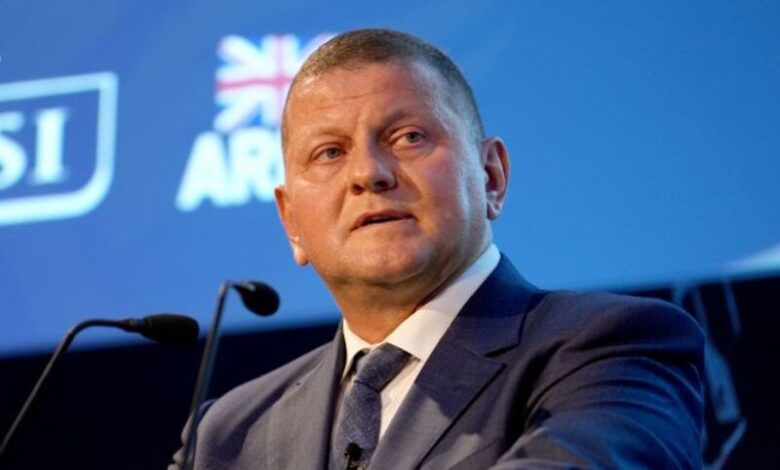
Full-scale war has changed the perception of the front, rear, mobilization and the role of technology in combat. In his speech at the Defence24 Days conference in Warsaw, the Ukrainian Ambassador to the UK and former Commander-in-Chief of the Armed Forces of Ukraine, Valeriy Zaluzhny, outlined an approach according to which the ability of a state to fight depends on a combination of human resources, technological superiority, reserve training, fair rules of service and a new military doctrine that must correspond to the reality of drone warfare, robotic systems and strikes throughout the territory of the country. He emphasized “smart mobilization” as part of a new doctrine of state resilience.
On the tension around mobilization
Valery Zaluzhny recalled that back in November 2023 he warned about the emergence of a qualitatively different war, in which unmanned systems have made the battlefield almost transparent. According to him, this transparency has created an operational deadlock, since traditional approaches no longer allow for the implementation of strategic and operational tasks without significant losses.
Explaining the consequences of such a breakdown, he emphasized that Russia tried to get out of this state through new tactical solutions, but in a war of technologies, old methods only turn people into a resource for depletion.
“In a war of machines, people can achieve minor success according to the old principles of operational art. However, people in this way become expendable material, which, of course, needs to be replenished,” Zaluzhny said.
This phrase became one of the key ones in the speech, because through it Zaluzhny explained the main problem of the old mobilization logic: if the army fights using the methods of past eras, then additional human resources do not solve the problem of the enemy’s technological advantage, but only increase the cost of each advance.
Zaluzhny linked the tension around mobilization to Russia’s actions in the information space. According to him, the enemy accompanied the pressure on the front with a campaign aimed at discrediting the mobilization process in Ukraine. Because of this, the issue of recruiting troops is increasingly becoming a source of conflict between society and state institutions. He noted that such a campaign intensified in late summer 2023, when Ukraine tried to mobilize a reserve that was supposed to help compensate for losses and create a basis for future operations.
Valery Zaluzhny does not present mobilization as a separate administrative procedure; in his presentation, it is part of a broader process of restoring and maintaining the state’s combat capability during a long war, the end of which remains uncertain:
“Therefore, the topic of our conversation today is not even mobilization and demobilization, but a more complex process that is characteristic of the 13th year of the war and the fifth year of a full-scale invasion in the absence of a fact of the end of the war, large-scale changes in instruments and, as a result, the forms and methods of waging war. This is the restoration and maintenance of the state’s combat capability.”
Valery Zaluzhny explained that mobilization has historically been a way of creating potential before war, preparing reserves and replenishing losses during hostilities. At the same time, in modern warfare, combat capabilities depend not only on the number of people, but also on the development of weapons, technical progress, organizational structures and methods of using new systems.
According to his logic, the emergence of new weapons forces a change in the forms of their use, after which military structures, training, management, financing and doctrine must change. Without such consistency, the state risks responding to the drone war with the methods of the First World War.
Describing the new reality, Zaluzhny emphasized that the front line no longer requires a mass presence of people, as was the case in the wars of the last century. Instead, a limited number of military personnel work there, who often perform tasks at the limit of their capabilities and do not always have the physical ability to be replaced.
“Today, there is a very limited number of personnel there, who perform tasks at the limit of their capabilities, often without the physical ability to even be replaced. Because staying in cover even behind enemy lines is safer than moving to the rear of your own troops,” Zaluzhny believes.
According to him, under this model, other elements of war are shifted inland: analysts, technical groups, combat systems support units and security work in the second echelon, while launch, coordination and control centers are located in operational depth.
Zaluzhny separately emphasized that modern warfare is blurring the line between the front and the rear. Russian strikes on infrastructure, civilian objects and the economy make the entire country a combat zone, and therefore the resilience system must cover not only the army, but also society, critical objects, industry and the state’s ability to function under attack.
“Due to the shift of strategic goals to the destruction of the economy, due to the destruction of infrastructure and the reduction of the resilience of the people due to strikes on civilian objects, there is actually a complete blurring of the lines between the front and the rear; the entire territory of the state and, unfortunately, the entire population becomes a combat zone,” the ambassador noted.
In this context, the old mobilization system, according to Zaluzhny, transfers human resources to the zone of greatest threat, while weakening the protection of critical and civilian facilities and the overall resilience of society.
One of the most acute parts of the speech concerned the idea that all problems on the front line are explained by a lack of people. Zaluzhny believes this approach is erroneous, since the dominance of remote weapons, in particular FPV drones, makes a massive increase in personnel dangerous without changing the very logic of combat operations.
He explained that an increase in the number of people can lead to increased losses if the enemy or your own troops scale up the use of drones. He formulated this idea most sharply by comparing traditional weapons with tools of past eras:
“Until the general commander understands that modern war is a war of drones, that artillery is no longer the god of war. That tanks are a thing of the past, like horses and sabers, the troops will continue to suffer heavy losses in personnel, and the war will last as long as there are enough people for the old mobilization.”
This quote directly explains why Zaluzhny insists on a new doctrine. In his vision, the problem is not in one law or a separate decision on conscription, but in the fact that the system must move from the old mass model to a technological one, where human life is protected by new means of destruction, management, training and defense production.
What does “smart mobilization” mean?
Zaluzhny used the concept of “smart mobilization” to describe a system that takes into account technological warfare, the duration of hostilities, the fatigue of society, the demographic crisis and the need for clear rules of service. This approach does not involve a mechanical increase in the number of mobilized, but a combination of training, rotations, reserves, industry, motivation and new structures of the army.
He outlined three possible models of “smart mobilization,” which should take into account the technological nature of war, demographic constraints, social fatigue, and the need for clear rules of service. The first approach assumes that the majority of the population continues to live without a constant sense of war, while some military functions can gradually be performed by private structures or volunteers attracted by financial motivation.
The second approach is based on nationwide mobilization with clearly defined volumes, terms of training, service, and rotations. In such a system, according to Zaluzhny, the quality of personnel, intellectual preparation, and openness of the process become important, and the state gradually moves to a model of constant readiness similar to the Israeli one.
The third approach could be temporary: some functions are transferred to private companies, while the state at the same time has an open conversation with society, especially with young people, about the terms of training, service, and further prospects.
Zaluzhny stressed that without reform of the Armed Forces of Ukraine, the training system, the defense industry and a new doctrine, such a model will not work. Demobilization, according to his logic, is possible only as a result of the changes that have already been made, and not as a political slogan.
Without which the new approach will not work
Zaluzhny stressed that “smart mobilization” is impossible without deeper changes. This concerns the reform of the Armed Forces, the system of training the mobilization reserve, combat training, the defense industry and the transition to the production of weapons that reduce casualties.
“However, the most important thing is that without reforming the Armed Forces, the system of training the mobilization reserve and the entire system of combat training, without a radical reform of the military-industrial complex and an urgent transition to the production of weapons necessary to reduce casualties, such a smart approach will be impossible. A completely new smart doctrine is needed,” the ambassador believes.
This part of the speech explains why Zaluzhny considers mobilization as part of the military architecture of the state. According to his logic, without changing the training, weapons, production and organization of the army, the new rules of conscription will not give the desired result.
Regarding demobilization
Zaluzhny made the issue of demobilization dependent on previously implemented changes. In his presentation, it can become possible only after the creation of a system that ensures the preparation of replacements, rotation, reserves and maintenance of combat readiness during the war.
He sharply assessed the calls for demobilization without answering the question of who and how should replace the military at the front in the conditions of war with an enemy that surpasses Ukraine in population and resources:
“Currently, Ukraine is waging a war for survival with an enemy that surpasses Ukraine in population and resources. Therefore, in the current Ukrainian realities, all calls to demobilize the military are nothing more than political populism that makes no sense.”
He also emphasized that mobilization and the order of service are the basis for any scenario for continuing the war. Without resolving these issues, in his opinion, it is impossible to move on to more ambitious goals.
“The events that are developing now have made it obvious that mobilization and the order of service are the basis for any option for further continuation of the war,” – Zaluzhny emphasized.
In addition, he described mobilization as part of a much broader task – maintaining the state’s combat capability in the conditions of a long technological war. His key idea is that Ukraine must change not only the rules for recruiting people to the army, but the entire system of training, rotations, reserves, military production and the use of new means of destruction.
In his speech, Valeriy Zaluzhny consistently showed that drone warfare reduces the effectiveness of old approaches, makes mass presence of people on the front line extremely dangerous, and requires a doctrine in which technology helps to preserve human resources. That is why “smart mobilization” in his vision should be based on open rules, clear terms of service, high-quality training, defense production, and honest dialogue between the state and society.