Other people’s mistakes are our rake: why the experience of mass migration in Europe could be a disaster for Ukraine

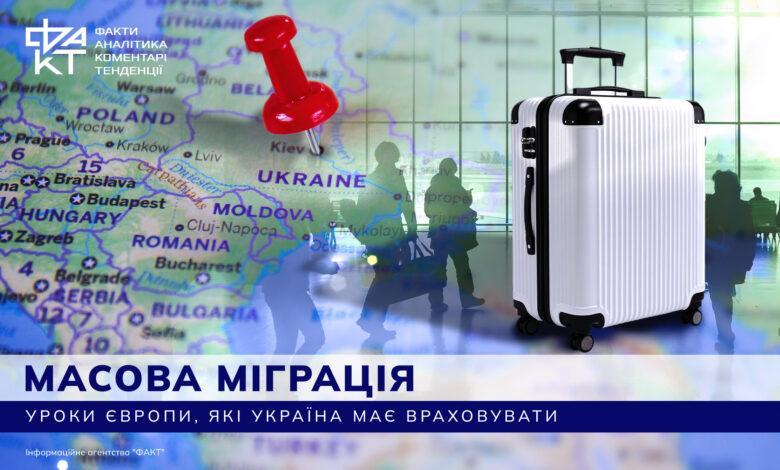
When politicians cautiously hint that Ukraine will be saved by a few million migrants after the war, it is worth remembering how expensive the same “rescue recipe” cost many European countries. In Germany – the growth of the far-right electorate, in Sweden – ghettos and explosions in “peaceful” suburbs, and in France – burned cars in the center of Paris. The mass migration hoped for by European governments has upset the political balance, undermined social systems and exacerbated identity crises. What was first sold as an economic “upgrade” turned into a political boomerang.
Ukraine is on the verge of demographic collapse, but does this mean that we should mindlessly repeat European mistakes? Are we ready to live in a state where, instead of a grown and restored nation, there will be a scattered population with incompatible values, languages and lifestyles?
The Invisible Crack: How Labor Migration Changed Western Europe Forever
The beginning of mass migration to Europe is not a phenomenon of the 21st century, it acquired a systemic character in the second half of the 20th century, laying the foundation for the modern migration map of the continent. The first large-scale stage was the post-war labor migration of the 1950s–1970s, when developed European states, in particular Germany, France, Great Britain, and the Netherlands, needed labor to restore the economy. It was then that people from Turkey, Morocco, Algeria, Tunisia, Pakistan, India and Yugoslavia began to arrive en masse. This decision was based on a pragmatic approach: cheap labor was needed for economies that were rapidly recovering from the Second World War. Migration was considered a temporary phenomenon and government officials were convinced that foreign workers would return to their homeland after completing their task. However, everything turned out differently: migrants stayed, transported their families, settled in a new place.
In Germany, since 1955, the program of “guest workers” – temporary workers who were officially invited to factories and construction sites – began to operate. By 1973, millions of people came to the country under this scheme, primarily from Turkey and Southern Europe. France, which has maintained close ties with North Africa since decolonization, has also actively welcomed migrants as a labor force, as well as part of its historical responsibility to its former colonies. This was not an escape from war, but a contractual process between states: one side had a surplus of population and unemployment, the other a shortage of hands. However, even then, the first debates about integration, culture, language, identity began in Europe – topics that only intensified later.
Later, in the 1990s, a new wave moved to Europe – political refugees and economic migrants from the destroyed post-Soviet countries, from the Balkans, and from the beginning of the 2000s – from the Middle East and Africa. But it all started when Europe first opened its doors, not as a gesture of mercy, but as part of an economic strategy.
In those days, temporary residence was replaced by permanent residence, while the flow of new arrivals did not weaken, but on the contrary only increased. Discussion of this trend at the political level was taboo: even an attempt to raise questions about the long-term consequences of migration could cost a politician a career and provoke accusations of xenophobia. At the same time, the idea of multiculturalism was established in the public discourse, which became the ideological foundation for an even more liberal migration policy.
The political elites of many countries, regardless of the concerns of their own citizens, chose a course to open borders to people from other cultures, religious traditions and social models, and this was considered a symbol of humanism and progress. The apologists of the multicultural approach talked about the exchange of ideas, the enrichment of cultures, as well as the economic benefit: they say that it is migrants who keep construction, the care sector, and logistics afloat. At the same time, the arguments of defenders of open borders were not limited to the economy, they also referred to socio-demographic challenges: Western Europe is aging, the birth rate is falling. They argued that without replenishment of the young labor force, Europe is facing decline, but the real picture turned out to be much more complicated.
Mass migration quickly turned from a temporary economic solution into a profound transformation of the social landscape. What initially appeared to be purely labor mobility eventually led to permanent demographic shifts, the emergence of new minorities, disputes over national identity, and challenges to integration policies. The first generations of migrants often returned home after a few years of work, but a significant number stayed. New diasporas were emerging – Turkish in Germany, Algerian in France, Pakistani in Great Britain. Whole districts in cities became ethnically homogeneous, with their own cultural and religious infrastructure. As a result, Europe, which considered itself monocultural, suddenly found polyphony in schools, markets, and transportation.
This process also had positive consequences: migrants became a pillar of industry, transport, health care, and construction. They compensated for demographic aging and supported pension systems. However, social tensions arose at the same time, as integration policies were often delayed or ignored. Migrants lived in isolation, faced discrimination, and European society faced xenophobia, misunderstanding and fear. In the 1980s and 1990s, this began to manifest itself in the form of a political backlash: the rise of the far right, protests against multiculturalism, explosions over religious symbolism, disputes over school curricula and free speech. Some countries, for example, France or the Netherlands, entered into a protracted discussion about the limits of tolerance and the concept of “national unity”.
In addition, one of the most acute topics became the issue of crime. In European countries, especially in Western Europe, an increase in the level of crime was recorded in areas with a large concentration of migrants. This concerned primarily petty theft, street violence, youth gangs, drug trafficking and the illegal labor market. Such cases were visible, for example, in the suburbs of Paris, Marseille, Lyon, some quarters of Berlin, Cologne and Essen. However, the reasons for this phenomenon were much more complicated than the mere appearance of people of a different origin. Many migrants were placed in remote areas, often in a socially depressed environment, without access to quality education, stable work and full integration. In such conditions, the children and grandchildren of labor migrants grew up in an atmosphere of social alienation, inequality and lack of prospects. This gave rise to internal confrontation, despair, and sometimes radicalization.
Against this background, right-wing political movements grew, which began to publicly link crime to nationality or religion, even though official statistics indicated that the level of criminal offenses depended more on socio-economic conditions than on a person’s origin. However, the media rarely focused on the stories of migrants who worked, studied, started businesses or became part of civil society. They talked mainly about conflicts, incidents and the ghetto.
Thus, mass migration caused an increase in social tension and crime in certain regions. But this was not a direct consequence of the arrival of people from other countries, but the result of failed state policy, ignoring integration mechanisms and the inability to build a system of fair opportunities for all. Mass migration changed Europe forever in a slow, multi-layered shift for which political systems were not always prepared.
The current state of affairs with migrants in Europe
The migration policy of the past decades has brought tangible results in modern life. According to Eurostat data, on January 1, 2024, 44.7 million people who were born outside the EU lived in the European Union. This is 9.9% of the total population — 449.3 million. There are 16.9 million such people in Germany, 9.3 million in France, 8.8 million in Spain, and 6.7 million in Italy. These four countries collectively account for more than two-thirds of all foreigners living within the European Union.
The ratio of the share of migrants in the population structure is also impressive. In Luxembourg, 51% of residents were born outside the country. In Malta — 30.8%, in Cyprus — 26.9%, in Ireland — 22.6%, in Austria — 22.1%, in Sweden — 20.6%, in Germany — 20.2%. This means that in some capitals – such as Brussels or Vienna – the native inhabitants are gradually turning into a minority. On the other hand, the situation in Eastern Europe is different: in Poland, the share of foreigners is only 2.6%, in Romania – 3.1%, in Bulgaria – 3.3%, in Slovakia – 3.9%. This can be explained both by historical reasons and by modern policies that are more cautious about cultural fusion. The external manifestations of this demographic transformation are becoming more and more obvious. In many cities of Western Europe, the linguistic and religious structure of school classes, neighborhoods, and administrative institutions is changing. You can observe how in some areas of Paris, Brussels or Cologne, the dominant language is not French, Flemish or German, but Arabic or Turkish.
It should be noted that for decades migrants were called economic support, but these expectations were not fulfilled. If mass immigration were indeed a powerful catalyst for economic growth, Western Europe should be showing a steady rise in GDP, new industrialization, and investment inflows. In reality, Europe has been showing the lowest growth rates among the world’s leading regions in recent years. It is increasingly inferior to the USA, China, and the countries of Southeast Asia.
As the facts show, instead of the promised economic miracle, Western Europe faced an economic impasse. At the same time, in 2024, the situation reached such a critical point that even the former head of the ECB and the Prime Minister of Italy, Mario Draghi, prepared a special report on the global decline of the competitiveness of the European Union. This was confirmed by a new round of research — finally in Europe they began to publish analytics on the true financial effect of immigration, without ideological make-up. One such document is an in-depth study by the German Institute for Labor Economics (IZA), which analyzed the long-term fiscal contribution of immigrants to the Netherlands.
His findings are a blatant slap in the face of the myth of the “useful migrant”: only highly skilled migrant workers from countries like the US, Japan or the UK really bring income to the state. Their lifetime contribution can reach more than 200,000 euros. At the same time, asylum seekers and migrant relatives put a heavy burden on the budget — with costs of more than 300-400 thousand euros during their lifetime. The reason for this is weak integration, a low level of education, as well as dependence on social assistance.
The numbers confirm everything that could not be said out loud for years: migration has radically different consequences depending on a person’s origin. According to IZA, immigrants from the USA, Scandinavia or Japan integrate quickly, do not need social support, pay taxes and contribute to productivity growth. At the same time, people from war-torn countries, such as Syria, Sudan, Afghanistan or Iraq, often end up on reservations without a future and drain resources from the budget instead of replenishing it.
Against this background, the Resolution Foundation think tank in Great Britain admitted: record immigration over the last decade has not made Britons richer. Yes, since 2010, the country’s economy has grown in population, but this has not been converted into productivity. Gross domestic product per capita grew by only 4.3% over 16 years, compared to 46% in the previous period. It is difficult to imagine a more vivid demonstration of how the promised “support” of the economy actually masks its weakness.
In addition to economic, social upheavals are becoming more and more visible in Europe. In April 2024, scientists from the Universities of Marburg and Reading published a study that proves that the influx of migrants directly causes housing prices to rise. A 1% increase in immigration leads to a 3% increase in apartment prices and a 1% increase in rents. This is a direct blow to the middle class, which is already barely able to withstand the tax pressure and the high cost of living.
But even worse is the growth of social tension and crime. In Germany, from 2014 to 2025, the number of cases of sexual violence against women increased by 89%. In Sweden, a country that until recently prided itself on peace and prosperity, the majority of murders are caused by migrants’ firearms. In the summer of 2024, after the horrific attack in Southport, where children died, the UK was engulfed in mass protests against the accommodation of migrants in hotels. Photos from the anti-immigration rally in Aldershot, near the Potters International Hotel, have become a symbol of the collapse of European tolerance.
In February 2025, the sociological company YouGov conducted a survey in seven EU countries, its results became a cold shower for the political class. More than 80% of Germans, 80% of Spaniards, 73% of Swedes and 71% of Italians said that the level of immigration was too high and that governments had failed to cope. More than half of respondents believe that migration has brought more problems than benefits. It seems that the Europeans have finally started voicing what they have been hiding for years under a layer of multicultural gloss.
Therefore, migration did not become a recipe for economic breakthrough. Instead, problems with social integration have worsened in many countries, and new conflict lines have emerged — ethnic, religious, and cultural. Ghettos, where the shadow economy flourishes, the growth of crime, as well as the spread of radical ideology, have become a sad norm for many European cities.
The mass influx of migrants embodies not only the drama of wars in different countries, but also the new reality of European metropolises: people from different continents, with different histories, mentalities and perspectives, are building their future on a foreign land. At the same time, political elites continue to appeal to humanism, but more and more often in society there are requests for rethinking: is it possible to ensure a balance between help and the preservation of one’s own identity? Can millions be integrated without loss to the social fabric? So, Europe is no longer what it was 50 years ago, in terms of population. Mass migration did not just change the face of the continent, but forced it to look in the mirror and ask questions that still have no answers. And it is quite obvious that Europeans have good reasons to be dissatisfied with this phenomenon.
Why mass migration plagued Europe but not Asia
While European countries were increasingly filled with new flows of refugees, asylum seekers, and migrant workers from around the world, Asian countries—South Korea, Japan, Taiwan, Singapore—were confidently heading toward a technological breakthrough, virtually avoiding imported demographics. The European course on mass migration, which until recently seemed unalternative and “progressive”, today no longer needs pathos: the facts speak for themselves.
Asian countries demonstrate the opposite strategy: limiting immigration, investing in education, science, and automation. In these countries, state policy was not based on social experiments, but on long-term investments in human capital. In Seoul, Tokyo or Taipei, no one tried to solve the demographic problem by mass replacing their own demographics, but they still became technological giants without losing their identity. And this is what allowed them to avoid the disintegration, loss of social integrity and cultural conflict that Europe is facing.
In Japan, where population aging began earlier than in the EU, the authorities realized in the 1990s that the migration option would quickly destroy the homogenous social fabric. Therefore, instead of open borders, the government started large-scale automation of the economy, the development of robotics, digital services, and mechanized care for the elderly. Even after relaxing some of the barriers to the arrival of highly skilled professionals, Japan has not crossed the line of mass migration: as of 2024, the share of foreigners in the country’s population is only about 2.4%, and most of them are temporary workers under strictly regulated programs.
South Korea is another prime example. Multicultural models have never been created in a country that was among the poorest in the world even in the 1960s. The government focused on strict control over the labor market, an uncompromising education system, subsidies for science and the development of strategic industries. Foreigners in South Korea still do not have an automatic right to citizenship, even after many years of residence. The social model is based on the maximum mobilization of its own population — not on its replacement.
Taiwan, which has withstood China’s pressure while building a powerful economy, is acting even tougher. The basis of the model was a class of highly qualified engineers and entrepreneurs grown in the internal system. Taiwanese governments have made it clear that migration should not become a tool for demographic or economic salvation. If specialists are needed in the country, the state invests in education, not in importing personnel.
Even Singapore, the most open of these countries, implements its migration policy exclusively through the lens of national interest. Point selection applies here: only those who have clearly defined competencies and undergo a multi-stage selection can come. And permanent residence or citizenship is an exception, not the norm. In the Singaporean model, state control weighs more than the emotional rhetoric of humanism.
So, the reasons why Asia did not follow the European path are obvious: first, the awareness of cultural integrity as an advantage rather than an obstacle; secondly, the fear of social fragmentation, which could undermine trust in institutions and traditions; thirdly, the focus on one’s own forces, which forced the economy to be modernized from the inside, rather than patching it from the outside.
Unlike Europe, which delegated part of its problems to demographic imports, Asian countries took responsibility for the transformation of their own society. And that is why today they do not have ghettos, crime explosions and identity crises. Their productivity is increasing, technology is developing, and social conflicts remain the exception, not a systemic disease. If you look objectively, then the European experiment with multicultural reconstruction appears to be increasingly flawed, while the Asian path is consistent and stable.
Lessons for Ukraine
While Europe is confusedly patching holes in a ship pierced by cultural and demographic shock, Asia is heading forward without much fanfare — steadily, consistently and without a social explosion. And for Ukraine, this is not a matter of ideology, but a lesson in national survival. European and Asian approaches to migration differ not in style, but in essence. Europe bet on external growth and lost control over internal processes. Asia invested in its own system and avoided destabilization. Ukraine should clearly see these differences. In the conditions of demographic decline, economic pressure and political vulnerability, one should focus on practical results and not on slogans, because there is no more room for new mistakes.
Ukraine is currently in a state of a powerful demographic crisis, which will most likely intensify over time. Millions of citizens have gone abroad, the average age of the population is increasing, and a large number of able-bodied people are either fighting or dead. In 2024, the death rate in Ukraine significantly exceeded the birth rate – only 176,100 children were born out of 495,100 deaths. This is the lowest birth rate for the entire period of Ukraine’s independence. These are all terrible facts, but something else is no less obvious: mass immigration is not the way out of this situation. It did not help Europe, and it is unlikely to help Ukraine, a country with a much higher level of vulnerability, infrastructural deterioration and geopolitical instability.
The most important lesson for our country should be that any demographic decision should be strategic, not emotional. Ukraine cannot afford to repeat the path of European states, which opened borders not because of the logic of national benefit, but because of the political situation. Immigration from regions where there is no level of education, work culture and basic respect for the legal system not only does not compensate for losses, but on the contrary destabilizes society, erodes cultural codes and causes social pressure.
Another lesson is that quality should outweigh quantity. Studies show that immigrants from developed countries who arrive with clear qualifications and language skills can be useful, but they are few and far between. They cannot be attracted without creating a system of incentives, and such a system does not yet exist in Ukraine. Therefore, trying to attract anyone who agrees to come without a preliminary filter is a path to disaster.
The lesson for Ukraine should be that labor policy should stimulate internal potential. If the state wants to fill the personnel gaps, it should not import workers, but rebuild secondary professional education, restore the prestige of working professions, create a retraining system for those who have returned from war or evacuation. And the main thing is to raise wages so that millions of Ukrainians who are currently abroad have a real motivation to return home.
An equally important lesson for us is that safety should always be a priority over demographics. Europeans believed that they could “digest” millions of people from other cultures, and they lost. The migration policy without filters has led to the creation of closed ethno-cultural enclaves in which not the laws of the state but their own rules apply. For Ukraine, which is at war with the Russian Federation, which systematically uses migration crises as a weapon (Belarus and Poland are eloquent examples), the implementation of a mass migration program can create a channel for the infiltration of disloyal and hostile elements.
Starting in 2021, the regime of Alexander Lukashenko systematically brought in migrants from the Middle East (primarily from Iraq, Syria, Afghanistan) in order to provoke a migration crisis on the eastern border of the European Union. Migrants were driven to the Belarusian-Polish border, given instructions, knives for breaking through barbed wire, mobile phones, some of them were trained to respond aggressively to security forces. This process was accompanied by the support of the Belarusian special services and a media campaign aimed at discrediting Poland and the Baltic countries. Poland, in response, imposed a state of emergency, deployed additional forces on the border, built a wall and changed the rules for the use of force against illegal trespassers. The European Union officially recognized this as a hybrid attack by Belarus, which uses migration not as a humanitarian issue, but as a tool of political pressure and destabilization.
It is important to understand that such a crisis is not limited to the humanitarian dimension. The waves of uncontrolled infiltration of people may hide infiltrated agents, individuals associated with terrorist or subversive structures, or simply unpredictable entities capable of causing conflict, unrest, or destabilizing regions from within. This was recognized not only by Poland, but also by Lithuania, Latvia, and Germany — all countries that experienced this tactic themselves. For Ukraine, this means that without a clear system of identification, security, checks and integration policies, any open program for the reception of a large number of migrants can turn into a channel for the infiltration of spies, provocateurs, or even trained subversive groups operating behind the scenes under the guise of vulnerable individuals. Russia, which exploits any weaknesses in the system, will not bypass this one either, because the hybrid war has long since crossed the border of the front.
Ukraine cannot copy other people’s mistakes, because Western Europe has already experienced the boom of multiculturalism, the era of tolerance without limits and without criteria, the phase of “diversity for the sake of diversity.” And today, this model fails at all key points — from schools to the labor market, from social housing to street safety. Do we need such an experiment in the conditions of post-war reconstruction?
And finally, we need a clear strategy for repatriation, not population replacement. Those who left still retain linguistic, cultural and mental belonging to Ukraine. They are not strangers, so it is more profitable for the state to create conditions for the return of its citizens – with children, experience and capital, than to spend resources on the adaptation of those who will never be part of this community.
Ukraine should not look for simple answers to complex challenges. Mass immigration is not a salvation, but a temptation to transfer the internal crisis to an external factor. However, this temptation is too expensive, and Europe is already paying for it with social instability, economic inertia and political division. We should learn not from advertising slogans, but from real consequences, because for Ukraine, which is fighting for its statehood, an experiment with an imported future can turn out to be a disaster.