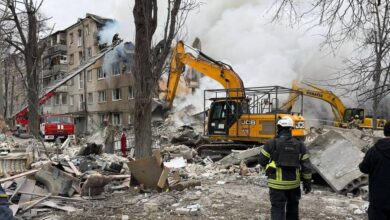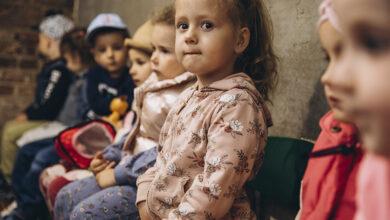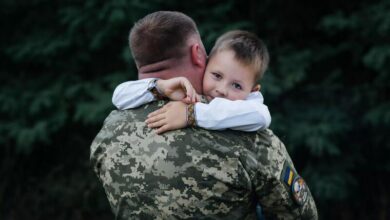
The war in Ukraine forced millions of families to reconsider the very concept of a normal school life. Instead of morning lines, there are sirens, and instead of school calls, there are Zoom connections. A teacher from the basement, classmates from other countries, children in front of a monitor — all this is a modern reality in which a new generation is growing, which has already received the name “children of war”. In these conditions, the problem of combining the work of parents with the needs of their children’s online education has gone beyond a private challenge and has become a national issue. Against this background, the law adopted and signed by the President of Ukraine Volodymyr Zelenskyi on new rights for parents of distance-learning children is part of the gradual adaptation to the protracted martial law.
What exactly is changing
The President of Ukraine signed law, which provides for the possibility of transferring one of the parents to remote or home-based work if a child under the age of 14 is studying online. This is an addition to the Labor Code of Ukraine, which legally enshrines the right of parents to work remotely, upon agreement with the employer, for the period of distance education of the child. It can be both classic remote work using digital tools, and home work — when the employee performs duties from home without using the corporate network. However, it is important to emphasize: the law does not establish automatic transfer to remote work. This right can be exercised only by one of the parents and only with the consent of the employer.
This approach is a compromise. On the one hand, he recognizes the objective circumstances: when there is a child at home who is studying online, leaving him alone during the working day is not only a matter of convenience, but also of safety. On the other hand, it preserves the interests of employers, who do not always have the opportunity to transfer all staff to remote mode.
Why is this important right now?
With the beginning of the full-scale invasion of Russia, more than 60% of schools in Ukraine were forced to switch to a mixed or fully remote form of education. Many of them are due to security risks, lack of shelter or proximity to a combat zone. This means that hundreds of thousands of children are learning at home every day, while their parents work offline, unable to monitor or monitor their learning.
This issue is especially acute in single-parent families, in families of IDPs, or where one of the parents is mobilized. The law allows at least partially to even out this disparity — and to make family life more manageable within the chaos that war dictates.
Legal nuances and gaps
The law also takes into account another weak point of the current legislation — business trips for teleworkers. Until now, there was no legal mechanism for registering a business trip for a person who works from home, and this created legal uncertainty for both employers and regulatory authorities.
The new law proposes to regulate this as well: if the remote or home worker’s contract provides for such a possibility, he can be officially sent on a business trip with all the appropriate guarantees and compensations.
What the law does not decide
However, even despite the positive step, the law does not eliminate the main problem — voluntariness on the part of the employer. In real life, this means that a father or mother can request to work remotely, but management has the right to refuse. And if such a model is acceptable for the IT sector or the civil service, it is extremely limited for the spheres of education, trade, medicine or production. Thus, the right remains primarily declarative rather than guaranteed.
In addition, the law does not take into account parents of children with disabilities who need special support even with a mixed form of education. The mechanisms that would allow the employer to verify the validity of the refusal are also not prescribed.
What is the benefit?
Despite all the limitations, the very fact that the state officially recognizes the need for legal protection of parents during distance learning of their children is important. This is not just a social gesture — it is an attempt to form a new normality, where war does not exclude care, education, and parental involvement in the child’s life.
And if this norm works at least in a third of cases, it will already reduce the risks of school exclusion, gaps in knowledge and social neglect faced by children of war. Because it is they — the generation growing up in conditions of instability — who need the daily presence of their parents more than ever. And if the state cannot guarantee peace, it at least tries to provide a common room for work and study. It seems that this is the maximum possible for now.