Peace treaty without plebiscite: human rights activists oppose the idea of a referendum

Зміст
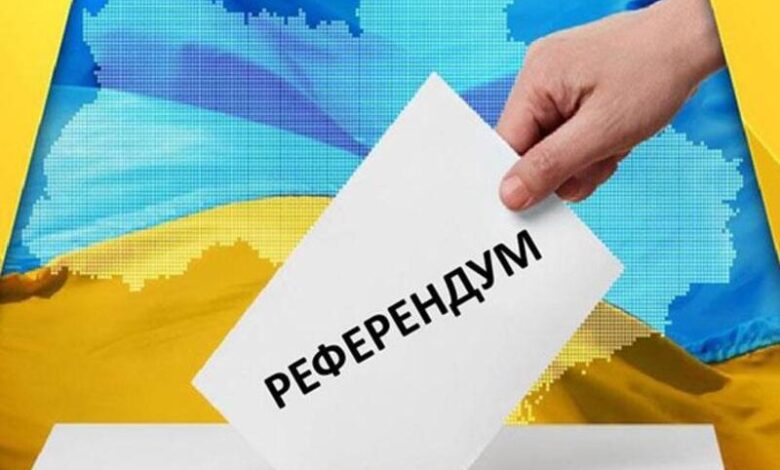
ToggleThe public discussion around possible mechanisms for approving the future peace treaty has gone beyond political offices and has acquired a legal dimension, in which representatives of civil society warn against steps that, in their opinion, may contradict Constitution and current legislation. A group of public figures and human rights activists published an open appeal calling for the rejection of the idea of submitting the issue of approving the peace treaty to an all-Ukrainian referendum, arguing their position with the norms of the Basic Law and considerations of national security.
Contents of the open appeal and its addressees
The appeal by human rights activists emphasizes the need to protect the legal system, national security and civil peace, in connection with which the authors call for the topic of approving the peace treaty through an all-Ukrainian referendum to be removed from the agenda. They also appeal to officials to prevent the approval and signing of provisions of international agreements that could contradict the Constitution and laws of Ukraine, in particular if such provisions would provide for obligations to hold any referendums.
The appeal also contains a warning to the President and Parliament regarding possible attempts to declare a referendum in violation of the requirements of Article 72 of the Constitution of Ukraine. The authors of the document emphasize that such actions would be unlawful and could cause unforeseen consequences for the state.
Constitutional procedure for concluding international treaties
The appeal emphasizes that the procedure for concluding and approving international treaties is determined by the Constitution of Ukraine, as well as national and international legislation, and this procedure does not provide for a referendum. According to current regulations, the authority to approve international treaties falls within the exclusive competence of the parliament – the Verkhovna Rada of Ukraine.
This approach means that the final decision on the ratification of international agreements is made by a representative body that acts within the framework of clearly defined procedures that ensure legal certainty and compliance with the Basic Law.
The signatories of the appeal believe that attempts to impose an illegal referendum on Ukraine may create additional risks for the state. The document notes that such initiatives actually justify and encourage the aggressor state – The Russian Federation – and pose a threat to the national interests of Ukraine.
Thus, the argument goes beyond a purely procedural issue and covers a broader security context, in which legal certainty is considered an element of protecting statehood in the conditions of an ongoing war.
Who signed the appeal
Among the signatories of the open letter is the head of the ANTS National Interests Protection Network, Hanna Hopko, former Minister of Foreign Affairs of Ukraine (2007–2009), Head of the Center for Russian Studies Volodymyr Ogryzko, Chairman of the Board of the Center for Political and Legal Reforms Ihor Koliushko, Deputy Chairman of the Central Election Commission in 2007–2018 Andriy Magera, Director Kharkiv Human Rights Group Evgeny Zakharov, head of the HONEST Movement Vita Dumanska, president of the Center “Strategy XXI” Mykhailo Gonchar, as well as executive director of the Institute for Transformation of Northern Eurasia Volodymyr Gorbach.
The list of signatories shows that the initiative comes from representatives of various fields – diplomacy, electoral law, human rights activities and think tanks, who are united by a common position on the inadmissibility of changing the established procedure for ratifying international agreements.
The published appeal actually outlines the framework for further public discussion, in which the issue of peace and the conditions for its achievement is combined with the problem of compliance with constitutional procedures. The focus is not on the content of a possible agreement, but on the method of its approval, since it is the procedure that determines the legal force of the document and its compliance with the national legal order.