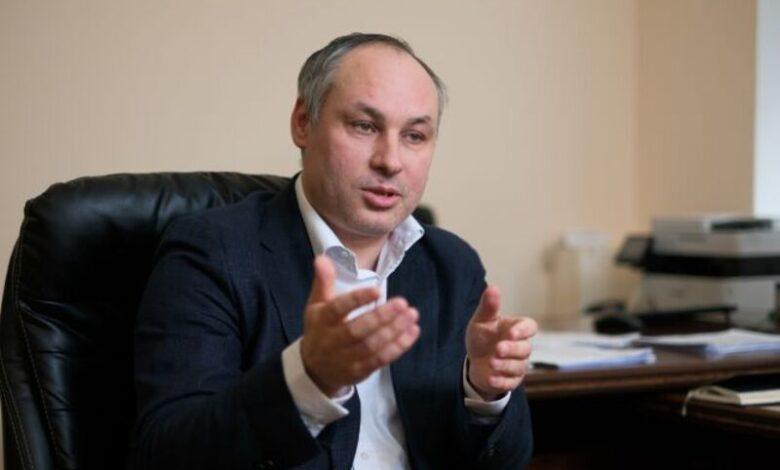
Public distrust of the state and courts lies in the fact that Ukraine was part of the empire and the Soviet Union: Deputy Minister of Justice Oleksandr Banchuk

The judiciary in Ukraine causes a lot of criticism from society. Distrust of judges, protracted cases, scandals and corruption risks – all this forms a negative attitude of citizens towards the justice system. Despite numerous statements about reforms, a large part of society still does not feel real changes. The authorities are trying to modernize the judicial system in accordance with European standards, but the process is slow and accompanied by controversy, in particular over the issue of the selection of judges, the influence of international experts and the effectiveness of the measures introduced.
Oleksandr Banchuk, Deputy Minister of Justice of Ukraine told on the creation of the High Administrative Court after the liquidation of the OASK, the reform of ARMA, the development of juvenile justice and judicial reform in the context of European integration.
Regarding the High Administrative Court
Banchuk said that now the Ministry of Justice is undergoing another transformation. The Department of Law of the European Union is currently being formed, which will analyze all draft laws for compliance with European standards. One of the key directions is the creation of the Higher Administrative Court, which will replace the liquidated OASK. Previously, this court considered cases against central authorities, in particular the Cabinet of Ministers, the NBU, and ministries. After its liquidation, it became necessary to create a new body that will work exclusively with these cases.
The deputy minister explained that the principle of administrative proceedings presupposes the presumption of guilt of the authority, that is, it must prove the legality of its decisions. However, the Verkhovna Rada in the first reading adopted an alternative draft law, which provides for the creation of two courts and does not include international experts in the process of selecting judges. The Ministry submitted amendments agreed with the European Commission and the IMF, which provide for the creation of one court with the mandatory participation of international experts in the selection of judges.
Banchuk explained the importance of international control with the need to ensure transparency and trust in the newly established court. He emphasized that international experts are already involved in the formation of more than 12 state bodies, including anti-corruption structures, and their participation in the selection of administrative court judges does not contradict the principle of sovereignty.
He noted that the creation of the High Administrative Court is an important step to ensure the rule of law, because citizens have the right to challenge the decisions of authorities in court. The liquidation of the District Administrative Court of Kyiv was caused by numerous scandals and a lack of trust in this body. The new court is designed to ensure an objective and independent consideration of cases, in particular for claims against central authorities.
Banchuk emphasized that it is important to create a court with independent and qualified judges, and for this it is necessary to involve international experts in the selection process. However, in the first reading, the Verkhovna Rada supported an alternative draft law, which provides for the creation of two courts without the participation of internationals. The Ministry of Justice submitted amendments agreed with the IMF and the European Commission, which provide for one court and the mandatory participation of international experts in the selection of judges. This will ensure transparency and trust in the new justice body.
Regarding ARMA
Banchuk explained that the new government bill No. 12374 envisages a change in the management mechanisms of seized assets, which is important for Ukraine in the context of European integration. The draft law provides for the introduction of an external independent assessment of the agency’s activities, as well as the competitive selection of management with the participation of international partners. This will ensure the integrity and competence of ARMA’s head, which is especially important given the large volume of assets transferred to the agency. Banchuk emphasized that seized assets should be effectively stored and benefit the budget, while ensuring the rights of owners who have not yet been convicted.
“Last year, as you may know, there was a very lively discussion and adoption of changes to the Law on the Bureau of Economic Security. There it was decided that a new director of the Bureau would be elected. In this case, there is no automatic termination of the powers of the head of ARMA. As for other executive bodies, the Government can make a decision to dismiss their heads, because according to the Constitution, it is the main body in the system of executive power. With the draft law, we provide for the independence of ARMA and limited grounds for the dismissal of the head Agencies. But, on the other hand, if we introduce a competition with the participation of international partners, we guarantee that the candidate is honest and competent.
And this is very important, because seized assets in criminal offenses, which are tens of thousands of objects, are transferred to the management of this Agency. And it is important for the state that this economic asset does not lose its properties, and perhaps even brings additional funds to the budget. And for the owner, who is a suspect or an accused, but not yet convicted person, it is important that his property is preserved.
Only in 2024, a new EU Directive concerning the management of seized assets was issued. In the process of European integration, we must also implement the provisions of this European directive in the new law.” – noted Banchuk.
Regarding juvenile justice
In addition, the Deputy Minister of Justice spoke in detail about justice for minors as an important component of European integration. This issue is included in the project of the Roadmap on the rule of law, and Ukraine is obliged to adopt the relevant law. However, its content is key.
Juvenile justice is aimed at protecting the rights of children who become victims or witnesses of crimes. These are mainly cases of violence, particularly domestic violence, as well as other violent acts. According to European standards, such children need an individual approach to implement the principle of protecting the best interests of the child. In Ukraine, 12 regional Centers have already been established for work with minors based on the Barnahus model (from Icelandic – “Children’s House”). In these centers, a psychologist works with the child, and a forensic medical examination can be conducted, especially in the case of rape or other violent acts. It is important that all procedures take place in one place to minimize stress for the child. The psychologist transforms the questions of the investigators into a form understandable for the child, using toys, drawings or other adaptive methods. Such centers are already operating in Kyiv, Zhytomyr, Lutsk, Ternopil, Chernivtsi, Odesa, Kropyvnytskyi, Mykolaiv, Poltava, Sumy, Cherkasy and Vinnytsia.
According to Banchuk, it is important to establish these mechanisms at the legislative level. Now their activities are regulated only by the joint order that approved this pilot project. The Justice Department is pushing for amendments to the CCP to expand the practice nationwide.
Regarding war crimes, there are already cases when children were interrogated in Barnahusy. For example, after the rocket attack on Vinnytsia in 2022, the victim children were interviewed in exactly this format, which allowed to receive their testimonies without repeated psychological trauma. Statistics show that in 2024, 818 children passed through Barnahus. This is an alarming figure, but at the same time an indicator of the effectiveness of the implemented measures.
According to Banchuk, in addition to the victims and witnesses, there are also minor suspects. For them, the Ministry is implementing a restorative reconciliation program, which started in an updated format in the fall of 2024. The program is based on the fact that minors who have committed minor crimes should not go through the full cycle of criminal punishment and serve sentences in places of deprivation of liberty. Instead, alternative measures are used.
Depending on the circumstances of the case, the prosecutor or the investigator may offer mediation to the victim and the suspect through the register of accredited mediators working within the Coordination Center for the provision of legal assistance. In case of reconciliation and fulfillment of specified conditions, the minor is released from responsibility. But this is not just an amnesty – the program provides for actions in favor of the victim, for example, in the case of theft from a store, a minor can work there for a certain time, performing household tasks. This allows not only to avoid imprisonment, but also to realize the consequences of one’s actions.
Regarding judicial reform
Oleksandr Banchuk also commented on the general situation with judicial reform. In his opinion, the problem of trust in the judicial system is related to the general mistrust of society in state institutions, which has historical roots.
“My first opinion is that we have public distrust of the entire state. Not only the judicial system. And this has its historical roots. Because we, Ukrainians, have not had our own state for centuries. Any state that was on this territory for centuries before 1991, except for a short period in 1917-1920, was a foreign state, or it was an empire, and we were part of an empire. And it is clear that no there was no trust, because it was not yours.
Plus, this mistrust has been rooted since the generation that lived in a totalitarian state, in which I was also born – the Soviet Union, where one thing was also proclaimed, but there was also corruption, and other decisions were made. These are very important Ukrainian features.
Now, I am convinced that at the level of the Constitution, we have everything in place to have the most progressive justice system. And we have a few steps left to implement it.” – thinks Banchuk.
He emphasized that the anti-corruption infrastructure, in particular NAZK, NABU, SAP, should be fully operational. It is also important to complete the recruitment of new judges – the Higher Qualification Commission of Judges has already announced a competition for 1,800 positions in local courts and 550 positions in appeal courts. This will allow to update the judicial system and ensure the integrity of its representatives.
According to Banchuk, Ukraine should complete the judicial reform within the framework of the five-year plan for joining the EU. The Roadmap project provides for the implementation of all necessary measures until 2027. It is then that the European Union will assess the effectiveness of the reforms and make a decision on Ukraine’s membership. The updated justice system must meet European standards and ensure the trust of citizens.