The deputy commander of the Charter Corps told how his unit and the Third Army Corps are changing their approach to military training

High-quality training of the military remains one of the key conditions for the army’s effectiveness. In modern warfare, separate courses or point initiatives are no longer enough – a holistic training system that combines combat experience, standardized programs, the work of instructors, and the introduction of new technologies is becoming increasingly important. It is precisely on a change in approaches to personnel training that Ukrainian units today are betting, seeking not only to improve internal processes, but also to create a model suitable for scaling throughout the army.
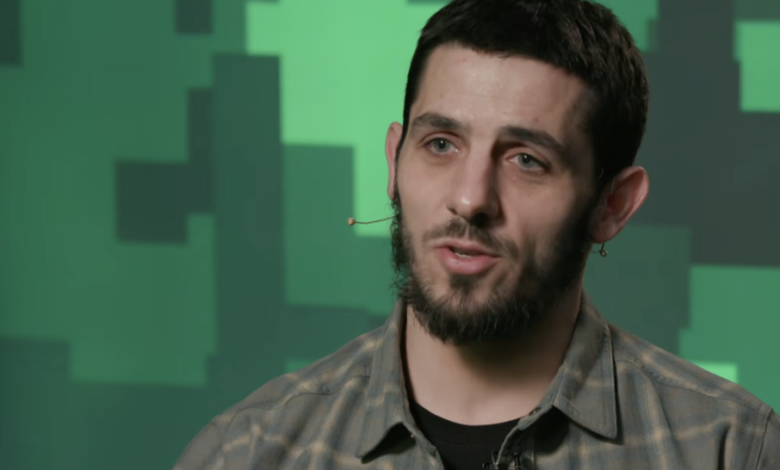
The 2nd Corps of the National Guard of Ukraine “Charter” together with the Third Army Corps of the Armed Forces of Ukraine are working on the formation of a new military training system. This involves a combination of combat experience, training programs, and approaches that have already proven their effectiveness on the front. This was told by the deputy commander of the “Charter” corps for personnel training, Colonel Volodymyr Lysyuk.
According to him, the interaction between the units has been going on since the beginning of the year. It involves the creation of joint training programs and the streamlining of the accumulated combat experience.
“Our general cooperation began at the beginning of the year – with the signing of a memorandum and the creation of joint programs. We already have extensive combat experience – both the Charter and the Third Corps. Therefore, we decided to systematize it and combine it into a single system,” Lysyuk said.
According to him, this is not only about launching individual training solutions, but about building a scalable training model that will be able to work not only within specific units.
“We combine high-quality initiatives, programs, and training methods so that it really gives positive development and high-quality training, because only by sticking together will we improve and do “even more effective results on the battlefield,” says Lysyuk.
Within this system, four main areas of training have already been outlined. We are talking about a sergeant school, basic combined-arms training, officer training, and the development of a technological component.
“The first direction is sergeant training. We take the experience of the Third Corps as a basis and supplement it with our own. The second is basic combined-arms training. The third is the training of officers, especially junior ones. The L1 combat course has already been launched. And the fourth direction is technologies: drones and ground robotic complexes,” Lysyuk said.
Special emphasis is placed on basic training, since, according to the plan, it should be unified for all military personnel and at the same time focused on survival and effectiveness in combat. The colonel emphasizes that the effectiveness of training is determined not only by the content of the programs, but also by the organization of the process itself – from the role of instructors to the systematic support of the fighter.
“Our task is to teach the fighter to survive on the battlefield and perform tasks with minimal losses. Basic training should be understandable to everyone: it is fire, tactical, engineering, medical training, and communications.
It is the system that works: ideological training, the dedication of instructors, the work of drill sergeants. They accompany the fighter from morning to evening. The instructors should be engaged in training, and the entire system should control the process. The role of everyone in this mechanism is important here,” says Lysyuk.
The Charter also sets the task of unifying approaches to training with other units in order to ensure interoperability in the preparation and execution of combat missions.
“Our task is to ensure that the approaches are the same: both in us and in the Third Corps. If someone wants to join us, we are open. Because the overall level of training and task execution depends on this,” Lysyuk emphasized.
At the same time, according to him, the development of programs alone is not enough. The key is to review the approach to military training itself. In doing so, international experience is also taken into account, in particular the practice of training Ukrainian military personnel abroad. The basic principles of the new training system in the corps include dedication, training, discipline, motivation, as well as a personalized approach to each serviceman.
“Our military personnel are trained abroad – in Norway, at courses for unit commanders. We treat each fighter, each new recruit with his personalization, where he will give the greatest result. Everyone should have a base and only then develop some of his features, his abilities, his main areas, where he will improve and give a positive result,” says Lysyuk.
Separately, the “Charter” emphasizes the need to maintain a balance between classical military training and the introduction of modern technologies. The corps is also engaged in attracting young people and trying to form a new perception of the service, showing that the modern army covers a wide range of areas.
“Technology is important, but war is not won only with drones. This is a large system that requires trained and competent people at all levels.
There are fewer motivated people, so we work with young people, students. We show that the army is not only about fear. There are many areas: drones, analytics, planning. This is a complex system,” Lysyuk believes.
According to him, the creation of a single training system should be a step towards increasing the efficiency of the entire army. Currently, the development of programs is in the final stage, after which testing with further scaling should begin.
“We are already at the final stage of program development. Next is testing and showing the result. And after that we are ready to scale this system for other departments,” Volodymyr Lysyuk summarized.