Quarantine introduced in Poland due to the threat of hantavirus: what Ukrainian refugees should know

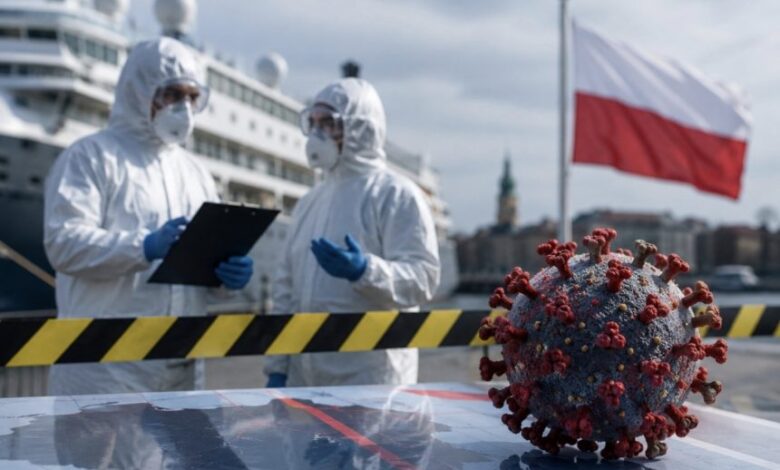
European countries are stepping up sanitary control after the outbreak of hantavirus associated with the MV Hondius cruise ship, as passengers and crew members could have ended up in different countries after the trip. In Poland, this situation became the reason for the first quarantine decision of this type: doctors took under observation a person who had contact with a passenger of the ship. For Ukrainians who live in Poland, often use transport, travel or work in areas with a large flow of people, it is important to understand that this is not a mass threat, but point-by-point actions of the services aimed at early detection of possible infection.
Introduction of quarantine in Poland
Poland introduced quarantine for the first time due to the threat of hantavirus after a person who had contact with a passenger of the MV Hondius cruise ship was sent under medical supervision. According to available information, this person has not yet shown symptoms of the disease, but Polish doctors took the person under observation. This was reported by MigNews with reference to the source MRF24.
The decision was made by the doctors as a precautionary measure, as the outbreak on the ship has already attracted the attention of sanitary services in several countries. Polish doctors operate according to the logic of contact control: if a person could have been near a potentially infected person, their condition is monitored for a certain period in order to react quickly in the event of a temperature, weakness, respiratory symptoms or other signs of the disease.
Quarantine for a person without symptoms of the disease may seem excessive, but in the case of rare infections with a potentially severe course, doctors act proactively. This approach allows you to limit the circle of contacts, regularly monitor the person’s condition and quickly conduct an examination if the first complaints appear.
For Poland, this does not mean the beginning of an epidemic. The decision concerns a specific contact person, not broad restrictions for the population. The sanitary logic here is simple: it is better to isolate a possible risk at an early stage than to search for contacts after a confirmed case appears. The reaction in Poland is explained by the fact that the country has a large international passenger flow, and after the outbreak on a cruise ship even a single contact needs to be checked. Medical surveillance in such a situation works as a control tool that allows you to separate the real risk from rumors and prevent unnecessary strain on the healthcare system.
Where did the threat come from
The cruise ship MV Hondius has been in the spotlight after reports of hantavirus infections among people associated with the cruise. Several passengers have developed severe symptoms, some have died, and international agencies have begun tracing contacts of those who may have come into contact with the infected.
The peculiarity of the situation is that cruise passengers may have traveled to different countries after their trip was completed or interrupted, so national health authorities are testing not only those who were on the ship but also people who had close contact with them after disembarking or during subsequent flights.
Hantaviruses are usually associated with rodents, and human infection most often occurs through contact with particles of urine, feces, or saliva of infected animals. The risk increases when cleaning enclosed spaces, warehouses, basements, summer houses, or other places where mice or rats may have been.
In most cases, hantavirus is not transmitted between people, but some strains can be an exception in close contact. For this reason, health services are paying special attention to contacts of people associated with the outbreak on the MV Hondius, where they are checking chains of possible spread of infection.
The first manifestations of hantavirus infection can resemble other viral diseases, so not only well-being is important, but also the history of possible contact. Doctors pay attention to fever, severe weakness, muscle pain, headache, nausea, vomiting or abdominal pain.
In severe cases, cough, shortness of breath, chest pain and signs of lung damage may appear. It is precisely because of the risk of rapid deterioration of the condition that contacts are monitored until symptoms appear, because early treatment gives a better chance of avoiding a critical development of the disease.
What Ukrainian refugees should know
For Ukrainians who are in Poland under temporary protection, work, study or frequently cross the border, the situation with hantavirus does not create grounds for panic. There is currently no data on the mass spread of the infection in Poland, and the quarantine concerns a person who had specific contact with a passenger of the MV Hondius.
At the same time, Ukrainian refugees should be more attentive to the messages of local sanitary services, especially if they have recently traveled through international airports, work in hotels, transport, cleaning, logistics or could have come into contact with people who returned from a cruise or were close to passengers of the MV Hondius.
Ukrainians in Poland should remain calm and act practically: monitor their well-being after possible contacts, do not ignore high fever, severe weakness, breathing problems or severe muscle pain, and in case of such symptoms, consult a doctor and report recent travel or contact.
People who clean basements, warehouses, summer cottages or homes after a long break should avoid dry sweeping, ventilate the premises, use gloves and a mask, and treat surfaces with possible rodent traces with a wet method. Such measures are important regardless of the history with MV Hondius, because the main route of infection with hantaviruses is associated with rodents.
If a person has received a notification from Polish services about possible contact, they should follow their instructions, stay in touch with doctors and not hide their symptoms. For those who do not speak Polish, it is worth seeking help from Ukrainian public organizations, translators or acquaintances in order to correctly understand the requirements of doctors and not miss important details.
Further development of the situation will depend on the results of medical surveillance of contact persons and new data on the outbreak on MV Hondius. If a person quarantined in Poland does not develop symptoms, this case may remain only a precautionary episode within the framework of broader international control.