
The Czech Republic is preparing a disturbing solution for Ukrainian refugees: Tomio Okamura’s statement

In recent months, the issue of legalization of Ukrainian refugees in the Czech Republic has become particularly urgent due to political disagreements within the coalition council and a tense discussion regarding the conditions for obtaining long-term residence. Consideration of the simplified procedure has become a subject of conflict between different political forces. For thousands of Ukrainian families who consider the Czech Republic as a potential place for long-term living, this situation has become a source of uncertainty and fear.
Tomio Okamura’s political position
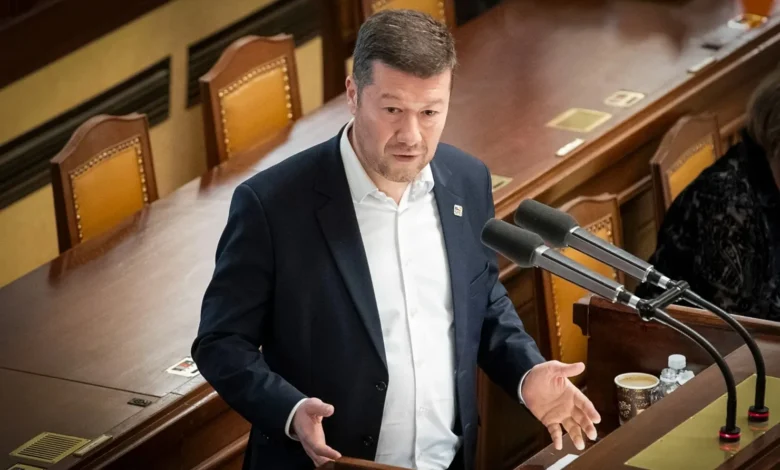
As reported by the Ceske Noviny, the Speaker of the Lower House of the Czech Parliament Tomio Okamura expressed the principled position of his political party, the SPD, which opposes a simplified procedure for obtaining residence permits for Ukrainians. He stressed the need to unify migration legislation and adhere to the same rules for all foreigners without exception.
According to Okamura, any provision of simplified conditions to one category of migrants creates a risk of inequality and violation of general standards, which, in his opinion, may affect the legitimacy of the country’s migration policy.
In the context of such political disputes, the coalition council is discussing future steps regarding the stay of Ukrainian refugees, and the Ministry of Internal Affairs is preparing a new draft law on the stay of foreigners, which is planned to be adopted by May 2026. The law should provide for stricter and clearer criteria, which is causing concern among the Ukrainian community and NGOs working with refugees.
Current conditions for obtaining a long-term permit
According to the current rules of the Czech Ministry of Internal Affairs, Ukrainian refugees can apply for long-term residence only after fulfilling a number of requirements. The main condition is to stay in the status of temporary protection for at least two years, which implies constant compliance with legal procedures and confirmation of residence. Additionally, the candidate must demonstrate financial stability: the annual income must exceed 440 thousand Czech crowns, which is approximately 17.4 thousand euros.
These requirements have been repeatedly criticized by human rights organizations, pointing out their severity and limitations, since only a small part of Ukrainian refugees are able to fulfill them. In practical terms, this means that even after two years of stay and adaptation to the Czech labor market, most Ukrainians still do not have a guaranteed opportunity to stay in the country for a long period.
Statistics and the real situation
At the end of 2025, 393,056 Ukrainians had temporary protection in the Czech Republic, which was about 3.6% of the country’s population. Last year, around 80,000 people applied for long-term permits, but only slightly more than 16,000 were successfully screened and granted permits. The scale of the need for legalization thus far exceeds the actual capacity of the system, which explains some of the tension and political disputes.
The temporary protection currently in place guarantees access to healthcare, education and the labour market, but the long-term outlook remains uncertain due to political and bureaucratic factors.
According to estimates by the Office of the United Nations High Commissioner for Refugees, three to three and a half million people could return to the country after the war in Ukraine ends. The highest willingness to return is expected among those in southern and eastern Europe, while the percentage of those willing to return is lower in northern countries. These forecasts indicate that political decisions in the Czech Republic regarding the legalization of Ukrainians may affect not only the short-term stay, but also the demographic and social structure of the country in the long term.
Implications for Ukrainian families
The SPD’s tough stance and the expected adoption of a stricter law complicate the plans of many Ukrainian families who are considering the Czech Republic as a potential place of permanent residence. Incomplete procedures or denial of long-term permits create a sense of instability and increase the psychological burden on families forced to leave their homeland due to the war.
Also, difficult conditions lead to citizens being forced to seek additional ways of adaptation, turn to charitable organizations, or change their professional activities to provide the necessary income, which complicates integration into a new society and distances the prospect of a legal and peaceful stay.
The situation in the Czech Republic demonstrates the difficulty of balancing political ambitions, state security, and the social integration of refugees. The adoption of a new law and the unification of the rules for the stay of foreigners may create a clearer framework, but in practice this will mean that some Ukrainians will be forced to wait longer or look for alternative ways to legalize.
At the same time, the issue of integration and adaptation of refugees remains open, and the decision of the Czech authorities regarding the long-term residence of Ukrainians will influence the formation of public sentiment and the social structure of the country in the coming years.


