Record number of sanctions against the Russian Federation: how does this affect its economy and the war against Ukraine

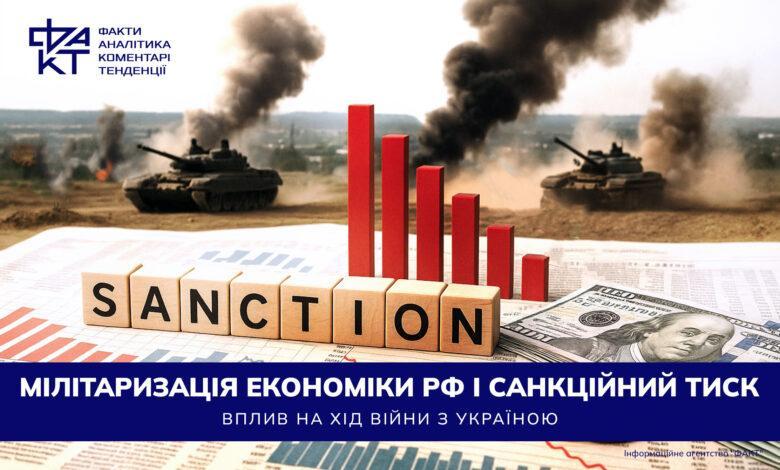
From the outside, Russia shows the illusion of confidence: GDP is growing, the military budget is up, and officials are cheerfully reporting. But behind the facade of “economic stability” another truth is hidden – sanctions isolation, chronic budget deficit, technological degradation and a money pump pumping new billions into the war against Ukraine. The Kremlin keeps this war machine moving at the cost of the future: destroying reserves, losing people, and dragging the country into a protracted inflationary spiral. Sanctions did not break the Russian economy instantly, but they changed its nature. Instead of a market system, a military-budget model with a centralized redistribution of resources and mobilization of everything for a “special operation” was formed. Everything — from oil dollars to teachers’ salaries — works for the front. For Ukraine, understanding these processes is of fundamental importance. It is the state of Russia’s economy that determines its ability to wage a long war, ensure the supply of weapons and compensate for losses.
Sanctions against Russia: an absolute record in modern international practice
In the shadow of diplomatic statements, military press releases and concerned resolutions hides an unprecedented phenomenon in recent history — the sanctions wall erected around Russia. But it still remains an active player on the international stage — with a nuclear arsenal, oil exports, diplomatic interventions, and an extensive network of influence. That is why it is worth not only ascertaining the figure, but also to understand how and by whom it is measured, and most importantly, what it means for Ukraine.
According to the global sanctions monitoring service Castellum.AI, from 2014 to 2025, the number of sanctions imposed on the Russian Federation reached 24,311. This is the largest recorded array of restrictive measures imposed on one country. By comparison, Iran, which has long remained a prime example of prolonged economic isolation, has about 5,000 sanctions — almost five times less. At the same time, the main part of the sanctions against Russia was introduced by the United States of America — 7,384 restrictions, which is more than a third of the total number. Canada is in second place with 3,639 sanctions, followed by Switzerland (3,266) and France (2,423). At the bottom of the list are Singapore (5 restrictions) and South Korea (24).
It should be noted that the number of sanctions is determined not by general formulations, but by clearly documented legal positions: each sanction is a separate unit recorded in the registers of national or supranational bodies. The Castellum.AI service aggregates data from more than 1,700 sources, including OFAC (USA), European Union, UN, Canada, Great Britain, Ukraine, Australia and other lists. Sanctions include various forms of restrictions — asset freezes, export bans, financial transaction restrictions, asset freezes, and entry or activity bans on jurisdictions. Since 2014, their number has been growing continuously, in particular after the start of a full-scale war in Ukraine on February 24, 2022.
A separate feature of the sanctions dynamics is the expansion of the sphere of coverage — from government structures and officials to ships, enterprises of the military-industrial complex, media platforms, banks, defense alliances, Russian oligarchs, their relatives, managers, business partners and contractors. In addition, secondary sanctions are recorded – against structures that cooperate with sanctioned persons or help circumvent restrictions.
It should be noted that the Castellum.AI service, which published the data, is an independent project founded in New York by former employees of the US Treasury Department. It aggregates, structures and constantly updates information on sanctions lists. In 2023-2024, the service introduced additional tools — in particular, the analysis of indirect participation in sanctions relations (through beneficiaries or related companies), which allows for a detailed picture of the full prohibitions.
It is noteworthy that 24,311 sanctions are not only an indicator of the sanctions policy, but also a basis for evaluating the change in the global approach to economic pressure. It is also a signal for countries that only partially support restrictive measures. For example, some jurisdictions have not yet joined global initiatives, limiting themselves to their own decisions or avoiding sanctioning participation. Among them are the states of Asia, Latin America, Africa, and the Middle East.
Goals and logic of international sanctions against Russia
One of the key areas of sanctions policy is limiting Russia’s access to technologies, materials and components necessary for waging war. For this purpose, export restrictions are being introduced on the supply of high-tech goods, including electronics, microcircuits, optical devices, aviation equipment, elements for the production of missiles and UAVs. Dual technologies that can be used in both the civilian and military sectors also fall under the ban. If in 2014 the main emphasis was on restrictions on specific officials, then in 2022-2025 the structure has changed: the emphasis has shifted to system industries, state corporations, arms markets, logistics, finance, IT and energy. At the same time, a significant part of the sanctions are “modular” measures – which are supplemented, updated or integrated into already existing legal regimes.
However, the restrictions in this direction are not aimed at an immediate effect, but at a gradual decrease in the technical potential of the Russian armed forces. It is not only about banning sales, but also about blocking access to service, software and financial mechanisms for purchases through third countries.
Another large group of sanctions is aimed at reducing the fiscal capabilities of the Russian Federation, i.e. limiting revenues to the budget, which are used to finance the war. To this end, restrictions on trade in Russian oil, gas, metals, fertilizers, coal, gold and other key export items are being introduced.
Additional sanctioning regimes apply to the banking system: restriction of access to SWIFT, blocking of correspondent accounts, ban on international payments, freezing of assets of the central bank of the Russian Federation. Along with limiting export revenues, this should create long-term financial pressure on the state’s ability to maintain its armed infrastructure and ensure economic stability.
A separate layer of sanctions is personal restrictions — for high-ranking officials, deputies, governors, leadership of law enforcement agencies, oligarchs, judges, propagandists and people close to them. Such sanctions do not have a direct economic effect for the state, but perform another function: to prevent the private use of global infrastructure – accounts, real estate, companies, residence permits, access to medical services or education in Western countries. In this aspect, the sanctions are intended to demonstrate the impossibility of combining participation in politics with unhindered use of the advantages of the global world. Sanctions also serve as a tool of delegitimization and public signaling: individual politicians or entrepreneurs lose the opportunity to act internationally as neutral figures.
From the middle of 2023, the sanctions policy began to be supplemented by secondary sanctions — restrictions on companies and countries that help Russia circumvent the established bans. Such sanctions can be imposed against legal entities in third countries, in particular in Central Asia, China, Turkey or the Middle East, if it is proven that they transited goods subject to export control into Russian jurisdiction. It was an attempt to build a system of sanctions not only as a list of restrictions, but as a control infrastructure. It includes constant monitoring of supply chains, beneficiary structure, financial transactions, transport routes, logistics hubs. It is at this stage that the role of specialized analytical systems, such as Castellum.AI, which allow technical monitoring of indirect ways of circumventing sanctions, is growing.
The last layer of sanctions functions is communicative. Due to restrictive measures, the initiator countries fix their position in foreign policy. For many European governments, this is an important tool for demonstrating solidarity with Ukraine and at the same time an indicator of their participation in the system of international law. Within the EU, sanctions become a tool for consolidating the positions of member countries, which do not always have a unified vision on defense or energy issues. At the same time, for states that maintain a neutral position or cooperate with Russia, the presence of sanctions policy from the West makes it difficult to make decisions about deepening contacts, creating risks of secondary sanctions, revision of treaties or reputational pressure.
Capital growth of Russian billionaires in 2025: what does it mean under the sanctions regime
In the first quarter of 2025, the Bloomberg Billionaires Index recorded an increase in the combined capital of Russian billionaires by 15 billion US dollars. According to the updated data of the index, 22 citizens of Russia, included in the list of the richest people in the world, control assets worth 305 billion dollars. Moreover, the greatest growth was recorded in those sectors that formally do not fall under the toughest sanctions — primarily in metallurgy, the mining industry, telecommunications, and technology.
Billionaires associated with the commodity market and digital services received the largest increases in wealth. Alisher Usmanov, whose assets include metallurgical enterprises, telecommunications and mining, increased his fortune by $3.6 billion. Andriy Melnychenko, whose business is concentrated in the fields of fertilizers and coal, added 2.5 billion. Gold production (Suleiman Kerimov), non-ferrous metals (Vladimir Potanin), digital platforms (Pavlo Durov) — all these industries continue to generate profits even in the conditions of Russia’s partial isolation from global markets.
Some of these sectors are focused on the domestic market, some on exports to countries that have not joined the sanctions, including China, Turkey, India, the United Arab Emirates, and Kazakhstan. In the case of digital platforms such as Telegram, it is a transnational model that is not formally linked to Russian jurisdiction, allowing the founders to avoid the direct effect of sanctions.
However, despite the general growth, some billionaires experienced financial losses. Volodymyr Lisin (NLMK), Gennadiy Timchenko (Novatek, Sybur), Mykhailo Fridman (Alfa Group), Leonid Mikhelson (Novatek) are involved in direct sanctions, their assets are partially frozen or restricted in circulation in Western jurisdictions. In addition, the activities of their companies are related to the oil and gas industry, which has become a key object of restrictions since 2022. Losses can be the result of a drop in product prices, problems with logistics, a reduction in sales markets and difficulties in financing – especially due to the disconnection of Russian banks from international payment systems, bans on payments in dollars and euros, as well as a general reduction in liquidity in the domestic market.
The growth of the total capital of Russian billionaires does not indicate the abolition or ineffectiveness of sanctions, but it shows their uneven effect. Sanction pressure significantly restricts certain sectors (in particular, oil and gas and finance), but leaves room for the functioning of other, less controlled industries. Moreover, the reduction of competition in the domestic market and the reorientation of exports to alternative channels ensure profits for those who have retained access to resources and logistics.
At the same time, it is worth considering Bloomberg’s capital calculation methodology, which is based on the valuation of shares in companies that are traded or valued on the private market. In a situation where Russian companies have maintained stock exchange activity in Shanghai, Dubai or Istanbul, capitalization can grow even in the case of isolation from New York or London.
Therefore, the financial indicators of the first months of 2025 demonstrate that sanctions are an instrument of long-term pressure, and not a mechanism of immediate results. They partially achieve their goals in the areas of international infrastructure — banks, stock exchanges, energy export. At the same time, in sectors where Russia maintains domestic demand or has alternative partners outside the system of the collective West, profits may even grow.
Indicators of the growth of billionaires’ capitals illustrate that the Russian economy is functioning in a new adapted form — with a reorientation of markets, partial autonomy and limited but stable access to capital. This does not invalidate the sanctions, but points to the limits of their effectiveness in a globalized economy with many alternative channels of circumvention. In this context, the question is not only the number of restrictions, but the quality of control and the technical ability to track bypass chains, which brings attention back to the importance of specialized analytical systems.
The state of the economy of the Russian Federation under the influence of the war
In 2025, the economy of the Russian Federation is in a unique state: it has not collapsed under the pressure of unprecedented sanctions, but it has not entered the path of peaceful development either. Instead of a deep recession, there was limited growth, the main source of which was military spending and the transformation of the civilian economy into an instrument of war. This transformation was not a temporary reaction to external pressure, but a structural basis for the political and economic survival of the state in the conditions of a protracted conflict.
According to the results of 2023, Russia’s GDP increased by 3.6%, in 2024 – by more than 3%, and in 2025 – by 2.5%. However, as noted in the Russian Federation itself, growth is not uniform, but fragmented. At the same time, the Russian Ministry of Economic Development worsened the forecasts for oil prices and the level of inflation. That is, the financial condition of the Russian Federation is increasingly deteriorating against the background of the protracted war against Ukraine and the effect of international sanctions. At the same time, according to the updated forecast of the government of the Russian Federation, the deficit of the federal budget for 2025 has increased significantly and is now estimated at 1.7% of GDP, which is more than 3.7 trillion rubles, or about 45 billion US dollars. A similar situation already occurred in 2024, when the government of the Russian Federation changed its budget indicators several times during the year, and the actual deficit reached 1.7% of GDP, or 3.485 trillion rubles, although it was initially planned at only 0.9%.
Several factors led to such a deepening of the financial crisis in Russia: colossal war expenditures, the impact of international sanctions, and a drop in global oil prices. Even the official structures of the Russian Federation recognize these problems. According to the updated macroeconomic forecasts of the Ministry of Finance, the expected price of oil was reduced from $69.7 to $56 per barrel, and the inflation forecast was revised from 4.5% to 7.6%.
According to data based on official sources, estimates by international organizations, think tanks and state structures, the Russian Federation will spend more than $100 billion on the military in 2024 — more than 6% of GDP or about 40% of the federal budget. In 2025, military spending increased more, and the number of enterprises in the defense sector increased from 2,000 to 6,000. The increase in production concerns primarily the “military” industries: metallurgy, mechanical engineering, the chemical industry, the production of weapons and optics. Meanwhile, civil sectors, including automotive, woodworking, and construction, are showing decline or stagnation. In 2024, car production remained more than 20% below pre-war levels in 2019, and mining, the largest sector of the Russian economy, declined by 6%.
Consequently, Russia’s economy has effectively become a “wartime economy,” where the main driver of growth is the army, which entails colossal budget expenditures, rather than innovation, technology, or private initiative.
At the same time, the structure of the Russian economy deteriorated significantly – most foreign companies left the market or closed down their activities. Loss of access to Western technologies, components, software, credit markets and logistics channels pushes the country to technological archaism. In addition, the tintization of trade and dependence on gray imports through China, Turkey and third countries is growing massively. At the same time, exports to EU countries fell significantly, and the growth of trade with the BRICS countries does not compensate for the losses. Russia is also experiencing a labor shortage: hundreds of thousands of men are mobilized or have gone abroad, young people avoid the draft, the burden on the social sphere is increasing, and the quality of education and infrastructure is declining.
As for the growth of citizens’ incomes, on the one hand, it increases consumption, and on the other hand, it contributes to inflation, which in 2025 reached 10.1%. The Central Bank of Russia, reacting to the situation, keeps the key rate at the level of 21%, the highest in the last two decades. This has sharply increased the cost of loans and increased the trend towards corporate bankruptcies, particularly in sectors that do not receive state subsidies.
The listed indicators testify to the formation in Russia of a mobilization economy model with signs of stagflation — a combination of high inflation and limited growth in narrow sectors. This model is supported by budget subsidies, a controlled ruble exchange rate, high rates, benefits for the chosen ones and isolation from global competition.
This situation is unsustainable in the medium term. The capacities of the military-industrial complex are already almost fully loaded, and there are few reserves for further expansion. At the same time, general consumption cannot grow – neither due to imports, which are limited, nor due to credit, which is restrained due to expensive resources. This puts pressure on the entire distribution and support system — increasing dependence on manual regulation and off-budget survival schemes.
Russia’s economy did not collapse during the war, but its so-called “growth” in some industries is an artificial effect of militarization, inflationary dispersal, and budget overheating. Internal reserves are being depleted, institutional quality is degrading, and technological backwardness is increasing. Behind the external facade of stability lies a deep structural crisis, which is only temporarily masked by the military demand.
Consequences for Ukraine
The appearance of Russia’s stable economy creates a false impression of its strength. In fact, we are talking about an excessively centralized, redistributed system for the needs of war, which is losing flexibility. The longer the war drags on, the more difficult it will be to return this economy to a civilian trajectory. And vice versa: an attempt at demilitarization can cause destabilization, conflicts over resources, falling GDP and rising unemployment. This increases the risks of prolonging the conflict, as the way out of the war without losing economic control remains unclear for the Russian authorities.
For Ukraine, this means that the sanctions, although they did not cause an immediate collapse, limit modernization, inhibit access to technology, form a narrow structure of economic growth in Russia and gradually exhaust its internal reserves. But their effectiveness requires a long-term and systematic approach, in particular, control over the circumvention of sanctions through third countries, updating lists, expanding sectoral restrictions and better coordination between allies. Sanctions do not end the war, but they create an environment in which supporting hostilities becomes increasingly expensive, less effective and politically risky. They are one of the few instruments of deterrence that remain at the disposal of countries that are not at war, but do not absolve themselves of responsibility.