Republican senators go on vacation without passing a bill on tough economic sanctions against Russia

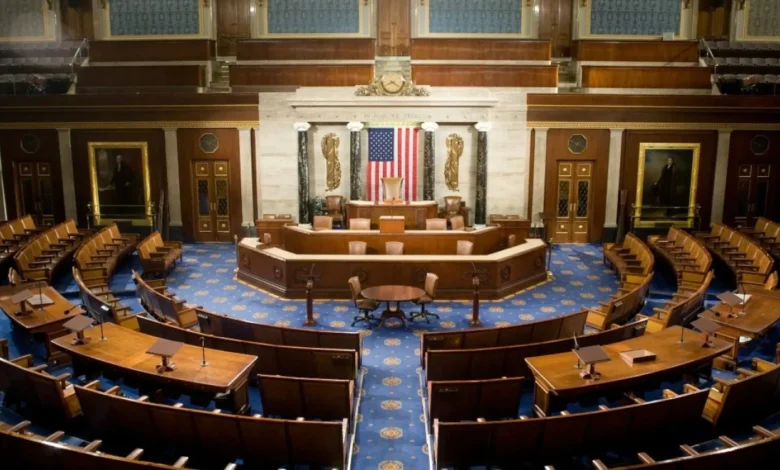
American senators from the Republican Party are going on summer vacation without passing an important draft law on tough economic sanctions against Russia. Thus, the decision on further pressure on Putin remains solely in the hands of Donald Trump, who previously threatened the Kremlin with new restrictions if he does not end the war against Ukraine by August 8. About this reported American edition of The Hill.
As a precautionary measure, the president has already announced the introduction of a 25 percent tariff on imports from India, one of the main buyers of Russian energy carriers. This is significantly less than the 500% tariffs proposed by Senators Lindsey Graham and Richard Blumenthal in the bill. At the same time, although supporters of a hard line towards Moscow sought the adoption of the draft law even before the August vacation, the upper house of the Congress never brought it to a vote.
Senator Mike Rounds expressed his belief that Trump will be careful in his actions, but admitted that the president is disillusioned with Putin and is beginning to understand that Republican critics of the Kremlin were right. At the same time, Democrats doubt that Trump will really introduce painful sanctions. Despite the president’s rhetoric condemning Russia’s actions, he avoids specifics about how seriously he is willing to pressure Moscow.
As The Hill notes, in his statement, Trump called Russian aggression against Ukraine “disgusting”, but at the same time questioned the effectiveness of the sanctions:
“I don’t know if it really affects Putin. They are already used to sanctions. But we will do it anyway.”
Despite the indecision of the White House, the bill itself provides for large-scale economic pressure on Russia and its trading partners. Its goal is to weaken Russia’s military potential by hitting its oil revenues. But imposing high tariffs could also cause energy shocks and strain US relations with countries like India, China and Brazil.
Senator Blumenthal said that even if Trump does not implement the full range of sanctions proposed in the bill, even partial implementation – at the level of 100-250% – would be a step forward.
“These should be devastating measures that will really stop the support of the Russian military machine,” he emphasized.
Senator Jean Shagin pointed to India’s quick response as proof of the effectiveness of the tariff pressure: Indian refiners are already suspending purchases of Russian oil before the new tariff takes effect on August 7. She called it a “positive signal.”
Senators Graham and Wicker believe the proposed bill gives Trump an important leverage tool — even if it doesn’t pass immediately. Some senators, including Steve Daines and John Curtis, have stressed that the bill should be ready for a quick launch in the fall when the House of Representatives returns from recess. This will allow the administration to quickly make a decision in case of worsening of the situation.
The Hill notes that, despite the fact that the Graham-Blumenthal project was not brought up for a vote before the August recess of Congress, senators hope that it has already influenced the course of events – at least at the level of a political signal. The very fact that Trump is issuing ultimatums to Putin shows that even Moscow’s former allies are changing their positions. However, the final decision rests with the White House and time is running out.
It will be recalled that on August 1, Trump announced that he had ordered the transfer of nuclear submarines to the region in response to nuclear threats by the Deputy Chairman of the Security Council of the Russian Federation Medvedev. He did not specify which region, but noted that it is closer to Russia.
He also announced that the special envoy for peace initiatives, Steve Witkoff, will soon leave for Moscow after his visit to Israel.