The first emperor of China is remembered not only as a ruler who united the country, but also as a ruler obsessed with the idea of avoiding death. Recent archaeological discoveries have shown that his search for the “elixir of life” were much larger than previously thought. On the Tibetan Plateau, scientists found a carving with an inscription dating back to 210 BC. e., which tells about the expedition sent by the emperor in search of the legendary means of immortality. reports Arkeonews.
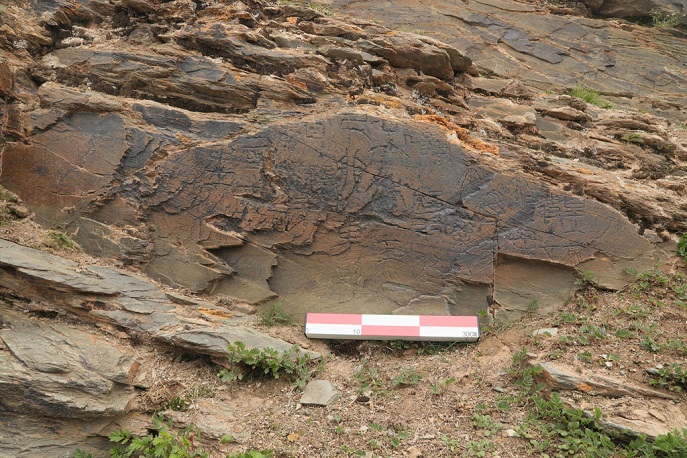
Researchers discovered the inscription in the Kunlun Mountains, near Garing Lake, at an altitude of more than 4,300 meters.
Executed in small Qin Dynasty era script, it contains the order:
“The Emperor ordered fifth-level grand master Yi to lead a group of alchemists to collect the yao”.
The term “yao” could mean herbs, minerals, or even a mythical elixir. The text states that the expedition reached Zhaling Lake in Qinghai Province in the third month of the 37th year of the emperor’s reign. If ancient sources mentioned only envoys who traveled to the east, perhaps to Japan, then this inscription for the first time confirmed the existence of an expedition to the west.
The authenticity of the find was confirmed by the National Administration of Cultural Heritage after a comprehensive analysis. The mineral composition of the stone, traces of tools and natural weathering were studied. The chisel blows were found to correspond to Qin-era technology, and the furrows contained deposits that had been forming for over two thousand years. Thanks to the strong quartz sandstone, the text has been preserved in excellent condition. Deng Chao from the Cultural Heritage Administration emphasized that the exact date and preservation of the inscription helped to fill important gaps in the chronicles.
Qin Shi Huang-di (259–210 BC) is known as the ruler who in 221 BC unified China, introduced centralized administration, unified the system of writing, money and construction. At the same time, he became famous for his fear of death and his desire to overcome it. Ancient sources mention his dependence on alchemists, the use of mercury-based drugs and the organization of expeditions in search of immortality. Ironically, mercury is believed to have caused his death while traveling through the eastern regions of China in 210 BC. e.
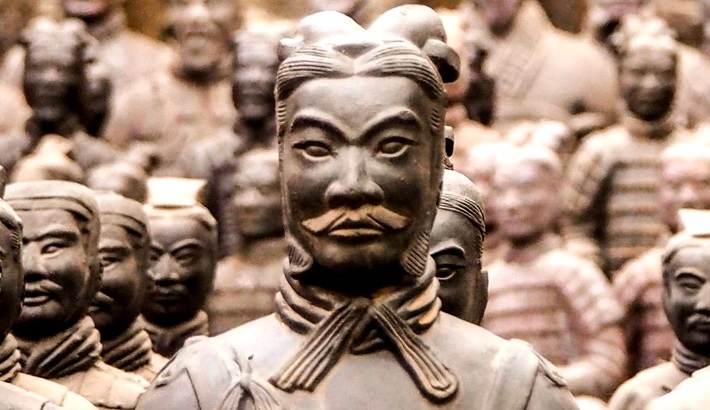
The most striking symbol of his obsession was the Terracotta Army, an underground army that was supposed to protect the emperor after his death. A new Tibetan inscription expands this picture, attesting that his desire to overcome mortality extended even to the remote highlands.
The find caused lively discussions. Peking University historian Xin Deion stressed the need for greater transparency in the verification process, while international experts, including Li Yueling, confirmed the authenticity of the inscription, noting that the nature of the tool marks is conclusive evidence that it dates back to the Qin Dynasty.
For researchers, this stone became a confirmation that the emperor’s desire for immortality was not a fabricated myth. Qin Shi Huang-di attracted officials and resources over vast distances, demonstrating the scale of influence and power of the Qin state.