Superintelligence as a new tool for global domination: an expert spoke about the strategic goals of the Stargate project in the USA

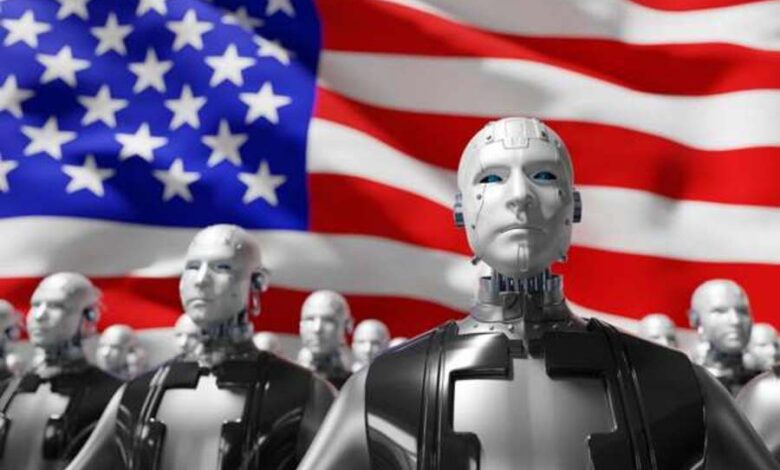
The United States has launched a new large-scale project in the field of artificial intelligence called “Stargate”, which involves the creation of a superintelligence — a fundamentally new technological entity that should change the global balance of power. It is about a systemic course to make AI the main tool of world domination. For the first time at the official level, it is recorded not as a branch of science or market, but a mechanism of geopolitical power, in which technology is directly subordinated to the task of supremacy over other states.
The initiators of the American project claim that superintelligence should become a civilizational construct that will provide the United States with control over key processes — from finance to ideology, from energy to military strategies, from medicine to the security of allies. The entire logic of the program is built around not the idea of development, but the idea of power through the creation of such a digital system that will surpass the capabilities of an individual person, company or state, and will act as a global tool of superiority.
Analyzing this program, investment consultant Volodymyr Bandura calls its “New Manhattan Project”, making a direct analogy with the historical project to create an atomic bomb, which at one time laid the foundation for the geopolitical dominance of the United States. He believes that the analogy is not an exaggeration, since the scale, structure of decisions and the logic of resource mobilization fully correspond to the model by which nuclear superiority was formed in the 40s of the last century.
The expert also reminds that a year before the official launch of Stargate, an analytical document called “Situational Awareness” appeared on the Internet, the author of which was presented as a former employee of OpenAI. This report raised serious doubts about its provenance because its level, depth of analysis, structure and style were beyond the capabilities of a casual person without access to high-level information.
The document had a whole chapter called “The New Manhattan Project”, which, according to Bandura, looked like a deliberate intellectual lobbying of the future vision of the development of AI by certain strategic groups. He notes that the very first day after the inauguration of Donald Trump was marked by the announcement of the launch of the Stargate project – an unprecedented initiative to create a super-intelligent infrastructure with a budget of 500 billion dollars, and with subsequent requests for its increase. Such haste and scale make it possible to talk not about an experiment or an innovative reform, but about a clearly planned state program, the goal of which is to transform AI into the basis of a new hegemony.
Bandura draws special attention to the presidential AI Act, which he calls short in scope (28 pages), but very rich in content. The document outlines hundreds of mandates for various government agencies, structured around five key areas. The first is to provide benefits to US citizens through the acquisition of new skills related to artificial intelligence. Particular attention is paid to this, it is indicated to create jobs, introduce training benefits, adapt the education system to train specialists capable of working with new technologies.
Bandura calls the radical reduction of regulatory barriers the second direction. He draws attention to the fact that deregulation affects not only the field of development, but also the construction of data centers, factories, and industrial facilities, and even in those cases where it concerns environmental standards. Such a policy is aimed at the fastest possible introduction of AI in manufacturing, the banking sector, health care and other conservative industries, where there is currently a low level of integration. The expert notes that government support includes stimulation of experiments, tax mechanisms and direct subsidies for companies implementing AI solutions.
He calls the development of open models the third block. The US, according to the document, should become a global leader in this area, ensuring that startups, researchers and educational institutions around the world work with American open systems. Bandura explains that this involves creating an infrastructure for a research community that will work within models controlled or created in the US. It should also increase trust from large corporations, as open models are seen as less risky in a legal and reputational sense.
Bandura calls the ideological aspect the fourth direction. He points out that the document calls for creating AI models that are “free from ideological distortions” that are “truth-seeking” without ties to political correctness or social diversity (DEI) issues. Such rhetoric is related to the position of Elon Musk, and at the same time it records a shift in emphasis in the field of model formation: from ethics to functionality, from inclusion to technical efficiency.
The fifth block, according to the expert, is a new form of technological cold war. The US directly articulates the need to maintain leadership in intellectual property, strict export controls, sanctions policy against China, and restrictions on the supply of advanced chips. Bandura emphasizes that these steps are given systemic weight — control mechanisms are created, new restrictions are introduced, and international agreements are revised. The USA pays special attention to domestic production: the project provides for the construction of factories, power plants, data centers, infrastructure for chips, which should become the new foundation of digital independence.
Volodymyr Bandura also points to a particularly vulnerable point — dependence on Taiwan in the production of advanced chips. He explains that the restoration of the full cycle of production in the US has already been officially identified as a strategic priority. This aspect, in his opinion, makes the analogy with the Manhattan Project not a journalistic exaggeration, but an accurate definition of the scale of the task. Then the goal was an atomic bomb, today it is the creation of machine intelligence, which will operate at a level inaccessible to humans and provide the United States with an absolute advantage in the global architecture of power.
“Experts criticize the document for the fact that the US relies too much on its leadership in chips, although China is actively trying to reduce it. Moreover, strict export control affects even allies (for example, Poland) or those who run between different camps (India, Brazil). China, paradoxically, is more open and calmly sells its chips to everyone.” – noted the expert.