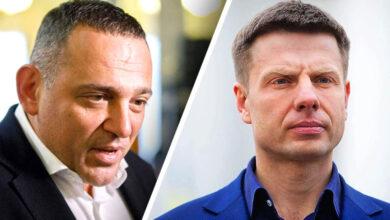
“The ability to build is what must be returned to states”: Francis Fukuyama on the failure of democracies in the world


Modern democratic countries are experiencing a deep functional crisis. Formally preserved institutions, the presence of elections, parliamentarism and the distribution of powers no longer guarantee effective governance. A paradox is observed: the older democracy is, the more it slips. There are elections, but voters are losing faith in the possibility of change. Parliaments work, but the legislative process is hampered by procedural wars. States exist, but democracy is lost. American political scientist, philosopher, economist and publicist, one of the world’s most famous public administration theorists, Francis Fukuyama sees this is not an accident, but a symptom of a deeper disease.
As Fukuyama notes, at first glance, democracies have everything: legitimacy, elections, balance of power, but it is within this architecture that chronic obstacles accumulate. In the USA and in many other democratic countries, the state is increasingly turning into a mechanism that does not allow action, but only preserves it. According to the political scientist, the collapse of democracies does not necessarily look like a dictatorship, it can be calm, slow, but inexorable. Its essence consists in the loss of the ability to act.
Francis Fukuyama fully agrees with the position of Ezra Klein and Derek Thompson, authors of the book “Abundance”, the main idea of which is that modern democracies, especially the United States, have created too many obstacles to the construction and implementation of new ideas. These obstacles are not constitutional, they are administrative, legal, procedural. Any major infrastructure project in the US can be blocked for years due to environmental appeals, disputes with local councils, lawsuits from private individuals. Everyone has the power to say no, but almost no one has the power to say yes.
In addition, Fukuyama describes in detail how in the US democracy has become hostage to the system of “vetocracy” – when any political decision can be blocked by several levels of governmental and quasi-governmental structures. In theory, this should provide balance. In practice, this takes away from the government the ability to achieve at least some results. In this logic, the political struggle turns into an exchange of blockades. The president appoints — Congress blocks. Congress votes — Senate stalls. The Senate approves — the courts cancel. And all this happens against the background of an information war, where every step is presented as a disaster or betrayal. In such an environment, management as such disappears. It is replaced by an endless ritual of positions and confrontations.
Unlike many liberal thinkers who focus only on rights, Fukuyama insists on the notion of state capacity. This is the state’s ability to implement solutions — to build bridges, organize vaccination, manage migration, and modernize the energy industry. In modern democracies, he argues, this ability has disappeared or is greatly weakened. However, the paradox is that the right to “block” has been preserved. And the ability to “act” is lost. In such a state, democracy ceases to be an effective form of organization of society. It becomes only formal. There are elections. And the feeling that they influence something disappears.
Against the background of this institutional degradation, figures appear who offer not solutions, but emotions. And here Fukuyama directly connects the problem with modern populists — from Trump to Erdogan. Their strength is not that they have a plan. And the fact that they attack a system that has lost its effectiveness.
“The Trump administration, Elon Musk, and DOGE (Department of Government Effectiveness) appear intent on undermining the American state and reducing its ability to govern.” – believes the scientist.
However, in his opinion, the main danger does not lie in these persons. It is that more and more citizens agree: this system really does not work. It no longer seems radical to them to destroy the government — it seems naïve to them to continue playing by the old rules.
Fukuyama does not call for the destruction of democracy. But he firmly insists: it must be restored as a functioning system. This means reforming the bureaucracy, reducing excessive regulatory barriers, and modernizing decision-making procedures.
“The ability to build is what should be returned to the states. This does not mean neglecting rights or freedoms, one should believe that a democratic state is capable of being not only procedural, but also productive. Not only to choose, but also to execute. Not only to promise, but also to build.” he emphasizes, fully supporting the arguments in Dostak.
In his reflections in other works on the effectiveness of democracies, Fukuyama also paid attention to the functioning of the state during a crisis. As an example, he offered to see how different countries coped with the COVID-19 pandemic. According to him, the states of Southeast Asia – in particular South Korea, Taiwan and Japan – have performed better than most Western democracies. As Fukuyama explained, the key to this was the continued respect for a competent, technocratic, impartial bureaucracy. In his opinion, it was the professionals in the ministries of health, who acted quickly and decisively, that were able to ensure an effective government response.
At the same time, as Fukuyama emphasized, in many Western countries such respect for institutions has long been absent. He believes that the public there is often suspicious of the bureaucracy, seeing in it something inefficient or outdated, and politicians – on the contrary – abuse distrust of institutions to mobilize the electorate.
Fukuyama also believes that during the last decades, a model of management based on the “Berlusconi formula” has been created in the states. It is a political model that combines media control with economic power. He emphasized that the former Prime Minister of Italy, Silvio Berlusconi, used his influence in the media to come to power, and later – political power to protect his own business interests. As the scientist noted, this model was later adopted by oligarchs in many other countries, in particular in Eastern Europe, and it poses a serious threat to Western democracy.
The political scientist notes that Western democracy still does not have effective mechanisms to combat this model. In his opinion, liberal democracy highly values press freedom, but does not know how to react when the media ceases to be a business or independent control, and becomes a direct tool of political influence and protection of private interests. He also emphasized that public radio and television could become a counterbalance to the oligarchic mass media, but only on the condition that they themselves would be protected from political and financial pressure. As Fukuyama pointed out, Internet media also have potential — the demand for reliable information in society is great, but these media have not yet developed a business model that would allow them to function independently.
Francis Fukuyama emphasized that there is a need for a broad awareness by society that the “Berlusconi model” is not a form of freedom, but a form of control. In his opinion, democracies should create an alternative model of governance in which there will be no place for oligarchs — neither in the media, nor in politics, nor in public administration.
In addition, Fukuyama provided an answer to questions about identity politics in Ukraine, related to long-term disputes surrounding the language issue. The American philosopher emphasized that modern democratic countries need a national identity, because without it it is impossible to maintain unity and solidarity within the country. It plays a key role in mobilizing citizens, their willingness to pay taxes, serve in the army, and obey laws. But, in his opinion, identity will be effective only when it is based not on ethnic or religious categories, but on the principles of citizenship.
Fukuyama emphasized that the general rule for a democratic country is to work on creating a national identity that is as inclusive and open as possible to all citizens, regardless of their origin or language. According to his conviction, civic identity should be built on common experience, values and the desire to live together in a democratic state. At the same time, he emphasized that the issue of identity is an internal choice of the nation. That is why Ukrainians must independently decide what their identity will be, and foreigners have “the least right to advise” on this issue.