The European Commission presented the 19th package of sanctions against the Russian Federation

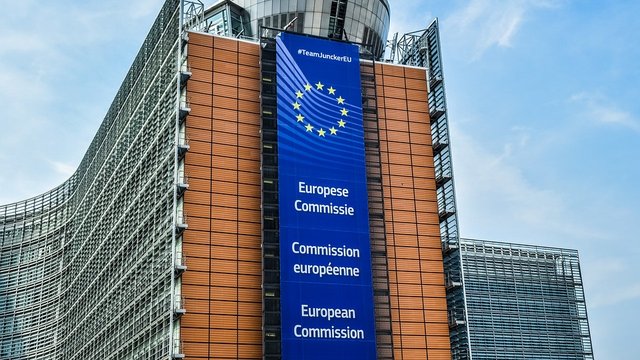
On September 19, the European Commission presented the 19th package of sanctions against Russia, which provides for a ban on the import of Russian liquefied gas, crypto-platforms and transactions in cryptocurrency, as well as blocking the operation of the Mir credit card system. This was reported by the President of the European Commission, Ursula von der Leyen.
Sanctions cover the energy sector: imports of Russian liquefied natural gas (LNG) to EU markets will be banned, a complete ban on transactions for “Rosneft” and “Gazpromneft” with the freezing of assets of other companies, as well as restrictions on 118 vessels of the “shadow fleet”, which help to circumvent the restrictions.
In total, more than 560 vessels are already under sanctions. Additional control over traders and oil refining companies, in particular in China, has also been introduced. Ursula von der Leyen reminded that Russia’s oil revenues in Europe have decreased by 90% in three years. European Commission spokeswoman Anna Kaisa Itkonen clarified that among the EU countries that still import Russian LNG are Belgium, the Netherlands, France, Spain and Portugal, while Greece, Slovakia and Hungary mainly receive pipeline gas via Turkish Stream.
The financial block provides for the prohibition of transactions for Russian banks and banks in third countries that facilitate the circumvention of sanctions. For the first time, crypto-platforms and crypto-currency operations are subject to restrictions. A ban is also introduced for foreign banks that cooperate with Russian alternative payment systems, including “Mir”, and transactions with companies in special economic zones are limited.
In the field of military technology, new bans on the export of goods and technologies that can be used on the battlefield have been introduced. 45 companies in Russia and third countries that directly or indirectly supported the Russian military-industrial complex, with a special emphasis on technologies for the production of drones, were added to the sanctions lists.
The European Commission emphasized that the restrictions have already had a significant impact on the Russian economy: the discount rate has risen to 17%, inflation remains high, and access to financing is constantly narrowing.
“One of the first requests of Russia in conversations with partners is the lifting of sanctions. This shows that our measures are working, Ursula von der Leyen said.
According to the REPowerEU plan, the EU planned to abandon Russian energy carriers by the end of 2027, but the new sanctions provide for a ban on LNG imports as early as January 2027, i.e. a year earlier than the planned deadline.