The first samples from the dark side of the Moon have raised new questions about the history of the Earth’s satellite

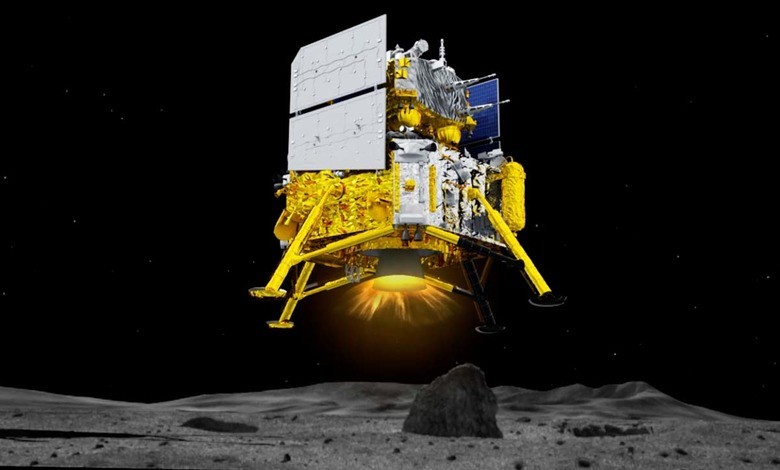
China’s Chang’e 6 space mission became the first to deliver soil and rock samples from the dark side of the Moon to Earth. In June 2024, the device landed in the South Pole-Aitken basin, where it collected about 1.9 kilograms of material. The samples turned out to be unique, they showed the differences between the visible and the reverse side of the satellite. The analyzed data provide new insights into volcanic activity on the Moon, informs CNN citing scientific papers.
The scientists found that most of the collected volcanic rock is about 2.8 billion years old. This means that volcanic activity was observed at the landing site for a long time, which is significantly different from previous data obtained during the Apollo and Moon programs. Research published in the journals Nature and Science confirms that basaltic rocks on the dark side of the Moon are much younger than on the visible side, where the age of the rocks exceeds 3 billion years.
Clive Neal, a professor at the University of Notre Dame and a co-author of the paper in Science, noted that the newly discovered age of the basalts is surprising because they lack radioactive elements that are usually catalysts for volcanic activity. He remarked:
“The young age of the basalts was a surprise. We still do not understand how these rocks were formed in the absence of radioactive elements.”
Data from the Chang’e 6 mission will also provide a better understanding of the volcanic history of the dark side of the Moon. Remote observations have long indicated a significant difference in the topography of the dark side, a thicker crust and an unusual distribution of basalt and thorium, according to researcher Kiuli Li, author of the article in Nature. The new samples confirm that the far side of the Moon has significant differences in rock composition and geological structure.
Another study author, Richard Carlson of the Carnegie Institution, noted that these results may indicate a longer existence of liquid magma on the surface of the moon than previously thought. Such discoveries suggest that volcanic activity could last much longer than scientists previously thought.
Despite the fact that people have not landed on the moon for a long time, the study of its surface continues. In 2024, scientists discovered a lunar cave for the first time, which may be the site of a future astronaut base. This discovery is another step in preparation for longer missions to the Moon.