The limits of what is permitted: what is behind the idea in the Verkhovna Rada to decriminalize adult content

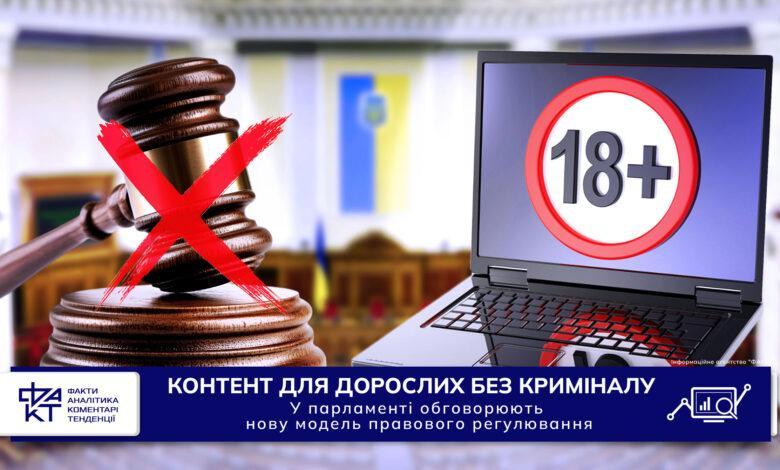
Within the walls of the Ukrainian parliament, an initiative is maturing that a few years ago seemed radical even to the liberal wing: it is about decriminalizing the production and distribution of adult content. If this idea gains legislative power, the state will actually recognize the adult content industry not as a criminal offense, but as an area that will be regulated by civil and administrative law instruments. The discussion of this initiative is alarming, because it is not only a matter of changing the legislative wording, but a potential revision of fundamental ideas about moral boundaries, social responsibility and the permissibility of the public presence of content, which until recently was automatically associated with a criminal violation. What consequences will this have for the law enforcement system, the Internet space and social norms?
Porn instead of priorities: what does the Verkhovna Rada care about during the war
Ukraine has been in a state of deep destabilization for several years – war, economic fatigue, destruction of the social structure, millions of displaced persons, loss of housing, growing inequality, institutional crisis. In such circumstances, it would be logical to expect the parliament to focus on legislative support for critical infrastructure, the security sector, social protection systems, judicial reform, and anti-corruption mechanisms. Instead, one of the directions that is now being continued is the decriminalization of pornography. That is, the Verkhovna Rada undertakes to resolve one of the most “important” issues of social morality and legal regulation: whether the production and distribution of pornographic content should be decriminalized.
The reason for this was the petition of OnlyFans (a platform for publication and distribution of content, where authors create and sell access to their materials (photos, videos, audio) through a paid subscription), which claimed pressure from law enforcement officers and demands for a bribe to close a case initiated under Article 301 of the Criminal Code of Ukraine (CPC).
Danilo Hetmantsev, head of the parliamentary committee on finance, tax and customs policy, unexpectedly expressed public support for the initiative:
“I am for decriminalization. The state cannot with one hand take money from content creators through taxes, and with the other deploy a campaign to harass the same payers. I will say nothing about “control purchases” at all.”
It was his position that witnessed a deeper shift: from a legal issue, it turns into a fight for a norm that can change the public landscape of the country. At first glance, the idea sounds “logical”: it makes no sense to take money and punish at the same time. But this “logic” replaces one key question — should the state, in principle, recognize the production of pornography as a legal activity? Hetmantsev evades the answer by appealing to “honesty”, but in fact it is a banal defense of a shadow business, which has a high-profile media cover and no ethical responsibility.
OnlyFans in Ukraine claims to have paid more than 40 million hryvnias in taxes, but was the target of harassment. Under this pretext, draft law No. 12191, registered in November 2024, is being promoted, which provides for the decriminalization of the production and distribution of pornography, if all participants are of legal age and have given their consent.
However, behind the facade of “voluntariness” and “taxpayers” there remains a whole series of issues that the authors of this initiative prefer to ignore. Will not such legalization become a formal cover for body trafficking on an even wider scale? What signal will a society receive where education reform is failing, and state policy towards children is blurred and defenseless in the face of the digital industry? Where is the line between “adult content” and exploitation – in a country where protection systems for victims of sexual violence are barely hanging on?
Hetmantsev, positioning himself as a fighter against “hypocrisy”, actually legitimizes not the law, but the market. If the state collects taxes on the sale of alcohol or cigarettes, it does not mean that it should approve of abuse. But in the case of the adult industry, instead of control, the removal of criminal responsibility is proposed, while not a word about the criteria of what is permissible, as well as the guarantee that this “administrative model” will not open the floodgates for the legal porn business with all its consequences – from involvement in sexual exploitation to increased gender-based violence.
The real problem is not in the very fact of paying taxes, but in the fact that the state turns into a shadow accountant, instead of answering the basic question: what values does it protect? With the tacit consent of parliamentary functionaries, we risk getting a market of “adult” content with state indulgences, but without any public ethics. And this is not a fight against hypocrisy, but replacing one shadow with another. In this case, we are talking about the normalization of the market, which they want to bring out of the shadows, without creating mechanisms for its control. That is, the state turns into a service for the profitable sector, without setting any value requirements. This is the essence of legislative initiatives.
Back in August 2023, draft law No. 9623 was registered in the Verkhovna Rada, which provided for the decriminalization of pornography. In a few months, the topic disappeared from the public agenda. It seemed to have lost its relevance. However, on November 11, 2024, 27 deputies will once again submit draft law No. 12191 to the parliament, with the same content. At the same time, the previous document was not removed from registration. Both are in the public domain, and both were submitted at a time when, against the background of the war, the issues of defense, judicial reform, support for IDPs, the fight against corruption, military rehabilitation and the budget deficit are acute. The draft law does not contain norms that would change the status of the porn industry in tax or economic legislation. It is exclusively about the decriminalization of certain actions related to the circulation of materials that were previously classified as pornography. According to the legislative initiative, in case of violations, administrative liability is assumed instead of criminal punishment. But how to eliminate forced participation, economic vulnerability, coercion due to debt or dependence? The bill is silent on this. As well as algorithms for the protection of minors, digital barriers, prevention of online body trade under the guise of supposedly voluntary consent.
It is also worth reminding that Article 301 of the Criminal Code did not arise from abstract puritanical logic, it was adopted as an element of public self-defense against content that forms distorted ideas about the human body, intimacy, relationships, women’s role, sexuality. In conditions where sex education is almost non-existent in Ukraine, and the question of consent is still confused with “provocation”, the pornographic industry has become the main provider of ideas about the norm, but now they want to establish it legally. Of course, Article 301 itself has been in need of clarification for a long time. Its wording is out of date and it is often used selectively as a tool of pressure rather than protection, but replacing this article with a complete repeal is extremely ill-considered.
In the countries that legalized the adult industry, the consequences were not as unambiguous as the Ukrainian decriminalization lobbyists try to present. For example, in Germany, sex work is legal, but this has not eliminated the problem of human trafficking and pimping. In France, on the contrary, there is a model of criminalization of the client, but with full support for social exit from the industry. In the US, there is fragmented regulation that often conflicts with the laws of individual states. In Ukraine, they offer a model where the state simply steps aside. It does not undertake control, does not create ethical standards, does not outline red lines, but only says: if you have paid taxes, work.
Meanwhile, dozens of stories testify to a different face of the industry: forced recruitment, the creation of porn with the participation of female students in the debt pit, filming with the participation of teenagers, pressure and threats for refusal. All this has been in Ukraine for a long time and is in the shadows, but legalization without regulation will not remove it, but will make it a new form of officialdom. And when Hetmantsev calls to “be honest”, I want to ask: before whom? Before the tax office? Before those who squeeze profit from the bodies of vulnerable women and children? Is it in front of society, to which the state should guarantee security, and not a platform for the distribution of goods that carries humiliation, objectification and legalized exploitation? True honesty is not decriminalizing the adult industry, but admitting that the state has no plan to deal with it. It is not ready for either control or protection, while it is very willing to take taxes.
Therefore, the topic of decriminalization of pornography became the subject of a full-fledged legislative process, where the gap between the requests of citizens and the agenda of part of the parliament is clearly visible. Even if the content of the document is technically justified, its appearance against the background of a military disaster and the growing demand for effective management looks like a dissonance.
It should be noted that Ukraine ranks 14th in the world in terms of visits to Pornhub, while the average time spent by Ukrainian users on the site is 9 minutes and 53 seconds. The largest age group is 25–34 years old, followed by 18–24 year olds. There is nothing criminal about these figures, but nothing that calls for legislative intervention in wartime conditions. Private content consumption practices are not a problem that society demands to be solved immediately.
The existence of criminal liability for the distribution or possession of pornographic content may be a topic for discussion within the framework of criminal code reform or in the context of privacy protection. But bringing this topic to the forefront of parliamentary work, when the state is facing a large-scale humanitarian, financial and management crisis, causes justified criticism. And as long as these priorities are formed without taking into account public demand, trust in the legislature will continue to decline.
Decriminalization of pornography: risks for society and the state
In the case of the adoption of draft law No. 12191, Ukraine will for the first time officially remove the concept of pornography as an object of criminal prosecution from the regulatory field. Formally, this will reduce the number of criminal proceedings, but the legal vacuum that will arise after this step will immediately cause a number of consequences that were not calculated by the initiators. The key problem in this case is the absence of any mechanism for regulating the circulation of sensitive digital content at the household level, in the professional environment, in the context of cyber security, protection of minors, psychological impact and the system of private law.
In addition, the repeal of Article 301 of the Criminal Code will free the hands both for the legal distribution of erotic content and for the transition of small producers into a gray area without any supervision. If the content does not fall under the exceptions (children, violence, revenge porn, deepfake), it becomes legally neutral, so the law will allow anyone to produce, sell and distribute pornographic materials without a license, ethical oversight or labeling. As a result, the state will get the growth of the shadow segment of the digital market without any impact on quality, safety or accountability.
An even more serious gap will appear in the field of education and child protection. Without Article 301, there will be no mechanism for responding to attempts to circumvent direct prohibitions. Even with the formal preservation of responsibility for child pornography, there will be no way to stop the distribution of content with models of dubious age, deepfake imitations or products that specifically disguise their nature as permissible. Platforms such as Telegram or X (Twitter), which are not moderated in Ukraine, will be able to distribute such content without violating current legislation. The result will be the mass entry of minors into an uncontrolled environment of digital sexualization — without a system of restraint, protection algorithms and responsibility.
For the legal system, the repeal of Article 301 will not be a purely technical action, but will be the first example of complete deregulation in a sensitive area without building control mechanisms. In the future, this will set a precedent for the dismantling of other criminal law norms that are considered “outdated” – without a thorough analysis of practice, enforcement, alternatives. In addition, there will be a need to review the sentences already passed, including those related to borderline cases. This will lead to an additional burden on law enforcement officers, courts, the prosecutor’s office, advocacy and the administrative system.
Also, the absence of a state policy on sexual content in the digital environment will cause a rapid increase in conflicts in the field of employment, education, media, family and labor disputes. Without a regulatory framework, any private leak or use of pornographic materials in an unexpected context will have no legal qualification—either under civil, administrative, or criminal law. This means that individuals whose content ends up in public access or is used for manipulative purposes will be deprived of protection tools.
At the level of social dynamics, the consequences of decriminalization will be felt primarily in the normalization of the commercialization of sex in wartime conditions. A state that does not have a system of basic sex education, has not developed a code of ethics for interaction in the digital space, does not have a state policy for working with vulnerable groups, will at the same time receive a free market with the simplest entry conditions. This will be especially toxic for adolescent girls and women in social crisis, who will be tempted to make a quick buck in the absence of alternatives. No compensatory policy is offered. The issue of sexual exploitation of vulnerable groups is not articulated. The entire weight of ethical responsibility is transferred to individuals who are not legally protected by anything.
For the parliament, this initiative will become a political marker — the adoption of the law will demonstrate a shift towards topics that do not have an obvious public demand in wartime conditions. Confidence in the legislative body that passes the law on pornography at a time when the basic problems of the military, law enforcement, judicial, and social systems have not been resolved will decrease even more. Support for the initiative will be read as a signal of the loss of the ability to set priorities and as alienation of the parliament from the real life of the country.
In the medium term, Ukraine without legislation on digital security and at the same time without criminal liability for the distribution of pornography will have a chaotic market for sensitive content. The situation will deepen with the growth of children’s access to dangerous materials, the use of deepfake technologies in manipulation, and the spread of psychological dependence on synthetic content. In the long term, this means one thing: the state will get out of the regulation of one of the most dynamic, most technological and most vulnerable to abuse industries of digital culture. And he will do it at a time when the institutions of supervision have not been created, the judicial system has not been updated, and the society is deeply fragmented and exhausted by the war.