The nuclear rhetoric trap: why it is dangerous to play with the topic of weapons of mass destruction

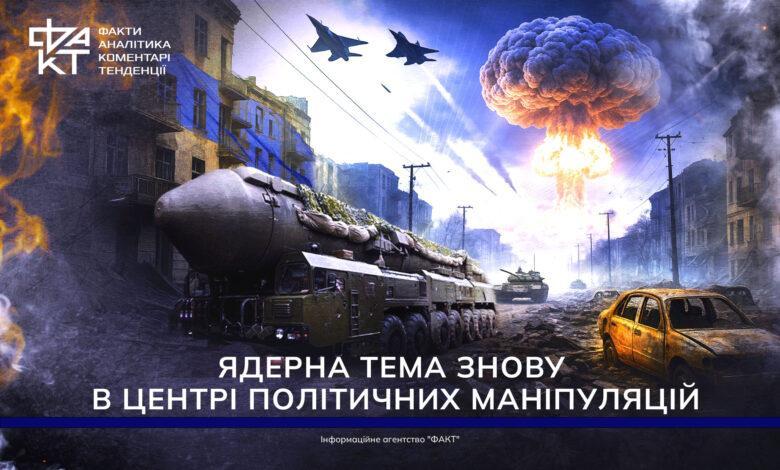
A few years ago, public statements about nuclear weapons remained mainly at the level of declarations that did not go beyond the established framework. Today, this topic is more and more decisively at the center of political and military discussion both within Ukraine and on the international arena. It turns into a real factor that influences decision-making and strategy formation. Politicians, experts, military and individual statesmen began to use formulations that were previously silenced or remained in the realm of the unspoken. The argument is that only nuclear weapons can guarantee our country’s national security. If the allies do not give guarantees and Russia understands only force, it remains to form strategic deterrence on its own. In this logic, nuclear weapons remain the last, most powerful tool for asserting the state’s subjectivity, but the consequences of such rhetoric may be opposite to the desired ones.
How risks are formed around statements about nuclear Ukraine
Let’s start with the story. After the collapse of the Soviet Union in 1991, Ukraine became an independent state, on whose territory remained a significant part of the nuclear arsenal – one of the largest in the world in terms of the number of warheads and means of their delivery. Formally, these weapons ended up within the boundaries of the new state, but remained under the control of Moscow. It was this that created a difficult situation that had to be resolved at the first stages of state formation.
As of the end of 1991, Ukraine had 176 intercontinental ballistic missiles: 130 liquid-fuel SS-19s, each with six warheads, and 46 solid-fuel SS-24s with ten warheads each. In addition, dozens of strategic bombers — Tu-95MS and Tu-160 — were based at Ukrainian airfields. The total number of strategic nuclear warheads was estimated at more than one and a half thousand, and up to four thousand tactical ones. However, Kyiv did not have independent access to the combat control system. The first president of Ukraine, Leonid Kravchuk, aware of the risks, tried to at least technically make an unauthorized launch from the territory of Ukraine impossible, but the Russian Federation did not agree to this.
However, even before the declaration of independence, the intention not to become a nuclear state was fixed in Ukrainian political culture. In the Declaration on State Sovereignty of July 16, 1990, clear guidelines were laid down: neutrality, non-alignment, as well as the obligation not to produce, not to acquire, and not to use nuclear weapons. This approach is known as the “Pavlychka doctrine” – named after Dmytro Pavlychka, who in those years headed the parliamentary committee on foreign affairs. Later, it was criticized for its idealism, but for a state that chose a peaceful path from the beginning, such a position had an internal logic.
At the same time, the trauma of Chernobyl was still fresh, so for a large part of society, the prospect of completely getting rid of any form of nuclear threat was perceived more as a liberation than a loss. Already in October 1991, the Verkhovna Rada officially declared a nuclear-free status, and in December of the same year, the Minsk Agreement of the Commonwealth of Independent States was signed, which provided for the phased disarmament – first of tactical, and later of strategic weapons.
It should be noted that the formal rejection of the status of a nuclear state did not happen immediately. Ukraine was in no hurry to join the Treaty on the Non-Proliferation of Nuclear Weapons (NPT), which caused increasing concern among Western partners. The signal was, in particular, demonstratively restrained diplomatic behavior of the USA. In January 1994, President Bill Clinton visited Ukraine, but instead of a full visit, he limited himself to a short conversation with Leonid Kravchuk at Boryspil airport.
Ukraine could not afford to lose international support, especially at a time when the security system was just being formed. Therefore, in November 1994, it joined the Treaty on the Non-Proliferation of Nuclear Weapons (NPT), which stipulated that all nuclear weapons on its territory are recognized as Ukrainian property, but the country undertakes to completely eliminate them. In return, our country expected not only moral support, but also specific security guarantees. Their formalization was the Budapest Memorandum signed on December 5, 1994 — a document by which the United States, Russia, and Great Britain assured respect for the sovereignty, territorial integrity, and inviolability of Ukraine’s borders, as well as the obligation to refrain from any pressure — political, economic, or military.
On June 2, 1996, Ukraine left the nuclear age, on that day the last nuclear warhead was finally removed from the territory of the state – a symbol of the final dismantling of the largest arsenal after Russia and the United States. The country, which at that time possessed nuclear charges, unique technologies, missile systems, intercontinental means of delivery, became nuclear-free in a matter of years, and in exchange received empty promises. Formally, the guarantees agreed to by Ukraine had no legal force. It was not a treaty, but a declaration – a political piece of paper without mechanisms of influence. Russia destroyed it first by annexing Crimea. As a result, the US and Britain expressed “deep concern”, but did not defend, and without a nuclear deterrent, Ukraine became the target of attack.
However, the question of restoration of nuclear status did not disappear, it became taboo in diplomacy, but lived in political and military circles. After the recent speech of the British colonel Richard Kemp, in which he publicly suggested that Great Britain consider helping Ukraine to create its own nuclear weapons, the topic, which previously remained at the level of marginal speculation, acquired a new informational status. It was legitimized as an object of public analysis – Ukrainian politicians, political scientists and the military began to use the phrases “return to nuclear status”, “alternative to NATO”, “absolute right to nuclear weapons”. Such formulations are increasingly appearing in interviews, public speeches, political forecasts and even military concepts.
In addition, the statement of Andrii Biletskyi, the commander of the Third Army Corps, made recently in an interview with the YouTube channel “Viddushivdush” became resonant. According to him, nuclear weapons are “mandatory” for Ukraine, since only they, together with a modern army, can guarantee national security. Biletsky emphasized that Ukraine has “legal, practical, physical and moral” grounds for possessing such an arsenal, and all other security formats — from demilitarized zones to international contingents — lack any credibility. He directly declared the ineffectiveness of Western initiatives and the need to create a half-million army of a new type with its own ballistic and nuclear components.
Other public figures joined this logic. Political scientist Mykola Davidyuk referred to Kemp’s statement as an indicator of changes in Western thinking: according to him, “some partners” are already privately offering Ukraine assistance in obtaining nuclear weapons. He emphasized that this topic is no longer taboo and is gradually transforming into a factor of foreign political pressure. Consequently, a new information background is being formed, in which the very idea of Ukrainian nuclear weapons is perceived not as an extreme, but as a potential alternative, in particular in the case of blocking NATO membership.
Against this background, statements at the highest level periodically appear. In February 2025, the President of Ukraine, Volodymyr Zelenskyi, in an interview with the British journalist Piers Morgan, directly stated that nuclear weapons could be a sufficient guarantee of security in the event that Ukraine does not join NATO.
“Give us back nuclear weapons, give us missile complexes, partners will help us finance a million-strong army, move your contingent to those regions of our country where we want stability, so that people have peace.” Zelensky said.
Thus, the president put the topic of nuclear weapons on a par with other possible formats of guarantees as an alternative to joining the Alliance.
American messages about Ukraine’s nuclear weapons: positions and hidden interests
In March 2025, the American political space showed growing ambivalence about Ukraine’s right to raise the issue of nuclear weapons as a security tool. Against the background of the protracted war with Russia and the lack of clear guarantees regarding NATO membership, the discussion about nuclear deterrence has resurfaced. And the reaction on the part of the USA turned out to be not only cautious, but also strongly negative in a number of moments, and demonstrably cynical in some statements.
US President Donald Trump, returning to active public policy, continues to demonstrate a specific approach to the topic of nuclear weapons, Ukraine and relations with Russia. In his statements, he combines public messages about disarmament with a desire for personal agreements with the Kremlin and emphasizes his own difference from his predecessors, using the theme of the nuclear threat as a tool for geopolitical positioning.
In recent statements, Trump emphasized that “significant progress has been made with Ukraine and Russia.” However, what exactly is meant by “progress” is not specified. But it goes on to say that he wants to complete this process “so as not to talk about nuclear weapons.” This is a direct hint that the topic of nuclear potential is undesirable, but at the same time closely related to the negotiations. In fact, Trump does not deny that the nuclear issue is a factor in his contacts with Moscow and Kiev.
In addition, he stated that “it would be wonderful” if all countries gave up nuclear weapons. However, this thesis was voiced against the background of the recognition that the USA and Russia have the largest arsenals, and China, he said, “will have the same in 4-5 years.” Such a prediction by Trump simultaneously shows the rejection of the nuclear balance as a stable structure, as well as an attempt to turn disarmament into one of the pillars of his own diplomacy. He recalled that he had “come a long way with Russia” on the nuclear disarmament program, which he claimed had been derailed by his political opponents because of the “Russia hoax”.
Trump’s rhetoric is demonstrably personalized. He does not speak on behalf of the American administration, but emphasizes his own exceptional ability to “deal with Russia” and solve global nuclear problems through personal connections. At the same time, there is no mention of Ukraine’s security or mechanisms that could compensate for its vulnerability. His focus is exclusively on the global security of the big players: the USA, Russia, China.
It should also be mentioned that on March 25, the Special Envoy of the US President for Special Assignments, Richard Grenell, stated that the nuclear weapons that Ukraine transferred to Russia within the framework of the agreements of the 1990s “were not Ukrainian.” According to him, “it was a Russian arsenal, not a Ukrainian one,” and added: “This is an unpleasant fact.” This wording indicates an attempt to retrospectively transfer all responsibility for the former Soviet arsenal to Russia, which removes Ukraine from the context of its own nuclear past and at the same time nullifies the legal nature of the agreements enshrined in the Budapest Memorandum.
At the same time, the former US ambassador to Ukraine Steven Pifer, who participated in the negotiations on the Budapest format, publicly responded to this statement. He noted that Grenell is “categorically wrong”, since the warheads that remained on the territory of Ukraine after the collapse of the USSR were under Ukrainian jurisdiction. Pifer clarified that although the weapons were of Soviet origin, they were not Russian, and Ukraine itself was responsible for them until it handed them over as part of its obligations.
In addition to the discussion about the historical relevance of the nuclear arsenal, the USA also sent direct political signals. State Secretary Marco Rubio called statements from the Ukrainian side about the possibility of obtaining nuclear weapons as an alternative to NATO membership “not serious.” In a conversation with Breitbart News, he stated that he does not consider these proposals to be realistic, and the idea of arming Ukraine with nuclear weapons is unacceptable.
“We need fewer countries with nuclear weapons, not more.” Rubio emphasized, adding that he “did not hear” such a demand directly from Zelensky.
Separately, Rubio focused on the topic of American-Russian contacts. He noted that the US is interested in discussing with the Kremlin the issues of frozen Russian assets, the work of American companies in the Russian Federation, and the opening of diplomatic missions. At the same time, this statement sounded in parallel with the ongoing shelling of Ukrainian cities and another Russian attack on the energy infrastructure.
So, the administration of Donald Trump has clearly outlined its position against the return of nuclear potential to Ukraine. All public signals from Washington, including statements by Secretary of State Marco Rubio, appeal to the idea that the world should move toward reducing the number of nuclear states, not expanding them. Even when the Ukrainian side raises the issue of returning to nuclear status as a reaction to the constant refusal to provide real security guarantees, the United States reacts categorically negatively: neither weapons nor even a theoretical consideration of such an option.
However, against the background of this official rhetoric, there is another plane – hypothetical assumptions that depict a much more cynical context of possible developments. We are talking about scenarios in which Russia’s nuclear attack on Ukraine, despite the terrible humanitarian and geopolitical consequences, can bring indirect strategic benefits to the USA, according to the logic of cold calculation. If it is assumed that Russia still carries out a limited nuclear strike on Ukrainian territory, not even on cities, but on military or infrastructure facilities, this will immediately make Europe a space of immediate nuclear threat. In such a situation, business, investment, production, technology and scientific personnel can start emergency relocation. According to the logic of big capital, the movement will take place where there is strategic security, military power, independent energy, markets and resources. The USA will be the main beneficiary of this process and will receive enormous profits.
Hypothetically, if a real threat of nuclear escalation looms over Europe, investments, bonds, and bank transfers can move toward the USA in a few days or even hours. Manufacturing enterprises, especially high-tech ones, can consider the issue of urgent relocation, primarily from such countries as Germany, France, the Czech Republic, and Belgium. This is not an openly articulated position of any administration, but a completely realistic assumption that fits the logic of economic migration in a high-risk world. Technological and financial systems of the modern West react very quickly to changes in the security climate. And although no responsible politician will say this publicly, such scenarios are taken into account in strategic forecasting.
So, it is quite possible that in the event of a nuclear attack on Ukraine, against the background of human casualties, ecological disaster and the collapse of European trust, the American economy will receive an unprecedented benefit. In this context, a moral question arises: is there room in contemporary American strategy to understand not only self-interest, but also the long-term price humanity will pay if such a scenario becomes a reality.
Consequences of the potential restoration of Ukraine’s nuclear status
The unfolding of the discussion about the possibility of restoring Ukraine’s nuclear status, and even more so the prospect of producing its own nuclear weapons, goes far beyond the sovereign right to self-defense. In the context of a full-scale war, this issue becomes highly sensitive, capable of destroying not only diplomatic structures, but also the very field for an achievable peace. A public or behind-the-scenes return to the idea of nuclear weapons is not a neutral or technical action. This is a step with deep international, security and economic consequences.
First of all, it is about the fundamental destruction of the global nuclear non-proliferation regime, to which Ukraine has joined. After decades of operation, this regime teeters on the edge of credibility. And if the country that publicly gave up its arsenal in exchange for guarantees officially announces the return to production, it will become a precedent for other regions of the world, primarily the Middle East, Southeast Asia, and Latin America. Instead of solidarity and support, Ukraine may be directly accused of undermining a regime that many already consider ineffective. This will mean the loss of the moral position on which international support for Kyiv stands today.
Next is the reaction of key Western partners. The United States, which is the main donor of weapons, finance, intelligence and political influence, has repeatedly signaled that the expansion of the nuclear club is a red line. In the case of even partial legalization of the production of nuclear components, all programs of aid, cooperation, and integration into Western defense structures will be put on hold. This is not a threat, but an established doctrine. Continuation of the topic of nuclear recovery quickly isolates Ukraine from the Western political field, and in the conditions of war, this is tantamount to strategic suicide.
It is also worth considering that the return to nuclear status will not be limited to technical processes, it will cause a chain reaction. Russia will use this initiative as a casus belli for a new escalation under the pretext of “destroying the nuclear threat on its borders.” China — as a member of the UN Security Council and a nuclear power — will publicly condemn such a move and collapse the diplomatic ambiguity it still maintains. Today, he maintains a restrained and neutral public position regarding Ukraine, and in the event of a declaration on the restoration of the nuclear status, he will be forced to take a harshly critical position – not because of his support for Russia, but because nuclear expansion in Europe is contrary to his own global interests and the official nuclear doctrine.
At the same time, India, Israel, Saudi Arabia, South Korea and other countries will begin reviewing their own nuclear positioning models. At the same time, Ukraine, which has been at the center of world sympathy until now, will find itself at the center of strategic mistrust.
Another consequence is internal economic. The creation of a full-fledged nuclear cycle requires enormous resources: highly enriched uranium, infrastructure, reactors, specialized plants, security systems, secrecy, transportation. All this in a country that is already overburdened with war spending, has tens of thousands of destroyed facilities and social tension. Furthermore, funding a program that would be officially condemned by the Allies would inevitably cause internal divisions. Political forces will begin to use the topic of nuclear weapons for mutual blackmail, and society will receive a new dividing line.
Finally, the restoration of nuclear status calls into question the very possibility of a peaceful settlement of the war. Any configuration of future peace with Russia, regardless of its form, will require the involvement of third parties. They, however, will refuse to participate in the process in the event of the start of a nuclear project. Ukraine will be perceived as an unstable party that violates taboos in the midst of the biggest conflict in Europe since the Second World War. This will rule out any future format for dialogue, even with a temporary truce.
As we can see, the restoration of Ukraine’s nuclear status, even in the format of the declared intention, triggers a chain change of ideas about the very nature of Ukrainian subject status in the world: from a state that appeals to the principles of international law and suffered from violated guarantees, it turns into a country that deliberately goes beyond the limits of the global security regime.
The restoration of Ukraine’s nuclear status and the launch of its own production of nuclear weapons will inevitably turn the war into an irreversible phase of confrontation, where the very mechanism of political settlement will lose its relevance as such. Instead of creating the conditions for ending the war, such a move will shift its framework from a regional conflict to a global nuclear danger zone, in which diplomacy will no longer be relevant. Ukraine will automatically find itself in conflict not only with the Russian Federation, but also with allies who today support it precisely because it defends international norms, and does not violate them.
Nuclear weapons will not be a guarantee of peace, because their very appearance in Ukraine will be perceived as a final break with the global deterrence regime. Rearmament will remove Ukraine from the circle of partnership formats and turn it into an isolated actor responsible for a new nuclear arms race in the center of Europe. This will not bring peace closer, but will make it impossible.