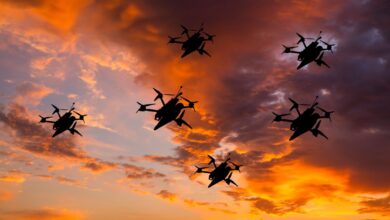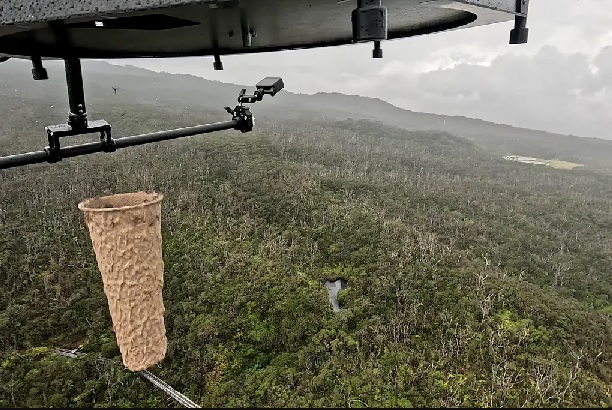
Drones have been launched over the forests of Hawaii, scattering biodegradable capsules – each containing about a thousand mosquitoes. This is reported by CNN.
These are not ordinary mosquitoes, but laboratory-grown males that do not bite and carry the natural bacterium Wolbachia. Infection with this bacterium leads to the fact that after mating with wild females, their eggs become unviable. This method should reduce the number of invasive mosquitoes that threaten local birds, including the rare Hawaiian honeyeater.
These birds play a key role in pollination and are of great cultural importance to Hawaii, but are now on the verge of extinction. Once home to more than 50 species of honeyeaters, the archipelago now has only 17, most of them threatened with extinction.
Last year, the small gray akikiki bird disappeared from the wild, and the yellow-green akeke population has dwindled to fewer than 100 individuals. According to Chris Farmer, director of the Hawaii program at the American Ornithological Society, the main threat to these birds is avian malaria, which is carried by mosquitoes.
The mosquitoes are not native to the archipelago – they were first recorded in 1826, probably introduced by whaling ships. Local birds are not immune to malaria, so the disease caused a mass extinction of the species.
Previously, honeyeaters escaped to the highlands of the islands of Maui and Kauai, because mosquitoes breed only in the warm lowlands. However, climate change has caused temperatures to rise, and mosquitoes have begun to appear even in the mountains, destroying birds in previously safe places.
To break this vicious circle, conservationists are using the Incompatible Insect Method (IIT) – releasing male mosquitoes with Wolbachia, which do not leave offspring after mating with wild females. For several years, scientists have studied the effectiveness of the method, tested different strains of the bacteria and gone through all regulatory procedures.
Mass breeding of such mosquitoes began in 2022 in a laboratory in California, and in 2023 their release began in honeybee habitats on Maui. Every week on the islands of Maui and Kauai, about 500 thousand mosquitoes are released using drones and helicopters. This is the world’s first use of IIT technology for conservation.
The main challenges include the difficult mountainous terrain and changeable weather, which often forced helicopter flights to be canceled. After extensive testing, the drones have proven their effectiveness: they deliver mosquitoes in protected biocapsules, keeping them safe throughout the flight.