
Tickets in Europe may increase in price at the end of summer: what does this mean for Ukrainian refugees

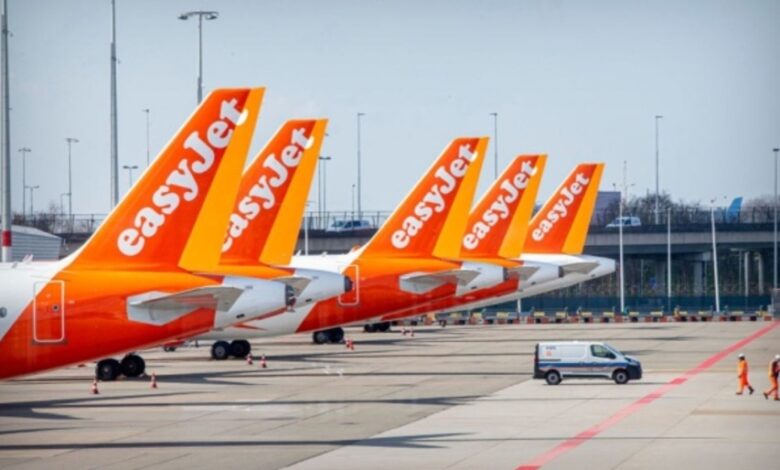
Travel plans within Europe this summer are increasingly dependent on the situation on the fuel market, which is already starting to affect the policies of major air carriers. For Ukrainian refugees living in EU countries and often forced to fly due to family circumstances, documents, work or difficult routes to Ukraine, this issue is of quite practical importance. The increase in ticket prices at the end of summer may hit first of all those who are used to postponing booking until the last minute or are building a trip with several transfers, where each price change automatically increases the total costs.
Why airlines are announcing ticket price increases
As reports Reuters, Kenton Jarvis, CEO of one of Europe’s largest low-cost carriers, easyJet, said that by the end of the summer of 2026, air tickets in Europe could rise significantly
The impetus for a new wave of announcements about a possible increase in flight costs was a statement by easyJet management, which warned that closer to the end of the summer season, passengers could experience more serious changes in fares. The company attributes the reason to pressure on the fuel market amid the war in Iran. While part of this blow is held back by pre-agreed fuel contracts, the effect of such protection is not indefinite, and the closer to the end of the summer, the more significantly the market will depend on the current price of fuel.
The situation that easyJet is talking about is not reduced to a simple explanation like “fuel has become more expensive – tickets have become more expensive”. For large carriers, hedges are important – pre-agreed contracts that allow them to buy fuel at a previously agreed price and temporarily protect the company from sharp market fluctuations. It is thanks to these agreements that carriers may not pass on the additional costs to passengers in full for a certain period of time.
At easyJet, such a system still allows them to keep costs under control, but by the end of the summer, the effect of some fuel protection will weaken. This means that new ticket prices will increasingly depend on how much fuel will cost at that time, and not on old, more profitable contracts. For a passenger, this sounds technical, but the consequence is quite clear: cheap tickets that can still be found at the beginning of the season may become less available closer to August or September.
The aviation industry operates in conditions where fuel remains one of the largest expense items, so any shocks in the oil and fuel markets quickly translate into tariff policy. For large carriers, this is not a secondary component of the budget, which can be covered for a long time with internal reserves. If the market remains unstable for several months in a row, companies begin to either raise prices, or review the frequency of flights, or combine both steps.
The European market is also vulnerable because a significant part of the aviation fuel logistics is connected to regions where any military escalation immediately generates a nervous reaction from traders, suppliers and the airlines themselves. Because of this, the consequences for passengers appear not only in the form of more expensive fuel, but also in the form of general uncertainty: carriers are planning the season more carefully, looking at demand longer and are less willing to keep prices aggressively low for future dates.
In easyJet’s statements, it is not only the forecast of price increases that is important, but also the time emphasis. The company is not talking about an instant jump in prices tomorrow, since the summer season is partially covered by previous fuel purchases. The most difficult period seems to be the second half of the summer, when old contracts will gradually lose their protective role, and market pressure will be more pronounced in the cost of new bookings.
The significance of ticket price increases for Ukrainian refugees
This is especially important for Ukrainian refugees, because many are postponing buying tickets until August in the hope of catching late promotions or waiting for a more convenient schedule. In a stable market, this tactic sometimes works, but in a situation where carriers are already warning of a possible increase, it turns into a risk. At the end of summer, demand increases in itself, as the holiday season ends, people return to work, and families with children prepare for the school year. If more expensive fuel is added to this, the chances of a truly profitable fare are noticeably reduced.
A separate consequence of the current situation is related not only to the price, but also to the change in the destinations chosen by travelers. Due to tensions in the Middle East, some passengers are starting to be more cautious about routes in the eastern Mediterranean, and interest is gradually shifting towards western resort destinations, primarily Spain. This creates additional pressure on popular flights, where seats are sold out faster and fares are growing more actively.
For Ukrainians living in the EU, such a change in market behavior has a double effect. On the one hand, the prices of routes that are already in high demand during the high season are rising. On the other hand, airlines can reduce the frequency of flights where demand weakens or becomes less predictable. For the passenger, this means that the problem is not limited to the amount of the ticket: the choice of departure times is decreasing, connections with buses and trains are getting worse, and any transfer becomes more expensive and more nerve-wracking.
For most European passengers, a plane is a separate way to get from one city to another. For Ukrainian refugees planning trips between EU countries and Ukraine, a flight is usually only one part of a longer route. Due to the closed skies over Ukraine, after arriving at a European airport, they often have to travel further by train, bus or car to the border, and then cover the distance inside Ukraine. Because of this, even a moderate increase in the price of a plane ticket quickly entails an increase in the entire trip budget.
For families with children, the problem is even more acute, since summer mobility in such families is rarely spontaneous. Trips are associated with vacations, returning to school, visiting relatives, processing documents, medical issues, or the need to maintain contact with family in Ukraine. In such conditions, a plane ticket is no longer perceived as a tourist purchase that can be easily refused. It is part of vital logistics, where a price jump of several dozen euros per person for a family with two or three children turns into a tangible financial burden.
What may change for those planning summer trips
First of all, the logic of booking is changing. If earlier it was possible to focus on a relatively cheap flight and only then complete the route by bus or train, then in conditions of fuel instability it is more expedient to immediately consider the entire trip as a single chain of costs. The lowest fare on a flight does not always mean a profitable trip if, due to an inconvenient arrival time, you have to pay for a night in a hotel, a separate transfer to the station or an expensive ticket for the last available bus to the border.
Flight schedules become no less important. If carriers start reducing the frequency of flights on certain routes, the choice will become narrower, and any error in planning will be more expensive. One canceled or postponed flight in a chain, where it is followed by a trip to the border, an overnight transfer and booking a seat on a bus, creates not one problem, but a whole cascade of costs. For a person flying on vacation without strict deadlines, this is an inconvenience. For a refugee traveling to Ukraine for a specific reason and with a limited budget, this is a serious blow to the entire route.
Major crises always change the market in two ways: they increase the costs of carriers and at the same time affect the decisions of refugees. People are increasingly delaying flights, paying closer attention to security news, changing destinations or even canceling trips that seemed familiar until recently. This creates a difficult situation for airlines, as they cannot accurately predict how demand will behave in the coming months.
So, summer trips should be planned not with a single ticket, but with the entire journey, including luggage, transfers, ground transportation and possible delays.


