
Ukrainian refugees after the peak of departure: how the migration situation in Europe is changing in 2026

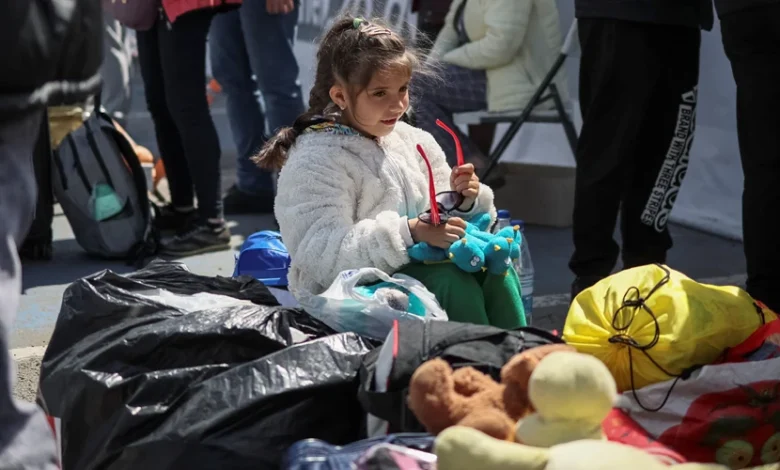
After several years of large-scale forced displacement, Europe is entering a period in which the decline in new asylum applications is combined with a change in the composition of migration flows, differences in the approaches of individual states, and the new situation of Ukrainian refugees, for whom the stage of urgent departure is increasingly giving way to a stage of longer-term settlement. Ukrainians occupy a central place in this changed picture, as their presence has been influencing the labor market, social systems, schools, housing, and political debates in host countries for several years. At the same time, the decline in the number of new applications gives reason to speak of a new phase of the migration process, where stability of stay, rules for the continuation of protection, and the willingness of states to maintain long-term commitments become important.
What the first months of 2026 showed
At the beginning of 2026, the total number of new asylum applications in the European Union countries, together with Norway and Switzerland, decreased to 173 thousand, which is 18 percent less than in the same period of the previous year. This decline reflects not one single reason, but several processes at the same time, including changes in resettlement routes, stricter approaches to reception, fatigue of European systems from the long-term migration load, and the gradual exhaustion of the wave of emergency departures that shaped the overall statistics in previous years.
If we look at these figures in the Ukrainian context, the most important thing is not only the decrease in the overall indicator, but above all the fact that Ukrainians have become much less likely to apply for new applications. During the full-scale war, millions of people have already found themselves outside the country, so now the migration dynamics are less and less reminiscent of the sharp outflow of the first years and increasingly depend on how the lives of those who have already left are developing, where they have settled and whether they see a need to change their legal status.
The reduction in applications from citizens of Ukraine by more than half has become one of the most noticeable changes in European migration statistics. Such dynamics indicate that some of the people who left earlier have already gone through a period of urgent adaptation, have found housing, education for children, temporary or permanent work and are no longer in a situation where the decision to seek asylum is made as a forced reaction to immediate danger.
Since Ukrainian refugees have become one of the largest groups of displaced people in Europe in recent years, any change in their behavior is immediately reflected in the broader statistics. Some families who left in a hurry at the beginning of the war have already managed to integrate into the life of the host countries, while others are postponing a new departure or moving to another country, taking into account the cost of rent, access to social support, employment opportunities and conditions for children in schools and kindergartens.
Changing migration profile
Along with the decrease in the flow of Ukrainians, the composition of people applying for asylum in Europe has also changed. In the first quarter of 2026, citizens of Venezuela, Afghanistan and Bangladesh came to the fore among the main groups of applicants, while Ukrainians and Syrians, who until recently largely determined the overall picture, lost their previous weight in the new statistics.
This restructuring shows that Ukrainian refugees are no longer the main source of new applications in the form in which they were at the beginning of the great war, but their influence on the European migration landscape remains due to the number of those already living abroad. As a result, the attention of states is gradually shifting from accepting new waves to issues of longer stays, access to documents, work, medicine, education and conditions under which people are not hung between temporariness and the need to build everyday life.
Why there have been fewer Ukrainians among new applications
During the full-scale war, the motivation for leaving Ukraine changed noticeably. At the first stage, people were fleeing from hostilities, massive shelling and the destruction of cities, so the decision to cross the border was often made within a few days or even a few hours. However, in 2026, longer-term calculations related to income, housing, family status, caring for elderly relatives, and the understanding that moving to another country means not a short-term shelter, but a restructuring of one’s entire way of life will play an increasingly important role.
The adaptation of those Ukrainians who are already in European countries has also had a separate impact. Some people have moved from the status of emergency rescuers to the status of residents who rent housing, have placed their children in educational institutions, have mastered the language at least at a household level, and have entered the local labor market. Under such conditions, new applications are naturally decreasing, because more and more decisions are not about escaping the first blow, but about choosing a life model for the months or years ahead.
Another factor has been fatigue from the constant uncertainty that accompanies any displacement during a protracted war. For many families, a second or first departure is associated with the risk of losing social ties, disrupting the children’s educational process, starting the search for housing from scratch and again going through a difficult period of adaptation to a foreign administrative system, where the rules of support, work and residence in different countries differ significantly.
Where are the largest concentrations of refugees
Despite the decline in the total number of applications, the main migration burden continues to be borne by European economies, primarily France, Spain, Italy and Germany. They concentrate the majority of asylum applications and retain the role of the main destinations for those seeking protection or better living conditions, while some Central European countries, in particular Hungary and Slovakia, demonstrate very low rates of new applications.
For Ukrainian refugees, this unevenness is of particular importance, because the distribution of the burden affects access to housing, school places, social assistance and the speed of administrative procedures. Where the number of arrivals is large, state systems are under greater pressure, which increases competition for rent, the burden on local budgets and politicians’ attention to the issue of supporting foreigners. Where there are fewer Ukrainians, conditions may be calmer, but the labor market, infrastructure and support networks are often of a different scale.
European migration policy increasingly looks like a one-size-fits-all approach. In some countries, internal debates about the limits of admission, the burden on the social sphere, the cost of integration and the impact of large numbers of foreigners on housing, transport and schools are intensifying. Against this background, migration ceases to be an exclusively humanitarian issue and increasingly moves into the realm of domestic politics, election campaigns and budget calculations.
The situation in Switzerland is indicative, where the discussion of population limits directly touches on the broader issue of the presence of foreigners. For Ukrainians with temporary protection, such discussions are important because any revision of the general migration policy affects not only new applicants, but also those who are already living in the country, depending on the extension of permits, looking for work or trying to transfer children to more stable educational conditions.
At the same time, the European space is not moving in the same direction, because alongside the states where migration sentiments are becoming more rigid, there are countries that support longer protection regimes for refugees. The extension of temporary protection until 2027 in Moldova and the automatic extension of permits in Ireland show a different approach, in which predictability for people who are already outside their country is a key principle.
For Ukrainian refugees, such a difference between states has practical significance, because it determines not the general mood of European policy, but the daily quality of life. The decision to extend the documents determines the ability to work without the risk of a legal gap, to rent housing for a longer period, to plan children’s education and not to live in a constant state of waiting for another administrative review.
The reduction in new applications from Ukrainians does not mean that the refugee issue has lost its importance for Europe. On the contrary, after several years of large-scale resettlement, the Ukrainian presence is entering a deeper and more complex phase, where the main issue is not the initial reception, but the long-term coexistence of host societies with a large number of people who left because of the war and have already become part of local daily life.
As a result, Ukrainian refugees increasingly appear in European politics not as an emergency category for which temporary accommodation must be found, but as a large community with permanent needs, including employment, language adaptation, medical care, psychological support, school integration of children and clear rules for their future stay. In this new phase of migration history, not only the numbers of border crossings are becoming important, but also how long countries are willing to support people who have left the war, and how their place in European society is changing.
Thus, the overall picture of 2026 shows that the European migration space is diverging into several models, each of which combines state interests, social opportunities and political pressure in a different way. One group of countries is increasingly closely monitoring the load on their own reception systems, another supports longer protection regimes, which is why the experience of Ukrainian refugees in Europe is becoming less and less homogeneous and increasingly dependent on the specific state, its labor market, administrative decisions and willingness to maintain a long support horizon.


