Ukrainian sole proprietors and freelancers in Spain: in which cases is it necessary to declare income?

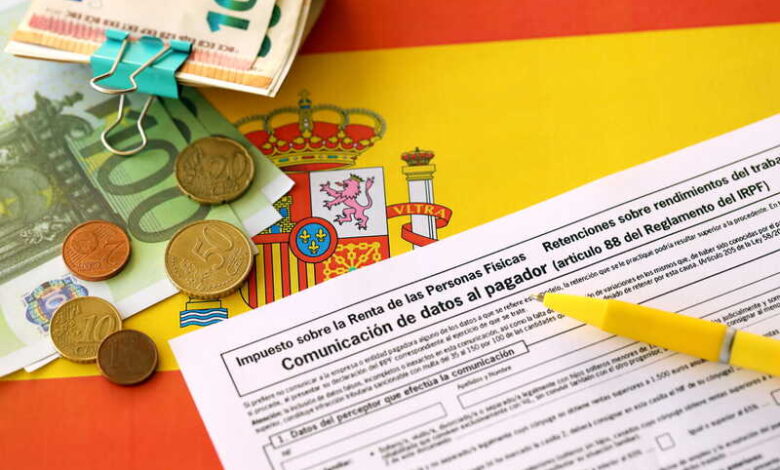
Ukrainians who moved to Spain after the start of the full-scale war often focused on pressing issues: legal status, housing, work, children’s education and maintaining income. However, long-term residence in another country gradually turns tax obligations from a secondary topic into a practical necessity, because the Spanish tax system takes into account not only the source of payments, but also where a person actually lives, works and has a center of personal and financial interests.
Why the income of Ukrainians may be of interest to the Spanish tax authorities
Expert in Ukrainian and international taxation, co-owner of the company UCBI Tetyana Lysenko explains the mistakes of Ukrainians. Many of them mistakenly believe that salary, FOP income, dividends, rent or interest on deposits received in Ukraine are not related to Spain. Such logic can only work if a person is not a tax resident of Spain or has separate grounds for a different tax regime.
If the tax authorities consider a person as a resident of Spain, all world income is important. This means that the declaration may include not only a Spanish salary or local business, but also a Ukrainian FOP, payments from an employer from Ukraine, rent for an apartment, dividends, investment income, cryptocurrency transactions and other income from abroad.
When can you become a tax resident of Spain
Tax residency is determined not by one certificate or card, but by a set of real circumstances. Having an NIE, TIE, residence permit or temporary protection status does not in itself mean automatic residency, but these data can be part of the overall picture that the tax office analyzes.
The most well-known criterion is staying in Spain for more than 183 days during a calendar year. It is important that these days do not necessarily have to be consecutive: short trips outside the country, vacations or temporary departures do not always change the situation if a person’s main life remains connected to Spain.
In addition to the duration of stay, the family’s place of residence, children’s school, rented or own housing, work, business activity, bank accounts, regular expenses and other signs that the center of a person’s life has moved to Spain are important.
Temporary protection does not exempt from declaration
Temporary protection status helps Ukrainians to legally stay in Spain, work, use social services and solve everyday issues. At the same time, this status does not cancel the tax rules of the country in which the person actually resides.
If a Ukrainian lives in Spain for most of the year, has housing here, visits local institutions, has placed children in school, works remotely or receives income from various sources, the tax office may consider such a person as a resident. In this case, the question is no longer limited to where the money physically came from, because the main thing is the tax status of the person himself.
Salary from Ukraine: what to consider
If a Ukrainian receives a salary from Ukraine, such income may be subject to declaration in Spain. In this case, it is important to show not only the amount of income, but also the taxes that have already been paid in Ukraine.
A mechanism for avoiding double taxation operates between Ukraine and Spain, so the tax paid in Ukraine can be taken into account when calculating obligations in Spain. However, this does not mean that you can not file a declaration: usually the income must be reflected, after which it is determined whether there is a surcharge under Spanish rules.
Most questions arise from freelancers and entrepreneurs who left the Ukrainian FOP, continue to work with Ukrainian clients and pay taxes in Ukraine under the simplified system. For many, this model seems sufficient, because the person already pays tax and officially receives income.
The problem is that the Spanish tax authorities can assess this income according to their own rules if the person has become a resident of Spain. Paying 5% in Ukraine does not guarantee that the income does not need to be declared in Spain or that the Ukrainian tax will be fully credited.
For a resident of Spain, business income from Ukraine may become part of the total taxable income. Because of this, Ukrainian FOPs should check their situation separately, because the mechanical transfer of the Ukrainian taxation model to the Spanish system may create debts, fines or claims from the tax authorities.
A tax return in Spain can include active and passive income. Active income includes salary, freelancing, business activities, payment for services, fees and other regular income from work.
Passive income includes interest on deposits, dividends, rent, profit from the sale of property, income from securities, investment accounts, cryptocurrency transactions and other assets. If a person is a tax resident of Spain, the country of origin of these funds does not always exempt them from the obligation to show them in the tax return.
Tax rates: why 45% does not mean the same burden for everyone
Spain has a progressive personal income tax system, where the rate depends on the amount of income, its type, marital status, region of residence, the presence of expenses, tax deductions and possible benefits.
For self-employed individuals, known in Spain as autónomo, tax is usually calculated not on the entire turnover, but on the net income after taking into account the expenses related to the activity. These can be professional services, work tools, part of the office expenses or other confirmed expenses, if they meet the requirements of the tax authority.
Therefore, the maximum rate does not mean that everyone automatically gives almost half of what they earn. At the same time, the Ukrainian model, in which the entrepreneur pays a fixed percentage and considers the issue closed, may not work for a resident of Spain.
Declarations 720 and 721: what you need to know about assets abroad
Certain obligations may arise not only due to income, but also due to assets outside Spain. The Spanish system provides for information declarations, in particular models 720 and 721, which relate to foreign accounts, real estate, securities, investments, insurance products or crypto-assets.
Such declarations are filed when there are assets whose value exceeds a certain threshold in certain categories. Their filing does not always mean paying tax, since the main purpose is to inform the tax authorities about property or financial instruments abroad.
Tax consequences may appear later, for example after the sale of an apartment, receiving rental income, paying dividends, transferring funds or selling cryptocurrency with a profit.
Why it is becoming more difficult to hide cryptocurrency and investments
Cryptocurrency, brokerage accounts, deposits and financial platforms are increasingly coming into the field of view of tax authorities through international information exchange. Banks, payment systems, investment services and legal exchanges accumulate data on customers, transactions and account balances.
If a person lives in Spain, uses financial services, has assets abroad or receives investment income, the tax authorities of the country of residence may receive information about such assets. Because of this, the “no one will know” approach is becoming increasingly risky, especially for those with significant amounts, regular transactions, or income from several countries.
What Ukrainians in Spain should check
Ukrainians who have lived in Spain for a long time and continue to receive income from Ukraine should first determine their tax status. After that, all sources of income should be assessed: salary, individual entrepreneur, freelance, rent, deposits, dividends, investments, property sales, and cryptocurrency transactions.
Entrepreneurs who have left Ukrainian individual entrepreneurs, people with real estate in Ukraine, owners of large savings, investors, and those who use foreign financial platforms require special attention. In such cases, an error in declaration can cost more than timely verification of documents and correct reporting.