Ukrainian teenagers who returned from the occupation spoke about pressure, fear and the way home

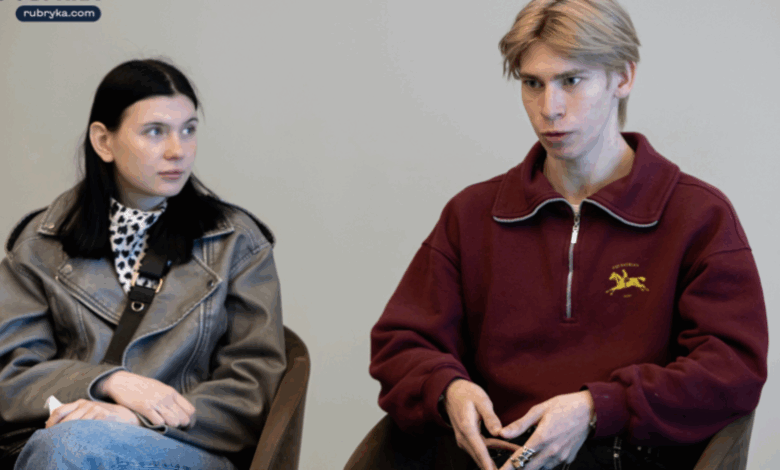
Ukrainian children returned from occupied territories bring with them personal stories of survival. They testify to a system of oppression built around school, documents, fear, isolation, and the imposition of someone else’s identity. Their stories show how the occupation intrudes on childhood through phone checks, as well as forced passporting, propaganda organizations, threats of mobilization, and attempts to convince teenagers that Ukraine has abandoned them. Anton from Luhansk and Anastasia from Kherson region, who were successfully returned to Ukraine as part of the Bring Kids Back UA initiative, shared their experiences.
A press conference was held in Kyiv as part of the Bring Kids Back UA initiative, attended by representatives of civil society, international partners, and state institutions coordinating efforts to return children deported or forcibly displaced by Russia.
According to the Ministry of Justice of Ukraine, 20,570 cases of deportation and forcible displacement of Ukrainian children have now been verified. At the same time, human rights activists estimate that hundreds of thousands of children may remain under Russian control.
“Despite all obstacles, 2,126 children were returned as part of the Bring Kids Back UA initiative of the President of Ukraine. Each return is a joint victory of the state, volunteers, non-governmental organizations, and our international partners,” said Olena Kondratyuk, Vice Speaker of the Verkhovna Rada.
Anton spent almost his entire adult life in Luhansk after its occupation in 2014. The boy returned to Ukraine in March 2026, when he already had years of life behind him in an environment where Russian propaganda was gradually displacing the Ukrainian space from schools, media, and public life.
“I was 8 years old at the beginning of the war. In fact, I spent my entire childhood under occupation. I have extensive experience of what Russians are like, how they operate in the occupied territories, and how they have been inciting people against Ukraine for years,” he said.
According to Anton, after 2014, Luhansk rapidly became impoverished, and ordinary life became increasingly difficult due to a lack of work, low salaries, and increased control.
“After 2014, things got really bad with work. Salaries were 5-10 thousand rubles, which was not enough for a normal life,” Anton noted.
According to him, after 2022, the pressure on children in Luhansk increased, in particular due to school events, Russian youth structures, and the imposition of technical programs related to drones and other areas.
“Representatives of the “First Movement” came to schools, advertised various programs, drones, technical areas. But most of us took it as a joke”, the guy recalls.
Anton gradually began to question the Russian explanations of the events, because his own experience of life in Luhansk did not coincide with what was shown on television.
“They said on TV that ‘Donbas was bombed for 8 years,’ but we lived in Luhansk all this time and after 2015 it was quite calm there. Then there was a feeling: something is wrong here, we are being lied to,” Anton said.
To have access to Ukrainian content, the guy used a VPN, watched films, TV series and cartoons in Ukrainian, wrote down new words and taught himself the language.
One of the reasons why Anton decided to leave was the risk of forced mobilization. The guy explained that after completing his studies, young people are registered in the military, after which they can be sent to military service and persuaded to sign a contract.
“After completing your studies, you are registered in the military and sent to military service, and then they pressure you to sign a contract,” he explained.
According to Anton, it became difficult to feel safe in Luhansk even during a normal walk, because the city was filled with soldiers, police, and checkpoints.
“I could be checked three times a day while I was just walking around the city. There were a lot of soldiers, checkpoints, and police. The atmosphere was very intimidating,” he said.
The guy traveled through Russia and Belarus with the help of volunteers. At the border, he was afraid that Ukrainian or anti-Russian content would be found on his phone. According to him, at customs, they checked his phone, asked questions about Crimea and Donbas. He answered the way they wanted to hear,” he said.
After arriving in Ukraine, Anton lost his Russian passport.
“I burned it at customs. Before that, they also put a stamp “Glory to Ukraine” on her,” he said.
Anastasia is 18 years old. After the full-scale invasion began, she found herself under occupation, and later she was detained while trying to return. The reason was the suspicions of the Russians because of the photos on her phone.
“They detained me because they thought we were passing information to the Ukrainian military. There were a lot of photos on my phone,” she said.
After the detention, the girl was effectively isolated, having her means of communication taken away and her personal data checked.
“They put her under house arrest for two weeks, took her phones away, checked her correspondence, photos, and deleted files. When they returned the phone, it was completely cleaned,” Nastya noted.
According to Anastasia, later they began to prepare Russian documents for her and look for a foster family in Russia, which caused her great fear.
“They told me: we will make a Russian passport, a Russian certificate and give it to a Russian family. I was very scared,” she recalls.
Anastasia also said that she saw Maria Lvova-Belova, the Russian President’s Commissioner for Children’s Rights, who offered her a place to study in Moscow. According to the girl, children were also offered to join the Youth Army. Some of the children agreed to such offers, and some later ended up at war.
Anastasia also described the psychological pressure through which they tried to impose on the children a feeling of abandonment and dependence on Russia.
“We were told that our families did not need us, that we would be better off in Russia, that Ukraine had abandoned us,” she recalls.
After returning, Anton lives in a social apartment in Kyiv and is taking a zero course to prepare for entering a Ukrainian university. For him, returning means the opportunity to plan for the future without the daily fear of inspections and mobilization.
“Here I felt that tomorrow exists. That you can plan and build something,” he says.
Anastasia lives with her seven-month-old daughter and plans to enter the University of Civil Defense, choosing a profession she has dreamed of since childhood.
“I want to study to be a firefighter. This is my childhood dream,” she said.
The issue of the return of Ukrainian children was also discussed during the Civil Society and Expert Day, where human rights activists emphasized the need for further international coordination. Following the event, a joint civil society statement was prepared with recommendations for the member states of the International Coalition for the Return of Ukrainian Children, the meeting of which is scheduled to take place on May 11 in Brussels.
“Children cannot be the subject of bargaining. There cannot be conditions on the issue of their return,” emphasized Alyona Lunyova, advocacy director of the ZMINA Human Rights Center.