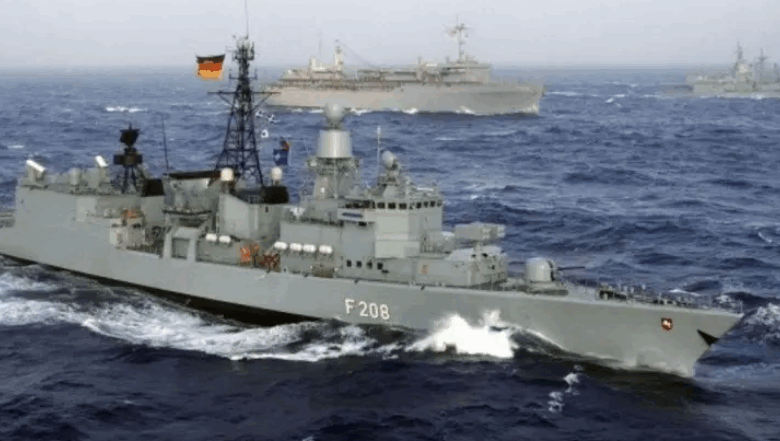
US President Donald Trump has called on allies in Europe and Asia to send warships to ensure the safe passage of oil tankers through the Strait of Hormuz, which is under attack from Iran. However, Germany, Spain and several other countries have already announced their refusal to participate in such a mission. This is reported by The Telegraph, Sky News and Reuters.
German Defense Minister Boris Pistorius said that European warships would not participate in securing the passage of oil tankers through the Strait of Hormuz with the United States. According to him, the military actions of Israel and the United States against Iran are not a war of Germany or Europe.
“What does the world expect, what does Donald Trump expect from a handful or two handfuls of European frigates, what will they achieve there, in the Strait of Hormuz, if the powerful American fleet cannot cope alone? This is not our war; we did not start it,” the German Defense Minister said.
He also noted that Germany favors a diplomatic path and seeks an early end to the war between the United States and Israel against Iran.
The Spanish authorities have stated that the country will not participate in military operations in the Strait of Hormuz area, as they consider the war between the United States and Israel against Iran illegal. This is reported by Reuters.
“Spain will never take any temporary measures, because the goal must be to end the war and for it to end now,” — said Spanish Defense Minister Margarita Robles.
Earlier, the Spanish government also banned American aircraft participating in the US and Israeli war against Iran from using joint military bases in the south of the country.
Italian Prime Minister Giorgia Meloni said in a speech in the Senate that Italy would not join the US and Israeli military operation against Iran.
“We are not at war and we do not want to enter into war,” Maloni stressed.
At the same time, she announced that Italy would provide air defense equipment to the Gulf countries and had already sent “a naval unit to Cyprus to support a European partner whose territory was attacked by Iran.” This is about Great Britain.
Meloni also stressed that Italy views Iran’s military ambitions as an immediate threat to Europe:
“We cannot afford an ayatollah regime that possesses nuclear weapons combined with a missile potential that could soon hit Italy and, even more so, Europe directly.”
Japanese Foreign Minister Toshimitsu Motegi held talks with US Secretary of State Marco Rubio. During the conversation, he stressed the need to use all diplomatic opportunities together with the international community, including the United States, to peacefully end the war between America and Israel against Iran.
“The safety of shipping in the Strait of Hormuz is of critical importance to the international community, including Japan, especially from an energy security perspective,” Toshimitsu Motegi told Marco Rubio.
British Prime Minister Keir Starmer said that the country, together with its allies, was working to “develop a viable plan to open the Strait of Hormuz,” and noted that the US strikes had already weakened Iran. This is reported by the BBC.
“This is not an easy task. That is why the UK is working with all our allies to develop a viable plan to restore freedom of navigation in the region,” Starmer said.
He also stressed that Iran must abandon “nuclear weapons” through the conclusion of an appropriate agreement and through peace negotiations.
France also officially refused to support President Donald Trump’s call to deploy allied warships in the Strait of Hormuz. The country’s Foreign Ministry said that France would adhere to a defensive stance and would not provide its own weapons to the United States for strikes on Iran.