The US Navy has announced the creation of a “maritime warning zone” in the Persian Gulf, warning that it cannot guarantee the safety of merchant ships. This is reported by Lloyd’s List.
“The US Navy has announced the creation of a wide “maritime warning zone” in the Persian Gulf region after large-scale US and Israeli strikes on Iran, warning that it cannot guarantee the safety of merchant ships and urging ships and aircraft to stay away due to expected jamming and distortion of GPS signals,” the report said.
Shipping industry representatives were advised to refrain from entering the US-designated “maritime warning zone,” which covers the Persian Gulf, Gulf of Oman, northern Arabian Sea and Strait of Hormuz.
A statement issued by US Naval Forces Central Command on Saturday morning advised ships to avoid the zone if possible.
The statement said the US Navy could not guarantee the safety of neutral or merchant vessels. It was also stressed that commercial vessels should keep at least 30 nautical miles away from warships.
A maritime warning, which was subsequently sent to flag states and security companies in various countries, recommends that “aircraft and vessels keep clear of the specified area”.
According to numerous reports from regional naval headquarters and security sources, there is a risk of jamming and spoofing of satellite navigation signals.
EU non-core personnel are leaving the region, and the EU naval mission is on high alert in the Red Sea. Maritime security officials stressed that the immediate threat to shipping in the area remained high.
In an urgent appeal issued by the tanker owners’ association Intertanko, members were warned that “the Houthis are expected to respond and resume attacks on vessels”, while noting that operational information was “vague”.
“Likewise, there is a widespread belief that the Iranians will not close the Strait of Hormuz, but will try to seize vessels associated with the warring parties”, the association warned.
“The US and Israeli attack on Iran dramatically increases the security risk for ships operating in the Persian Gulf and surrounding waters,” said Jacob Larsen, chief security and safety officer at BIMCO.
He said ships with business ties to the US or Israel were more likely to be targeted, but the risks extended to other ships, both intentionally and accidentally.
Ships already in the region are expected to seek shelter in the territorial waters of neutral countries, including United Arab Emirates or Qatar, and some may try to leave the area altogether. Vessels heading to the immediate conflict zone are likely to refrain from entering until the situation stabilizes.
Explosions were recorded near the Iranian island of Kharg. About 90% of Iran’s crude oil exports are through Kharg, transporting it through the narrow Strait of Hormuz, the report said.
While the primary task for shipping companies will be to avoid dangerous areas, BIMCO has already warned of a multiple increase in insurance rates, and ships with business ties to the US or Israel that approach this zone are likely to be unable to obtain insurance coverage.
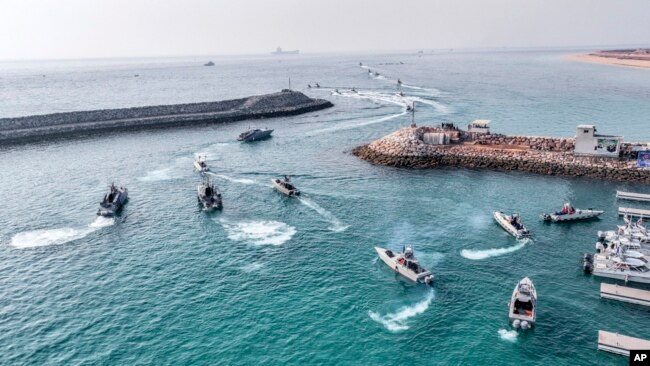
Iran’s naval forces have the capabilities to disrupt shipping in the Persian Gulf and beyond. In the short term, it is believed that Iran is capable of forcing commercial vessels to abandon the conflict area.
At the same time, BIMCO assumes that within a few days, US air and sea superiority will eventually provide a level of security that will allow commercial shipping to resume transportation to and from the Persian Gulf, as well as in adjacent waters.