Which Ukrainians are ready to return from Europe and what will determine this decision: results of a new study

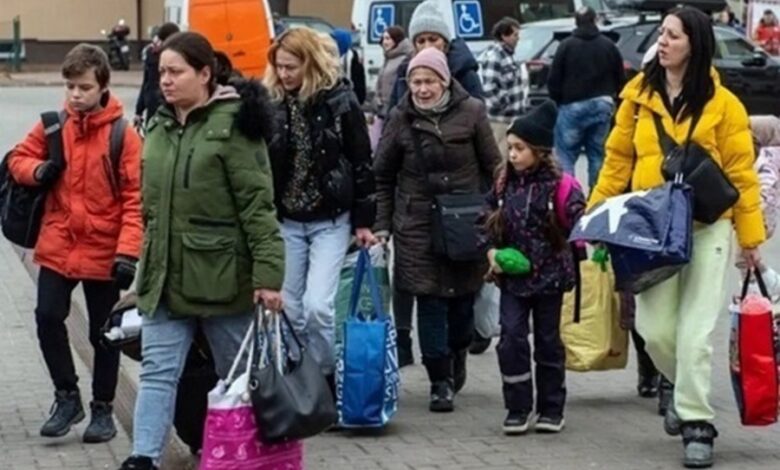
The full-scale war changed Ukrainian society not only within the country, but also far beyond its borders. In Europe, within a few years, a large community of people formed who left the danger, settled in new cities, and are gradually integrating into other economies. The scale of this displacement has long gone beyond the limits of a purely humanitarian topic, since it concerns the working-age population, educated professionals, families with children, and that part of the middle class on which not only consumption depends, but also the country’s ability to recover after the war.
How many Ukrainians remain abroad and why this issue goes beyond statistics
A new study by the Center for Economic Strategy suggests looking at this situation through the numbers, social composition, and motives of the people themselves who found themselves outside Ukraine after the start of the great war. During the presentation of the study, which was attended by the Director of the Institute of Demography and Social Research of the National Academy of Sciences of Ukraine Ella Libanova and the Head of the Ukrainian Mission of the Ukrainian World Congress Andriy Shevchenko, they discussed not only the scale of the departure, but also the conditions of possible return, which for millions of people depend on a combination of security, work, education of children and understandable rules of life after the war.
According to the Center for Economic Strategy, approximately 5.6 million Ukrainian refugees are currently outside Ukraine. Behind this figure is a complex environment of people with different ages, incomes, education, professions and family circumstances, which is why the issue of return cannot be reduced to one universal scenario.
For Ukraine, this problem has a direct economic dimension, since it is not just about a temporary loss of population, but about the long-term departure of people who worked, spent money, paid taxes, raised children and supported local economies in their cities. That is why the conversation about refugees is increasingly moving from the plane of sympathy and statistical reports to the plane of strategic choices, on which the future structure of the labor market, the pace of recovery, and the demographic balance of the country depend.
The social dimension of refugees
The research materials show a trend that is particularly important for understanding the consequences of the war for Ukraine: a significant part of those who left the country belong to the economically active population.
According to the survey results, 71% of refugees have higher education, 71% worked in Ukraine before leaving, and 43% could afford expensive purchases. For comparison, before the war, according to sociologists, there were about 20% of such households in Ukraine, and it is this comparison that provides the key to understanding the current situation. Among those who left, a significant part of the Ukrainian middle class turned out to be people who had the resources for independent living, professional subjectivity and, in many cases, experience of stable economic participation.
The estimate that approximately 1.7 million Ukrainians are already working in Western countries is particularly telling. For the states that accepted them, this means attracting new labor, while for Ukraine the consequences look much harsher, since due to the loss of workers and consumption, economic losses can range from 2% to almost 10% of GDP per year, depending on the scenario.
How integration occurs in European countries
Several years of living abroad gradually change the status of Ukrainian refugees in host countries, where temporary stay increasingly turns into a longer and more complicated process of settlement. The study records that the share of employed refugees is about 60%, which indicates a fairly significant level of inclusion in the labor market.
At the same time, the mere presence of a job does not mean full-fledged professional fulfillment, since 54% of Ukrainians work in a specialty other than the one they had in Ukraine. Such a discrepancy between previous experience and current employment creates a risk of gradual loss of qualifications, especially in those areas where the professional level is based on continuous practice, regular training, and work in a specialized environment. A person who worked in their field in Ukraine and is forced to accept another activity abroad may, over time, lose not only their career positions, but also their connection with their own profession.
Researchers call knowledge of the language of the host country a separate factor of integration, and this conclusion seems decisive for all subsequent scenarios. The faster a person masters the language, the easier it is for them to look for work, communicate with institutions, build social connections, and avoid professional decline, which often begins precisely where there is a lack of linguistic confidence to enter their field.
Do Ukrainians want to return and why this question has no simple answer
Despite gradual integration in European countries, a significant part of Ukrainians has not abandoned the idea of returning, although the very word “return” in their case is increasingly associated not with an emotional gesture, but with a number of very specific conditions. According to the study, 43% of refugees say they plan to return, while 36% do not plan to do so.
However, these figures cannot be read as a ready-made plan of action, since most of those who talk about returning do not tie it to a specific date. Among those potentially ready to return, 80% consider such a step only after the end of the war and the resumption of civilian flights over Ukraine. Therefore, even where the desire to return persists, it is associated with basic conditions of security, mobility and predictability, without which the decision to move back remains open.
It is also important that for many people return is not thought of as an abstract arrival “to Ukraine”, but as a return to a specific region, to their own city, familiar social environment and local circle of connections. If people are willing to consider other options, it is most often Kyiv or large cities, where it is easier to find work, housing, education for children and medical services. The study also shows that older people are more likely to return, for whom the connection to home, established life and familiar social fabric is often stronger than that of younger generations.
Who is less likely to return
A separate group is made up of those Ukrainian refugees who do not plan to return to Ukraine after the war, and researchers see quite clear social contours in this category. This primarily concerns people who have left abroad with their entire families, as well as those who have seriously ill relatives, for whom the stability of the system of care, treatment and daily support may be a decisive argument in favor of continuing life outside Ukraine.
The social composition of the entire group of refugees also helps to understand why the decision to return is in many cases a family, not an individual one. The majority of Ukrainian refugees are adult women, 40%, while 29% are adult men, and about a third are children under 18. In this structure, any choice about the future depends not on one person, but on a trade-off between safety, school, work, health, and the ability to maintain family integrity.
The researchers outline three scenarios for how many Ukrainians might return home after the war ends, and each one shows how large Ukrainian displacement abroad would remain even under favorable conditions. In the medium scenario, 1.6 million refugees would return, while 2.7 million people would remain outside Ukraine, excluding Russia and Belarus.
The pessimistic scenario assumes that 1.3 million Ukrainians would return, while 3.0 million would remain abroad. The optimistic scenario looks much better for Ukraine, but it does not mean a complete reversal, since even in this case 2.2 million will return, while 2.1 million refugees will remain outside the country. All three models show the same thing: even after the war, Ukraine will have to live with the consequences of large-scale migration, and the issue of return will not be automatically resolved with the cessation of hostilities.
Why teenagers can become a decisive factor for the whole family
During the discussion of the study, Andriy Shevchenko drew attention to a factor that is often omitted from economic calculations, although in real life it is he who can tip the scales in one direction or another. This is about the position of children and adolescents, for whom several years of living abroad are no longer a short episode, but part of personal experience, education, friendship and growing up.
If a 15-year-old child maintains contact with classmates in Ukraine, this, according to Shevchenko, can significantly increase the chances of the entire family returning. This detail shows an important pattern: the parents’ decision often goes through the internal state of the child, who either maintains lively contact with the Ukrainian environment or gradually takes root in a new country. That is why one of the key tasks is to maintain the connection of Ukrainian children abroad with the education system in Ukraine, because this connection can affect not only language skills or educational trajectory, but also the very readiness of the family to imagine their future again in Ukraine.
Should separate benefits be created for those who return
The issue of return almost inevitably leads to a discussion about whether the state should create special incentives specifically for those citizens who decide to return from abroad. However, some experts warn that this topic carries a serious risk of social tension if assistance to one category of people appears to be greater or more privileged than to other groups that have also experienced war and loss.
Ella Libanova points out that excessive benefits only for those who return can undermine social cohesion. If the state creates the impression that some citizens receive more support than others, including internally displaced persons, this can lead to competition for resources, resentment, and a sense of injustice. In this logic, the problem lies not in the support itself, but in its balance, because after the war the country will not need a division into “more needed” and “less needed”, but a system of solutions that will not destroy trust between different groups of victims.
What can change in 2027
A separate plot, which is increasingly influencing the decisions of Ukrainians abroad, is related to the future of temporary protection in the European Union. March 2027 is mentioned as the approximate date of completion of this mechanism, and therefore the question of a longer stay in Europe is gradually moving from the theoretical to the practical level.
According to the data provided, about 20% of Ukrainian refugees have already switched to other residence permits, while 80% remain under temporary protection. This means that the vast majority of people are still holding on to a mechanism that is not permanent, and that is why 2027 may become a moment of difficult choice. If EU countries do not offer clear rules for transitioning to other statuses, some Ukrainians will find themselves between several difficult scenarios: returning to Ukraine, finding another country to live in, or risking illegal residence.
Therefore, the decision to return for millions of Ukrainians will depend on a combination of several conditions, and none of them individually can provide a final answer. Security, the end of the war, the resumption of civil air traffic, work, the opportunity to return to their own region, the condition of children, the degree of integration in the new country, the health of relatives, and legal certainty in Europe. All these factors will act simultaneously, intersecting with each other in the same complex way that human biographies intersect.