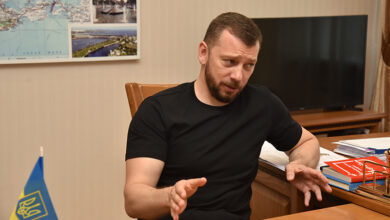
Why Donald Trump is in no hurry to end the war in Ukraine: an analytical view by Oleksiy Kushch


The expectation of a speedy end to the war in Ukraine has become one of the main topics for both Ukrainian society and the international audience after the return of Donald Trump to the White House. The US president’s public statements about “stopping the war in 24 hours”, then giving Putin a period of 50 days, then 10 days, increasingly call into question not only the terms, but also the very logic of events embedded in these statements. For Ukrainians, who are tired of uncertainty and sacrifices, Trump’s statements are acutely perceived, because it is a question of life and death, the future of the state and the trajectory of its post-war development.
Economist and financial analyst Oleksiy Kush surprised by what many believe: Donald Trump will stop the war in Ukraine and receive the Nobel Prize in the first year of his presidential term. He reminds that the US president is elected not for one year, but for four, and the logic of any great geopolitical game does not foresee too quick finals.
In his opinion, if Trump does end the war within the first year, the logical question is: What will he do next? His term has just begun, and too early “success” will only create a pause without much purpose in the political horizon.
Oleksiy Kush draws parallels with the presidency of Barack Obama. He reminds that Obama went to the elections with promises to end the war in Iraq and withdraw American troops from there. He was elected to the post of president in 2008, and in fact he began his duties in 2009. At the same time, the main part of American troops was withdrawn from Iraq only in 2012 — already on the eve of new presidential elections and the beginning of Obama’s second term. It was a deliberate political calculation: not to hurry with the solution of the promised issue, but to stretch it for a period that allows the maximum conversion of the result into political capital.
The analyst suggests that it is quite likely that by 2028, Trump will be able to end one major war and receive his Nobel Peace Prize, just like Obama. After that, he can hand over power to his successor — a younger politician who will continue his course for two more terms. However, unlike Obama, it will not be a Democratic heir, but a Republican who will have a closer political connection with Trump.
Oleksiy Kush notes that by this time Trump can use other conflicts as “training” grounds. These are smaller-scale wars — short-lived and limited in space. The analyst ironically calls them “12-day” or “5-day”, implying that these are conflicts in which the word “day” appears more often than “year”. This will allow Trump to demonstrate activity, build a diplomatic image and prepare the ground for a larger step on the global stage.
In this context, Kush compares the war in Ukraine with the war between Iran and Iraq in the 1980s. He emphasizes that he has repeatedly referred to this analogy in his analytical publications. In his opinion, the conflict in Ukraine is increasingly taking on the features of just such a confrontation – long, exhausting, with periodic escalations and diplomatic imitations, which lasts not months, but years. The war between Iran and Iraq lasted for eight years, and Ukraine, unfortunately, is getting closer to a similar scenario.