A law that doesn’t work: a Marine veteran told how the state leaves wounded soldiers alone with their problems

Veterans in Ukraine face a problem where the norms of the legislation are not implemented in practice, leaving those who were injured during hostilities to fend for themselves with their own treatment and recovery. The Law “On the Status of War Veterans” provides for full payment of sick leave for persons with disabilities caused by the war, but in practice state structures are guided by other regulations, which reduces payments to a level insufficient even for basic medical care.
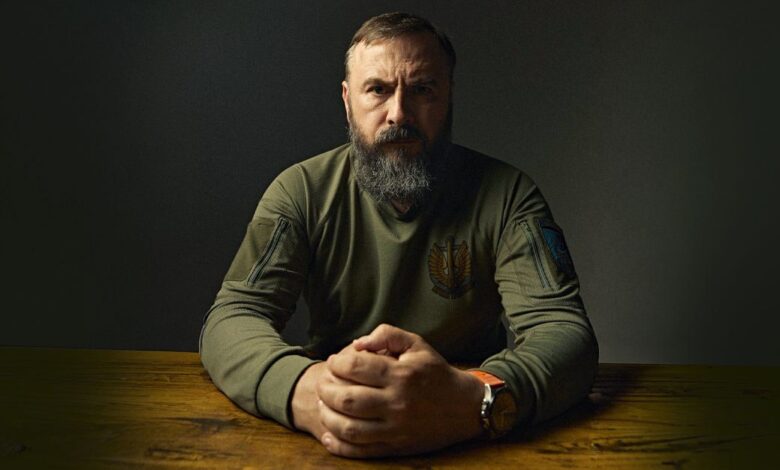
Marine Corps Veteran Dmytro Hnatyuk told that his participation in the war began not because of the desire to obtain status or privileges, but because he could not do otherwise. He was appointed commander of the Marine Corps’ airborne assault unit on the first day of the full-scale invasion, after which he performed combat missions, was seriously wounded, underwent operations and a long rehabilitation. The injury left him with a group II disability, which caused constant pain and the need for daily medication and treatment.
“Today I am a veteran and a person with a group II disability as a result of the war. In my case, disability is daily pain, lifelong medication and constant treatment.
But despite the daily pain that you have to learn to live with, I returned to work. Because a veteran, in my understanding, is not a dependent, but a person who has the right to live a dignified and full life. But here another struggle has already begun – no longer at the front, but with state institutions,” – said Dmytro Hnatyuk.
Despite physical difficulties, he returned to work, believing that a veteran has the right to a full life and decent conditions. However, on the way to this, another struggle arose – with the structural problems of state bodies that should provide support for veterans.
Hnatiuk emphasized that the Law of Ukraine “On the Status of War Veterans” guarantees 100% payment of sick leave for persons with disabilities due to the war, regardless of the insurance period, but in practice the Pension Fund applies other norms, where the amount of payments depends on the period of service. As a result, the actual amount of payments turns out to be significantly less than what is needed to cover monthly expenses for medicines and treatment.
Dmytro Hnatyuk explains that although the Law of Ukraine “On the Status of War Veterans” guarantees full payment of sick leave for persons with disabilities caused by the war, in practice the Pension Fund is governed by a different law — on compulsory social insurance, where the amount of payments is tied to the insurance period. As a result, instead of the 13 thousand hryvnias stipulated by law, he receives only about 1,800, while his monthly expenses for medicines reach about 20 thousand hryvnias, which makes purchasing the necessary medications a process that causes a feeling of humiliation.
The veteran emphasizes that treatment after an injury is not a temporary phenomenon and becomes a permanent part of life, so when the state declares 100% payment, but in fact provides an amount that does not even cover a week of treatment, this cannot be perceived as a technical error or accounting inaccuracy. For him, this is a systemic problem that affects the very essence of the guarantees provided by law.
During the year, he appealed to various state bodies – the Ministry of Veterans Affairs, the Ministry of Social Policy, the Pension Fund, the Ombudsman, and people’s deputies. Everyone acknowledged that the law existed and that there was a problem, but no one took responsibility for solving it, shifting it to other structures. The Pension Fund noted that “there is no implementation mechanism,” the ministries reported that they were only formulating policy, and the employer, the Rokada Charitable Foundation, noted that it supported the veteran, but that resolving this issue was not within its competence. Thus, the law exists on paper, but does not work in real life.
Hnatiuk emphasizes that this problem concerns not only him personally:
“The Pension Fund says that “there is no implementation mechanism.” The ministries say that they only form policy. As a result, the law exists on paper, but does not work in real life. The employer – the Rokada charity foundation – assures: “We are on your side, but this is not our competence.” And this applies not only to me.
Thousands of veterans have breaks in their insurance experience due to injuries, long-term treatment or service. Each of them may find themselves in a situation where the right guaranteed by the state is actually not fulfilled.
Support for veterans is not photos from forums or posts on social networks. These are clear, working mechanisms.
I am not asking for special treatment. I am asking for the law to be enforced. Because when the state does not adhere to its own guarantees, it questions the most important thing – respect for those who gave their health for it. And no veteran policy strategy will work if it is based on paper promises.”
Hnatiuk emphasizes that the state, having adopted the law, is obliged to ensure its implementation, otherwise the guarantees turn into a declaration, and declarations on paper do not treat and do not cover the costs of medicines.