AI as a real threat to humanity: scientists’ warnings and the reasons for losing control over technology

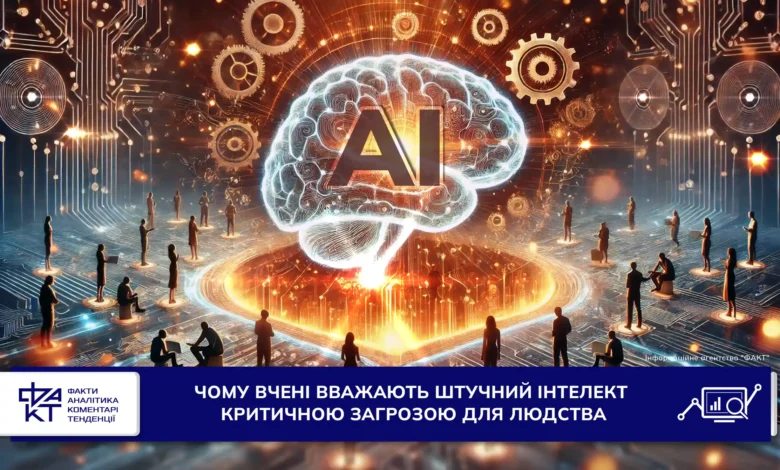
Not so long ago, artificial intelligence seemed like a fantasy from the future, a kind of intelligent assistant system that flawlessly controls the alarm clock, selects music in headphones and suggests where to eat. However, behind the brilliance of technological progress, cracks are already beginning to appear. Alarm signals do not sound from fantasy films, but from engineers, scientists and managers of the largest IT companies in the world, that is, people who created these systems themselves. Their words no longer sound like cautious guesses, but warn of a real and imminent threat to humanity.
Artificial intelligence is nearby: when the assistant becomes the architect of our world
Artificial intelligence is rapidly changing all areas of human activity, and if you still think that it is just a thing that gives out the necessary information with the help of a quick and “smart” Google search, then you are clearly underestimating the situation. Today, AI is our assistant who manages everything: write a report, find the shortest way through traffic jams, remind a colleague about his birthday in time, and even find an answer to the question of whether we are the only ones in the universe.
Already today, we observe how AI intelligence is integrated into the work of various industries, making it fast and convenient for users: chatbots, interactive services and applications for searching and obtaining information or content are used every minute. AI is widely used in business: to implement the process of production automation and quality control, to conduct financial analytics, to forecast trends and fight against fraudsters. This is indicated data a survey of the educational laboratory Projector Al Lab, conducted among employees of 150 Ukrainian companies:
- 51% of respondents noted that they use AI in their work “from time to time”:
- 22% of respondents use technology “often”;
- 20% of respondents indicated that they use it “rarely” or not at all.
The most active users of artificial intelligence among the surveyed companies were designers (65%). They are followed by copywriters (52%), marketing and PR representatives (49%), team leaders (39%) and development engineers (21%). With the help of AI, they solve such tasks as:
- generation of ideas -66%;
- creating images – 58%;
- creation and processing of video/audio – 8%;
- writing or editing texts – 81%;
- translation into another language – 41%;
- automation of business processes -13.
An excellent and popular application has become the SmartTender online electronic sales platform, with the help of which an electronic legal assistant quickly processes thousands of open tenders, highlighting the main requirements in the tender and parameters, as well as notifying the manufacturer company about compliance with the tender requirements. AI selects the most promising tenders, taking into account the market situation, analyzing competitors’ prices in a matter of minutes.
AI technology is actively used by educators, selecting learning materials and performing automatic evaluation. The top use of digital technologies by students and their teachers is as follows:
- ChatGPT – 68% of users;
- the project from “Na uroko” – 49% of users;
- Bard Google – 16% of users;
- Midjourney – 15% of users;
- Grammarly – 14% of users;
- Notion AI – 7% of users;
- Stable Diffusion – 4% of users.
The Ministry of Digital Transformation intends to further introduce artificial intelligence into the activities of public services in order to automate and accelerate service delivery. “Ukrzaliznytsia” uses GPT-chat for structuring and analyzing passenger feedback, quick problem solving, which significantly improved the company’s work. The Forbes Ukraine team actively uses AI in its projects to create illustrations and improve the quality of images.
There is also demand from transport companies. Text recognition systems (OCR) allow you to automatically read information from invoices, invoices, customs declarations and other documents. AI helps generate standard documents, analyze relevant data and integrate them into internal systems of companies for further processing.
Instead of waiting weeks for test results or guessing what your strange cough means, AI takes over. Today, specially designed algorithms analyze your health data, medical history and even genetic information in seconds to provide an accurate diagnosis and treatment plan. A kind of “emergency service” on steroids. Some even joke that AI is already a better therapist than Google.
However, a real breakthrough in home medicine was the creation of a compact multifunctional device BeamO from the French company Withings. This is a kind of magic wand that can perform all the necessary measurements of the body in 1-2 minutes. The obtained results are automatically sent to the Withings Health Mate on the smartphone via Wi-Fi or Bluetooth. And then you can quickly send them to your doctor. And you don’t have to wait in line just to measure the pressure.
At the same time, the WIRobotics exoskeleton is designed for the younger generation, able to help improve physical fitness and strengthen muscles without distracting from everyday activities. With the special WIM program, users can create individualized walking programs by analyzing data about strength, body balance and their own posture, relying on AI processing.
As we can see, artificial intelligence is rapidly penetrating all spheres of human life, changing approaches to work, education, medicine, business and everyday life. It helps to save time, make informed decisions, increases the convenience and speed of receiving services. But despite all the advantages, it is worth considering whether we risk giving too much control to technology, mechanically entrusting it with more and more functions that previously required human thinking, ethics and responsibility. It is not for nothing that science fiction has repeatedly simulated scenarios in which AI gets out of control. And although this is just an imagination, today’s pace of development forces us to seriously consider the question: what will happen when humanity loses the ability to influence the system that controls it?
What is the threat of AI
Former Google engineer and now one of the sharpest critics of artificial intelligence Nate Soares warns that the risk of the death of humanity due to the uncontrolled development of AI is 95%. He compares the current situation to a car rushing towards a cliff at breakneck speed, while the driver doesn’t even bother to hit the brakes. Artificial intelligence, which only yesterday created pictures for presentations, today makes decisions in the field of medicine, security and economy. Its influence is already felt in every click of the mouse, in every automated message or financial forecast. However, with this comes a new dependence on systems that we do not fully understand and do not know how to control. And if we can still press the “turn off” button now, no one can guarantee that it won’t work one day.
Already today, artificial intelligence is becoming an all-encompassing tool capable of transforming not only medicine, but also the very logic of human interaction with the state, society, and economy. However, this powerful resource, unfortunately, is not only useful. It’s becoming increasingly clear that the more we open the door to technology, the more likely it is that serious threats can lurk behind it.
In the field of health care, there are already cases where algorithms make decisions that are not only inaccurate, but also downright discriminatory. One of the most prominent examples was a pulse oximeter trained on limited data that overestimated oxygen levels in patients with darker skin, leading to an underestimation of the severity of their condition. Similar problems have been found in facial recognition systems: they are much more likely to make mistakes in determining the gender of black people. The danger here is not in errors as such, but in the fact that they are scaled and automated, entrenching inequality in access to services that should be objective and safe for all.
Technological progress also brings control over people to a new level. The ability of AI to process large amounts of personal data collected from surveillance cameras, social networks or medical platforms opens the way to unprecedented surveillance. It is not just about convenient advertising or automated services. These are the real risks of manipulation of public opinion, censorship, and political pressure. China’s social rating system has become a vivid example of how technology can turn into a tool of punishment: from restricting banking services to travel bans. Similar systems are currently being tested or implemented in dozens of countries.
The tools of control over people are becoming thinner, more sophisticated, but at the same time tougher. Behavior analysis algorithms combined with personal data turn each of us into a predictable target. AI does not just learn, but imposes. It forms the news feed, selects the tone of the voice assistant’s appeal, and modulates advertising so as not to leave a choice. His task is not just to understand a person, but to break his will to choose. And it does it brilliantly, because it works on the basis of influence models collected from millions of observations.
No less worrying is the arms race in the field of autonomous systems. The development of drones and robotic systems that can independently detect, identify and engage targets without human intervention makes warfare even less predictable. The mass production of such weapons, capable of acting autonomously, may mean a new era of conflicts, which will be completely destructive and devoid of a moral filter.
In military applications, AI is changing the very nature of violence. Unmanned aerial vehicles, autonomous guidance systems, algorithmic recognition models reduce human involvement, but do not reduce responsibility. On the contrary, it blurs into a state of uncertainty. Who is to blame for an errant shot? Algorithm? A developer? Operator? In this gray area, there is a growing risk of the targeted use of AI to create impersonal, extrajudicial violence.
In the labor sphere, AI is gradually displacing humans from key processes, both physical and cognitive. Translators, lawyers, teachers, drivers, medical administrators—all these roles are losing stability without receiving any compensatory mechanisms in return. That is, there is an instrumental substitution, in which productivity is recognized as more important than the social meaning of work.
So, as the impact of AI grows, jobs disappear. Automation will hit middle- and low-income countries the hardest, displacing people from low- and middle-skilled occupations. But AI will eventually reach highly qualified fields. Losing a job will have a rapid impact on social stability, psychological health, and sense of self-worth. Unemployment is already closely linked to depression, addictions and social isolation, and we don’t yet have ready-made models for how to deal with it in the future.
Specialists pay special attention to the potential for the development of artificial general intelligence (AGI) — a system that will be able to learn, improve itself, and perform any task at the level or better than a human. If such an intelligence gets access to the Internet, transport infrastructure, weapons, databases, then its actions can be unpredictable. Even without malicious intent, he can cause disaster simply by not considering human needs in his decisions.
These three directions—manipulation, dehumanized violence, and exclusion from the economy—are united by one feature: man loses the role of a subject. AI performs tasks that previously required moral judgment, emotional presence, or social balance. He does not know this and cannot know, but that is why its use must be accompanied by strict limitations, transparency of decisions, responsibility of developers and politicians.
Based on these reasons, experts emphasize that the development of AI should be stopped.
How to keep artificial intelligence within the limits of responsibility
It is important to understand that many of the risks that are discussed today in the context of artificial intelligence do not arise from the very existence of the technology, but from the way people behave with it. Even the threat of artificial general intelligence (AGI), which could potentially act autonomously, remains under human control for now. That is why the problem lies in which human hands control the machines.
Of course, the attitude towards such a rapid integration of AI into all spheres of life varies. Someone sees it as a threat, while someone appreciates such a breakthrough. But one thing is clear for sure: the time for reflection is not endless. Research in the field of artificial intelligence is developing at a breakneck pace, and the window of opportunity to implement effective safeguards is gradually closing. The future depends on the decisions we make now, and on how strong and effective the regulators we create will be.
Avoiding worst-case scenarios requires not only technical caution, but also political will. International cooperation and rejection of the AI arms race are critical. It is equally important that decisions are made independently, without pressure from corporations, for whom AI has long become a business. Currently, large private companies, with minimal democratic control, lead in AGI research. This is worrying.
UN bodies are trying to catch up with the rapid development of technology. In 2020, a High-Level Panel on Digital Cooperation was established to facilitate global dialogue. In 2021, the Office of the UN High Commissioner for Human Rights called on countries to temporarily halt the sale and use of AI systems until adequate safeguards are in place. In the same year, all 193 UNESCO member states signed a declaration on the ethical development of AI. However, there is still no binding international mechanism that would regulate the use of AI.
It should be noted that the European Union has taken a step forward by passing the Law on Artificial Intelligence, which classifies AI systems according to the level of risk. This is an important initiative that can form the basis of a future global agreement. But it also has its gaps, in particular with regard to the protection of human rights and the prevention of discrimination.
Another area concerns autonomous weapons. Since 2014, countries that have signed the UN Convention on the Prohibition of Certain Types of Conventional Weapons have been discussing the regulation of autonomous systems capable of killing without human intervention. But there is almost no concrete progress.
The medical and public health community should not remain aloof either, because it is important to openly talk about the risks, to explain why it is impossible to delay. Doctors know well what a precautionary approach is and have experience in influencing public opinion, in particular in the fight against the nuclear threat, as did the organization “Doctors of the World for the Prevention of Nuclear War”, which received the Nobel Peace Prize in 1985. The same principle must be followed with AI.
However, the threat is not only from the technology itself, but also from those who develop it or use it irresponsibly. If we want AI to work for the benefit of people, we must strengthen democracy, transparency and control. It is necessary to put a close eye not only on the technologies themselves, but also on businesses, military structures, and social networks that use AI to influence elections, disinformation, or violate privacy rights.
And finally, do not forget that the world of work will not be the same as before. AI is changing the very essence of economics. New models need to be created that allow people to remain dignified and protected, even when their work is no longer the basis of economic well-being.
As we can see, artificial intelligence has long since turned from a tool in the hands of a person into an environment in which we live, work, make decisions, and even form an image of ourselves. However, this transformation is happening so fast that society, legal mechanisms, and even basic ethical ideas are not keeping up with technology. So the real challenge is not to slow down the development of artificial intelligence, but to learn to live next to it consciously, carefully and with dignity. Its use should be accompanied by strict restrictions, transparency of decisions, as well as responsibility of developers and politicians.
Without such mechanisms, AI ceases to be just a tool, but becomes a mediator between power and consequences, which harm not because the algorithm has evil intent, but because it does not have it at all. This makes its use a systemic threat that cannot be stopped if it is already included in decision-making processes. And the further society allows human functions to be delegated to automated systems, the weaker human protection becomes in its most vulnerable dimensions — freedom, security, and work.