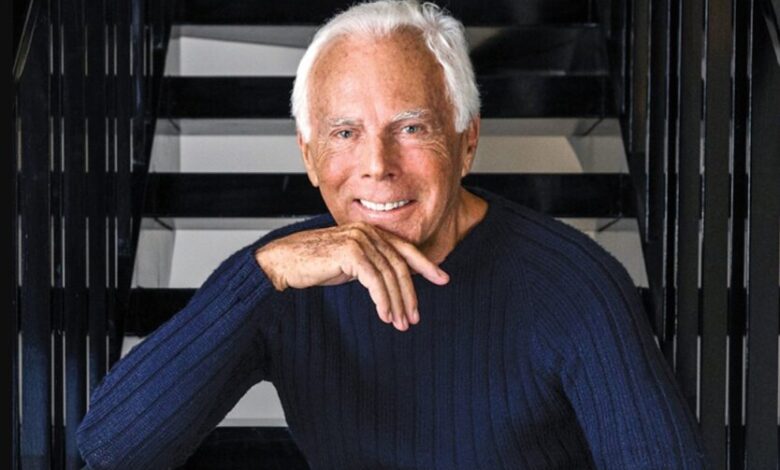
The late designer Giorgio Armani, in his will, instructed his heirs to gradually sell off the fashion house he created half a century ago, or take it public. reports Reuters.
Such a decision marked the beginning of a struggle for control over one of the most famous brands in the world and means a serious turn for the company, which for decades protected its independence and emphasized its Italian roots.
Armani, who died on September 4 at the age of 91, had no children to inherit his fashion empire. Experts estimate its value in the range of 5 to 12 billion euros.
The will consists of two documents submitted to the notary in March and April of this year. They state that the heirs must sell the first share — 15% of the shares of the Italian fashion house — within 18 months after the designer’s death. Then, within three to five years, they must transfer another 30 to 54.9% of shares to the same buyer.
The will specifies that preference should be given to giants of the luxury industry, including LVMH (Louis Vuitton), L’Oreal, EssilorLuxottica or another group of “equal status” determined by the special fund. This foundation was created by Armani to preserve his legacy, and his decision must be coordinated with the designer’s business and life partner Pantaleo Dell’Orco.
The direct mention of the possible sale of shares to French corporations and the readiness to allow the company to go public came as a surprise, because during Giorgio Armani’s lifetime he always categorically rejected the idea of loosening control over his brand or placing his shares on the stock exchange.
An alternative to the sale of the second part of the shares, as stipulated in the will, is an initial public offering of shares in Italy or another equivalent market. According to the Italian Association of Notaries, these provisions are binding and can be challenged in court if not enforced.
Giorgio Armani remained the sole major shareholder of the company he founded in the 1970s with the late Sergio Galeotti, and retained full creative and management control for the rest of his life.