Assaults on Zaporizhzhia — tactics or a prelude to a large-scale strike: explains Kostiantyn Mashovets

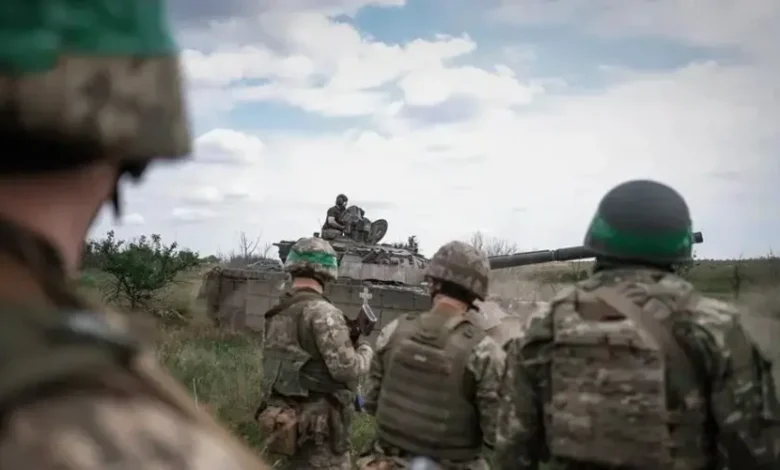
In recent weeks, anxiety has been growing in Ukrainian society due to the activation of Russian troops in the Zaporozhye region. Battles near Stepovoy, Shcherbaki and Pyatikhatok, attempts by the enemy to break through the defenses and advance several kilometers deep into Ukrainian positions — all this raises more and more questions from both citizens and analysts. Is it about another local phase of the war, or about the beginning of a wider operation? Could this activity be a diversionary maneuver behind a larger plan? Military expert Kostyantyn Mashovets analyzed the situation and suggested several possible scenarios of the enemy’s actions. In his conclusions, he tries to answer the key question — what exactly is Russia trying to achieve near Zaporozhye, and is this intensification related to preparations for a new major offensive, particularly in the Dnieper region.
Konstantin Mashovets considers, that in general one can expect from the Russian army an attempt to jump beyond the Dnipro in the direction of Kherson and Mykolaiv. This, according to him, can partly explain the increase in the activity of Russians in the Zaporizhzhia region. But for such a scenario, the Russian grouping of troops must be dramatically strengthened — and at the moment it is not clear by whom and exactly how this can be implemented. In his review, Mashovets notes that today he is returning to the old format of analysis — considering the situation in only one direction, namely Zaporizhzhia, since a large part of readers are asking questions about this section of the front.
As of now, according to his data, the 58th Combined Arms Army (AMA) of the Russian Federation is conducting positional defense in most of its zone, with the exception of the area between Pyatikhatky and north of the village of Dolinka. It is there that Russian forces have been trying to advance in the tactical zone in two directions for almost two weeks now — starting from March 13-15: Dolinka — Shcherbaki and Pyatikhatki — Stepove.
According to Mashovets, two battalions of the 108th Airborne Assault Regiment (part of the 7th Airborne Assault Division), several units of the 503rd Motorized Rifle Regiment (from the 19th Motorized Rifle Division) and one battalion of the 70th Motorized Rifle Regiment (from the 42nd Motorized Rifle Division) were involved in these assault operations. division).
The military expert notes that the immediate task of these advanced Russian units is to advance to the Kamianske-Orihiv road in the Stepove-Scherbaki section, as well as capture Ukrainian strongholds in the areas of these two villages. Now, as a result of active assault actions and intense fire on the positions of advanced Ukrainian units, the Russians managed to advance to a depth of up to 2 km (toward the road and the village of Shcherbaki) and up to 1.5 km (in the direction of the village of Stepove).
Despite the fact that the enemy continues to attack in the indicated directions, it clearly faces difficulties in maintaining a high intensity of the offensive. The rate of advancement, as the expert notes, is minimal even within the so-called “tactical improvement” of advanced positions. In addition, the advanced units of the Russians suffer significant losses during attempts to advance further.
Mashovets points out that currently the advanced units of the enemy are probably trying to gain a foothold on the southern outskirts of the village of Mali Shcherbaki, have come close to the road mentioned above (on a section of approximately 3 km of the front between Stepov and Mali Shcherbaki), and have also entered into battle for the remnants of the Lobkove hamlet, which is southwest of the village of Stepov. Previously, according to the analyst, the Russians had already occupied the village of Pyatikhatky, which lies further south.
He emphasizes that the Russian command managed to concentrate the majority of forces and means in this area, primarily in terms of the number of personnel suitable for active assault operations as part of assault groups and units. Using the tactics of small infantry groups with heavy fire support (including artillery and tactical strike drones), they managed to achieve some results at the tactical level.
At the same time, the question of the effectiveness of the enemy’s further actions remains open. Mashovets doubts that the Russian troops will be able to increase the pace of advance or significantly expand the tactical wedge in the defense system of the Armed Forces in this area. Advancement of 2 km in two weeks, in his opinion, is not an achievement that can cause special optimism in the command. All the more, if you take into account the “price” that the Russians had to pay for such a limited advance.
Next, the expert goes on to consider potential options for the development of events, asking two main questions: why are the Russians doing this and what might happen next. He identifies two hypothetical situations:
- if the actions of the Russians are exclusively of a local (tactical) nature;
- if these actions indicate something more — they have a deeper meaning and go beyond the tactical level.
In the first case, Mashovets explains, everything looks logical: the Russians are trying to restore the situation that existed before the Ukrainian offensive in the summer-autumn of 2023, simultaneously simplifying the task for themselves and complicating it for the Armed Forces. In particular, they are trying to cut the nearest road in the Ukrainian tactical rear (between Stepov and Shcherbaky), which will make it difficult for the Armed Forces to maneuver forces and means. According to Mashovets, the enemy has already almost fulfilled this “minimum program”: the road is de facto cut off, and the capture of Stepovoy and Shcherbaki is probably only a matter of time.
In the second case, the situation is much more complicated. If we are talking about the further development of the offensive with an operational-tactical aim — for example, in the direction of Kamiansky or to create conditions for a new offensive in the neighboring Orichivsk direction — the enemy will have to introduce additional forces and means into battle on this or an adjacent part of the front. But, as Mashovets notes, there are currently no signs of regrouping the enemy’s large reserves in the 58th Army’s lane.
Separately, the expert draws attention to the fact that all these “local” attacks in the Zaporizhzhia direction may have an auxiliary or, to put it simply, a distracting purpose. In this context, in his opinion, it is worth seriously considering the possibility of a new attempt to jump across the Dnipro or the resumption of active hostilities in the Orichiv direction. After all, the current activity in Zaporizhzhia is too limited to consider it a self-sufficient diversion of the attention of the Armed Forces from something bigger.
Moreover, in both hypothetical scenarios, according to Mashovets, mutually exclusive things would happen. In the case of an offensive across the Dnieper, the main forces and means of the “Dnieper” troop group should be concentrated in the lane of the 18th Army, and the equipment for fording the river would be moved there en masse. In the second option, on the contrary, the command of the “Dnipro” group should transfer additional forces from the Dnieper direction to the 58th Army’s strip – for example, the 76th Airborne Assault Division or one or two brigades of the 49th Army – the 34th and/or 205th Motorized Rifle Brigade.
In summary, Mashovets makes two key conclusions regarding the Zaporozhye region:
- “Offensive actions” (actually attacks) of individual units of the 58th Army of the Russian Federation currently have an exclusively limited — tactical — scale. And only at this level do they have a certain meaning.
- It is currently too early to talk about any greater threat from the enemy in this area. It is another matter if the enemy simultaneously activates in the Dnieper or Orichiv direction, or begins to sharply and significantly increase the scope and intensity of attacks specifically in Zaporozhye.
That is when, as the expert emphasizes, it will make sense to analyze in detail the possible plans and intentions of the Russian command.