Canadian Parliament calls for granting permanent resident status to Ukrainian asylum seekers

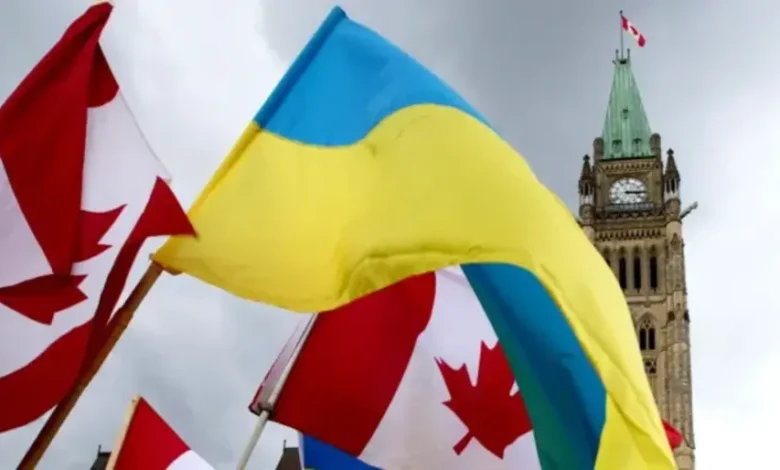
The issue of the legal status of Ukrainians who left for Canada after the outbreak of the full-scale war is gradually moving from the plane of temporary solutions to the sphere of a longer migration perspective. After several years of operation of special mechanisms that allowed for quick entry, work and legal residence in the country, the problem of the further status of those people who have already taken root in the Canadian environment, but do not have a clear path to permanent residence, is becoming increasingly acute. Against this background, a petition has been submitted to the Canadian Parliament, the authors of which call on the government to create a separate mechanism for granting Ukrainians the status of permanent residents.
What the petition is about
In Canada, an electronic petition has been submitted for parliamentary consideration, proposing to provide Ukrainians who arrived in the country after the start of Russia’s full-scale invasion with the opportunity to obtain permanent resident status. The document has already collected almost 48 thousand signatures, after which the country’s government must provide a written response to it. This was reported by Ukrinform.
This is not a government decision, but an initiative that has reached the official level of parliamentary consideration and now requires a response from the executive branch. Such a procedure does not mean an automatic change in migration policy, but it moves the problem from the level of a public inquiry to the sphere of state discussion, where a clear answer will have to be given regarding possible solutions.
The petition calls on the Canadian government to develop a special one-time immigration program for Ukrainians who are in the country under the Canada-Ukraine Emergency Travel Permit and other temporary programs. The petition states:
“We call on the Canadian government to develop a special one-time immigration program for Canadian residents who have arrived in the country under the Canada-Ukraine Emergency Travel Permit and other temporary migration programs.”
The essence of this initiative is that people who entered Canada during wartime should not be left in limbo simply because existing immigration routes often fail to take their circumstances into account. The petitioner emphasizes that many newly arrived Ukrainians cannot take advantage of standard migration programs due to limited quotas, age criteria, or inconsistency with professional requirements, so he suggests evaluating such applicants based on other indicators related to their actual life in Canada.
The petition was submitted to Parliament by Liberal Party MP Ivan Baker. After submitting such a document, the Canadian government has 45 days to prepare a written response. Therefore, the next stage will be the official position of the federal authorities, which will show whether Ottawa is ready to consider a separate program for Ukrainians who arrived in the country after the start of the Great War.
This stage is important primarily because it is no longer a matter of public discussion outside the institutions, but of a procedure within the framework of which the government must record its position in writing. The response is not equivalent to the immediate launch of a new program, but it will make it clear whether the Canadian authorities see the grounds for a separate decision and how they assess the scale of the request.
What are the arguments in favor of permanent status?
The petition emphasizes that when deciding on granting permanent status, it is necessary to take into account not the narrow framework of individual immigration programs, but the real degree of integration of a person into Canadian society. Among the criteria that are proposed to be taken into account are the length of legal stay in the country, work experience in the country, language skills and other circumstances that indicate the person’s ability to live in Canada on a permanent basis.
This approach reflects a change in the logic of the discussion itself: if at the initial stage the main task was the quick and safe reception of people fleeing the war, now the question of their future after the end of temporary programs is increasingly important. For many Ukrainians who already work, rent housing, educate children and build a life in Canada, the prospect of permanent status does not look like a political gesture, but an attempt to provide legal certainty to their situation.
How the program worked for Ukrainians after the start of a full-scale war
In March 2022, Canada launched the CUAET program, which allowed Ukrainians to obtain temporary residence and work permits. This mechanism became one of the main tools for the emergency reception of people who left Ukraine due to the Russian invasion, and allowed a large number of citizens to quickly obtain legal entry.
The acceptance of new applications for this program ended two years ago, but during its operation, about 300 thousand Ukrainian asylum seekers arrived in Canada. This figure shows not only the scale of humanitarian admission, but also the scope of future decisions that Canadian authorities will have to make regarding people who are already in the country under the temporary mechanism, but who increasingly need a more stable legal status over time.
The petition does not yet change the rules for Ukrainians to stay in Canada, but it captures a clear public demand for a new stage of migration policy for those who arrived after the start of a full-scale war. If the government agrees to develop a separate one-time program, some Ukrainians who are in Canada on temporary permits will have a chance to transition to permanent resident status based on their real experience of living in the country, and not just by meeting the narrow requirements of the current immigration routes.
Thus, the event that began with a parliamentary petition brings to the forefront one of the key questions for the Ukrainian community in Canada: will the temporary protection provided in the extraordinary circumstances of war turn into a long-term right to live in the country for those people who have already become part of its everyday space.