Dmytro Lubinets explained why the military is going to the North-Eastern Front and proposed a solution for the army

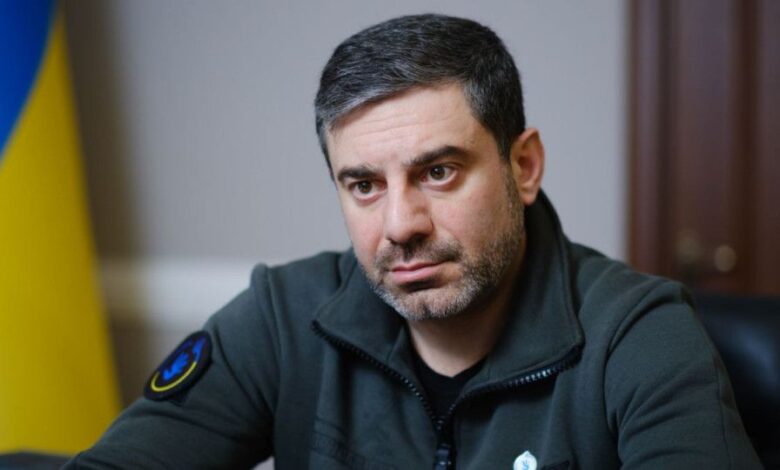
The problem of desertion has become one of the most painful issues in the army, as it is related not only to discipline, but also to the exhaustion of people, the uncertainty of the terms of stay at the front, the lack of rotations and difficulties with payments for the wounded. The Verkhovna Rada Commissioner for Human Rights Dmytro Lubinets stated in parliament that the state must change its approach to protecting the rights of servicemen, because the current gaps in the legislation create situations in which soldiers do not understand for months when they will be able to recover, undergo treatment or return to the normal regime of service.
During his speech in the Verkhovna Rada, Dmytro Lubinets stressed that the issue of desertion has become a significant problem for the army. According to him, some military personnel find themselves in a situation where prolonged service on the front line, lack of clear terms of service, and uncertainty about rotations force people to make decisions related to personal survival and psychological exhaustion.
The Ombudsman believes that the state should establish clear terms for military personnel to stay at the front. Such an approach, in his opinion, would allow military personnel to understand the limits of the workload, plan for recovery, and not remain in a state of complete uncertainty. Lubinets also emphasized the need for guaranteed rotations, because without them, service for many people turns into a continuous stay in a combat zone.
Lubinets drew the attention of the deputies to the fact that military personnel can be on the front line for months without a clear answer when they will be replaced or given the opportunity to rest. Such a situation, in his opinion, accumulates physical and psychological exhaustion, which over time turns into a critical state.
The Ombudsman considers the voluntary abandonment of a unit in this context as a problem that requires not only punishment, but also legislative regulation of the reasons. If a serviceman does not have a clear term of stay in the combat zone, does not see the expected rotation and does not receive sufficient guarantees from the state, a disciplinary response does not eliminate the source of tension.
Lubinets’ main proposal is to establish clear terms of servicemen’s stay at the front. The point is that the legislation should determine the limits of such a load, and not leave the military in a situation where the duration of service at the front depends only on the needs of the unit, personnel shortages or decisions of the command.
Separately, the Ombudsman insists on guaranteeing rotations. For the army, this issue is of practical importance, because regular replacement of units allows maintaining combat readiness, reducing the level of exhaustion and preventing situations where a person actually loses the opportunity to recover after a long stay in combat conditions.
Lubinets also provided data on military appeals to the Ombudsman’s Office. According to him, 5,361 appeals were received from military personnel, among which there were complaints about problems with payments during treatment.
The Ombudsman spoke about the case of a military man who was seriously injured and has been receiving treatment for more than a year, but does not receive proper payments. In such situations, the Ministry of Defense can point to local social protection agencies, but Lubinets believes that the wounded soldier should receive financial support throughout the entire period of treatment.
One of the problems that the Ombudsman draws attention to is the division of responsibility between military units, the Ministry of Defense and social protection agencies. When a wounded soldier is treated for a long time, different institutions may interpret differently who should be responsible for payments.
For the military man himself, such a bureaucratic dispute means a loss of time, income and energy during the period when he should be undergoing treatment and recovery. Lubinets insists that the state must eliminate such gaps in the system so that a wounded defender is not left without financial support due to inconsistency between authorities.
Lubinets also drew attention to the appeals of veterans and their family members. In 2025, the Ombudsman’s Office received 2,077 such appeals, which indicates a significant burden on the support system for people who have already served or returned from war with injuries, disabilities or other consequences of hostilities.
The Ombudsman emphasizes that the basic law on the status of veterans has been in effect since 1993, while after the start of a full-scale war, the number of veterans has increased significantly. The rules for support are placed in various laws, by-laws and orders, which is why people are forced to separately prove their right to benefits, treatment or payments in different institutions.
Lubinets believes that it is important to distinguish between voluntary abandonment of a unit and desertion. Desertion does not always mean the intention to permanently leave the service, as in some cases it may be related to the conditions of service, health, exhaustion, or the lack of a clear mechanism for resolving the problem within the unit.
Desertion involves a different level of legal assessment, as it is associated with the intention to evade military service. That is why human rights activists and the Ombudsman draw attention to the reasons that push military personnel to desertion, in particular, prolonged stay on the front line without specified terms, the absence of predictable rotations, and unregulated issues of treatment and payments.
Lubinets’ position boils down to the need for legislative regulation of several key issues: terms of stay at the front, guaranteed rotations, payments to the wounded for the entire time of treatment, and simplification of the veterans’ support system. Without such changes, according to his logic, the army will continue to face the consequences of personnel exhaustion, and the military will be forced to independently overcome problems that should be solved by the state.
For military personnel, this issue is of practical importance, as it concerns clear rules of service, protection during treatment, and the ability to obtain appropriate guarantees without a long bureaucratic circle. For the state, resolving these issues means an attempt to reduce the number of crisis situations in the army and make the service system more predictable for people who bear the main burden at the front.