
Protecting Ukrainian women from violence and xenophobia in EU countries: advice from FRA experts

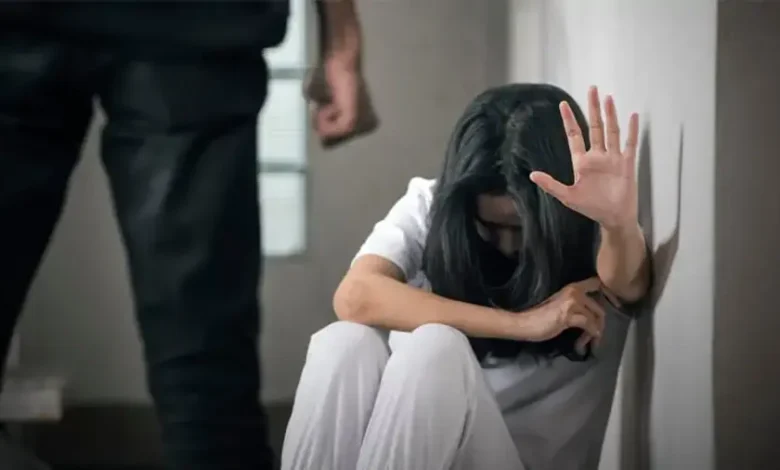
The war forced hundreds of thousands of Ukrainian women to seek safety in European Union countries, but the move did not eliminate all threats and in many cases only exposed new vulnerabilities related to the language barrier, lack of money, precarious housing, and dependence on outside assistance. This combination of circumstances is drawing the attention of experts from the European Union Agency for Fundamental Rights, who analyze why some women fleeing the war in EU countries find themselves at risk of violence and xenophobic attacks and why, even after what they have experienced, not all of them dare to contact the police.
As notes Sami Nevala, a leading expert on violence at the European Union Agency for Fundamental Rights, the focus of attention of experts has been the situation of Ukrainian women who left for European countries after the start of Russia’s full-scale invasion. Hoping to find protection there, they instead faced new risks. Lack of knowledge of the language of the host country, lack of work, permanent residence, and financial savings complicated the situation of many women who found themselves in a foreign environment without the usual social supports.
According to the expert, the group of unemployed Ukrainian women without higher education was particularly vulnerable, who more often than others became victims of violent attacks and xenophobic manifestations. This is not an abstract set of difficulties, but rather very specific circumstances that narrow the possibilities for self-defense: a woman who does not speak the language, does not have a stable income and depends on temporary assistance, is much worse at navigating the support system, feels less confident in communicating with institutions and finds herself more easily isolated.
Sami Nevala emphasizes that the authorities of EU countries, in particular the Czech Republic, Poland and Germany, should not leave Ukrainian women without financial support, because reducing payments in such conditions affects not only their well-being, but also their ability to protect themselves. The logic here is quite simple: a woman who does not have money for housing, transportation, communication, or basic needs is more likely to fall into a dependent position, and with it the risk of abuse, pressure, and violence increases.
According to the expert, refugees do not need so much – first of all, housing and work, which give a person a sense of support and reduce defenselessness before abusers. In the event of a lack of funds in the state budget for material assistance, an effective substitute may be assistance in finding official work in your specialty, since stable employment does not provide temporary relief, but a longer protective effect.
At the same time, a lawyer from the Czech Republic, Serhiy Antonov emphasizes that even basic knowledge of the language of the host country and a basic understanding of local legislation can play a decisive role when a woman has to defend her rights. This is not about the requirement to quickly integrate into someone else’s system without any support, but about a practical necessity, without which it is difficult to explain the circumstances of the case, file a complaint correctly, understand your rights and not get confused in contact with the police or doctors.
Antonov also draws attention to the fact that recording beatings requires communication with the police, and therefore, without minimal knowledge of the language and legislative procedures, protection becomes more difficult. For a woman in emigration, it is important, as much as possible, not to depend entirely on state benefits, but to have a job and pay taxes, since judges, according to him, take such circumstances into account when passing sentences.
One of the most alarming figures published in the FRA concerns precisely appeals to law enforcement officers. According to the agency’s estimates, 72% of Ukrainian women who have experienced physical or sexual violence in the EU reported the incidents to doctors, lawyers, relatives, friends, representatives of religious or social organizations. At the same time, only 12% of victims turned to the police.
Experts explain this gap between willingness to talk about their experiences and reluctance to file an official statement primarily by the fear of retaliation from the perpetrator. For a woman who is in another country, does not have sufficient financial support, does not fully understand local rules and is not always sure that she will be protected, this fear may be stronger than the desire to achieve justice. That is why silence in such cases is often associated not with a lack of trust in everyone around, but with a sense of danger that does not disappear even after the attack itself.
Sami Nevala recommends not leaving such cases without an official response and contacting law enforcement as soon as possible so that the incident can be investigated. The sooner a report is filed, the greater the chances of preserving evidence, recording the circumstances of the incident, and launching protection procedures, which in many situations are important in the first hours or days after the crime.
However, the expert also recognizes another reality: for some women, contacting the police may seem like an overly complicated or dangerous step. In such cases, he advises contacting humanitarian organizations that work with women who have suffered violence, because through them you can get help, support, and a clearer explanation of further actions. This path does not eliminate contacting law enforcement, but often helps to reach it without additional shock and confusion.
FRA assessments and comments from a lawyer from the Czech Republic show that the threat to Ukrainian women in EU countries arises where several weak links overlap: lack of money, unstable housing, language isolation, lack of work, and fear of official institutions. Under such conditions, even one crisis episode can quickly turn into a trap from which it is difficult to escape without external support.
Where a woman has access to official work, understands at least the basics of local legislation, can explain her situation in the language of the host country, and is not completely dependent on random help, the space for pressure from the abuser narrows. In the case where, after an attack, there is an opportunity to contact the police or at least a humanitarian organization, there is a chance not to be left alone with fear and not to let violence dissolve into silence.
The situation discussed in the FRA shows that the safety of Ukrainian women in Europe is determined by how accessible work, housing, legal protection and channels for seeking help are for them. In this area, where social conditions directly affect vulnerability to violence and xenophobia, experts see the main direction of action for both states and women themselves: to prevent isolation, not to leave a person without a resource for self-defense and not to postpone seeking help if the threat has already become a reality.


