War in the Middle East threatens the world with a global food crisis: experts warn

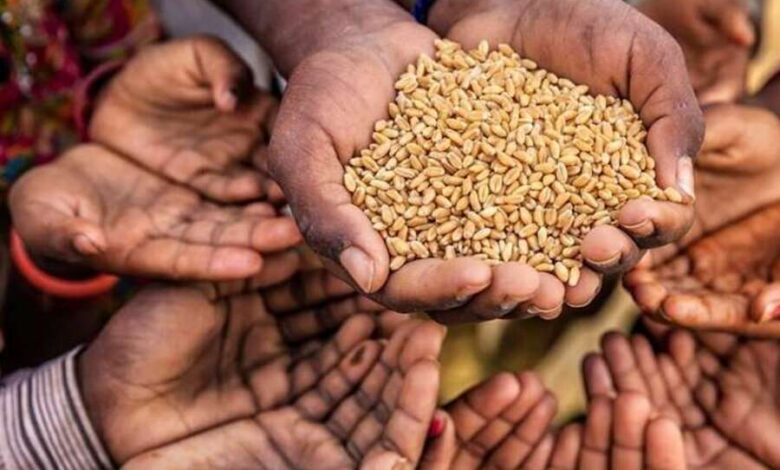
Global conflicts are increasingly reaching far beyond the battlefield, affecting economies, energy, and food security. The war in the Middle East is already starting to create new risks for the global agricultural market, as disruptions in fertilizer production and rising energy prices could affect harvests and the cost of products in different countries. Experts in the Financial Times warn that the consequences of this could be felt far beyond the region.
In their opinion, the war in the Middle East could provoke a global food crisis, the scale of which would exceed the consequences of Russia’s invasion of Ukraine in 2022. The main reasons are disruptions in fertilizer production and a shortage of natural gas, which could negatively affect crops in various regions of the world.
According to the publication, the Iranian attacks have disabled a significant part of the production of urea, the most common nitrogen fertilizer. At the same time, the gas shortage has forced companies in South Asia to reduce fertilizer production. According to Kpler, of the 2.1 million tons of urea intended for export over the past two weeks, about half have not been shipped. More than 1.1 million tons of fertilizers and raw materials, including 570,000 tons of urea, remain in the Persian Gulf – at the loading stage or already on ships.
Nitrogen fertilizers are produced from ammonia using natural gas, the price of which has risen sharply since the war began last month. The shortage fell during the planting season in the northern hemisphere, which increases the risks of reduced yields of rice and other staple crops.
Veronica Nye, senior economist at The Fertilizer Institute, notes:
“If the disruptions continue, the situation will be much worse than in 2022. The longer the conflict continues, the worse the situation will become.”
According to experts, the Middle East plays an important role in global supplies of fertilizers and energy. About a third of the world’s urea exports and 45% of sulfur exports pass through the Strait of Hormuz. Any restrictions on this route complicate supplies. For example, the Qatari company QAFCO has shut down a plant with an annual capacity of 5.6 million tons of urea due to disruptions in the supply of liquefied gas at QatarEnergy facilities.
In India, companies have been ordered to reduce gas use to 70% of normal levels. In Pakistan and Bangladesh, urea production has been halted, and one of Pakistan’s largest companies, Agritech Limited, has also suspended operations.
Unlike the situation in 2022, when the main problems were related to Ukrainian grain and energy, the current crisis affects several elements of the food chain at once. The global urea market is estimated at about 196 million tons per year, but only about 57 million tons of this volume is sold on the international market.
Experts note that South Asia is particularly vulnerable. India, Bangladesh and Pakistan depend on imports of liquefied natural gas from the Persian Gulf countries for fertilizer production. Pakistan receives almost all of its LNG from Qatar and the UAE, with Qatar providing more than 40% of India’s LNG imports and about two-thirds for Bangladesh. All 32 Indian ammonia plants are powered by natural gas.
Rising fuel and electricity prices have already led to higher costs for transportation, food processing, and food preparation. Raj Patel of the Lyndon B. Johnson School of Public Affairs warned: “Hunger is not just hunger. Hunger will undoubtedly increase this year.”
The Executive Director of the International Fertilizer Association, Alzbeta Klein, said:
“Some regions, especially with large numbers of smallholder farmers and subsistence farmers, will be hit the hardest, such as parts of Africa and South Asia. Countries that depend on imported fertilizers are vulnerable to supply disruptions and price increases, and these problems could spread far beyond the region.”